When the fortunes of the Portuguese nosedived
Many years back, Sheik Zainuddin, writing about the problems (created by the Portuguese) faced at Malabar wrote - The Muslim sultans and emirs did not take any interest in the Muslims of Malabar …..Generous help has been provided only by the Zamorin, from the very beginning…Why would Zainuddin say this? What could have irritated him so much? The linkage came to me only lately, when I put my head deep into the musty pages of the early 17th century documents. It actually surfaced when I researched the sorry story of the royal ship Rahimi.
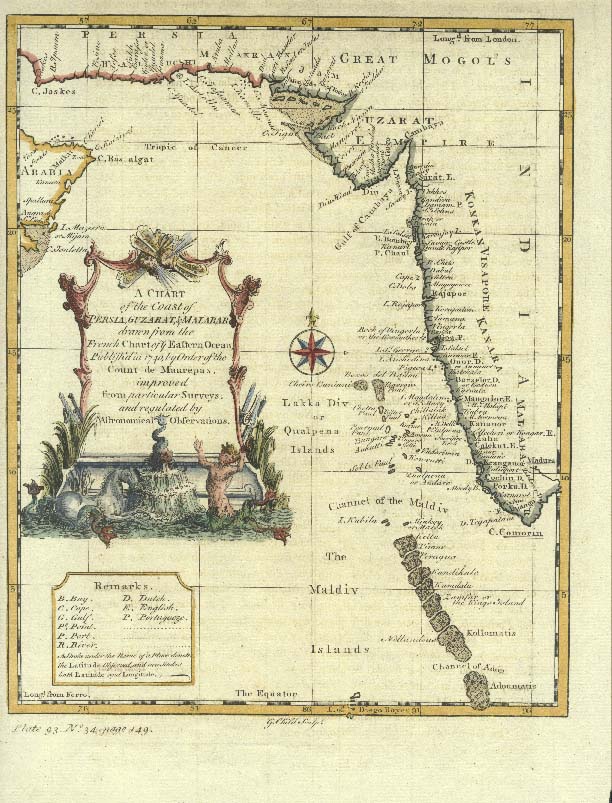
Some time back we read the story of the Meri and how the Vasco Da Gama and the Portuguese pirated and plundered that ship near Calicut in 1502 and eventually set fire to it. This Portuguese arrogance was to continue even though they were only tangentially involved with Calicut after that, while focusing their efforts at Cochin. The Meri event was soon to set a trend of organized piracy in the Arabian seas by the Portuguese and later by the English and the Dutch. Mind you, I am now talking about a time before the Dutch and the English laid legal control over the terrains of India. Soon afterwards, the Portuguese introduced the system of issuing Cartaz’s or permits for safe passage, through the seas they controlled, for this helped establish their monopoly over the region and certain aspects of trade and religion. The Portuguese by virtue of this control, continued to prosper or decline, whichever way one wants to put it, centered at Goa. As the story goes, another incident took place about a century later which was to create a huge diplomatic furor, and this was during the autumn of 1613.
First let us see how the Mughal relations stacked up with respect to the Portuguese. Akbar had annexed Surat in 1572 and finally got their access to the western seas. He had no intention of fighting the Portuguese and the Portuguese did not want to either. So after some negotiations (actually Akbar tried to fight the Portuguese indirectly a few times, but failed), the Portuguese accepted Mughal compromises and sent an ambassador to the Agra courts. Akbar tried to buy superior arms to counter the pressure, but could not and finally acceded to their demands for not paying customs at Cambay, and even ordered the Gujarat chieftains not to use Malabar corsairs against the Portuguese (Now you see why Zainuddin & the people of Malabar initially got irritated). In return Akbar was told that his family could go freely to Mecca every year to perform hajj and send one ship to the red sea ports without paying customs at Diu. Even so, the Portuguse hijacked a royal ship in 1577 but returned it quickly. So an uneasy treaty was in place, but by 1605 Akbar was gone and Jahangir had taken his place.
The Portuguese on the other hand were slowly and surely losing their grip and monopoly of the Indian Ocean trade. It resulted from their eagerness to claim even more territories such as Ceylon and Mozambique, but at the same time not possessing the immense military resources or the wealth to invest in the operations. So by 1600 the situation was looking more opportunistic for the British and the Dutch and the Portuguese had to contend additionally with continuing revolts from the chieftains at Malabar as well as the others up north, such as the Marathas, the Mughals and so on. By 1602 the Dutch EIC was created and their voyages to the Indies started. By 1619 the Portuguese shipping was virtually in ruins, so much so that even the rulers up North routinely used Kunhali’s Malabar flotillas ( hence their trips to Malabar hills – I was not aware of this while writing the previous article) effectively to disrupt the Portuguese shipping and policing. The Estado Da India was listing and badly at that. The heavily armed Dutch ships which came later created further havoc on the remaining Portuguese ships with their heavy 24 and 9 pounder guns. In the 17 years between 1602 and 1619, only 79 small Lisbon ships reached India and many of them did not even have trained gunners. The Portuguese were however still holding strong at their land bases and the HQ at Goa was in their firm control. By 1612 the British were also fighting sea battles with the Portuguese, intent on getting a foothold at Surat.
Jahangir continued the same policy that his father adopted. In fact one of his chief advisors was a Portuguese Friar. There were many other political issues and problems that caused Jahangir to fret, not only relating to the Portuguese but also concerning the Persian Shahs, Shia influence in Deccan, the Sultans of Istanbul, his own family etc, but we will not get into all that presently. Even the powerful Mughals had to put up with the Cartaz system as we saw and Jahangir like his father Akbar believed in keeping a balance in the name of peace and harmony, but was biding his time. The British on the other hand were looking for an opportunity to get a foothold at the Western ports. They had their eye at Calicut and Surat. About Calicut we had read about the trip by Keeling to Calicut, but as far as Surat was concerned, all their hopes rested on getting support from Jahangir. It was at about the end of the first decade that the English finally found a foothold in the region thanks to an enterprising young fella named William Hawkins who had burst upon the scene.
Captain William Hawkins led the first voyage of the English East India Company to India and sailed into the Gujarat port of Surat on 24 August 1608. He had with him 25,000 pieces of gold and a personal letter to the Mughal Emperor Jahangir from King James I seeking trade concessions. He had a perfectly miserable time at first and was quickly robbed by the franks or the Gujarat governor. Hawkins later travelled to Jahangir’s palace, impressed the emperor no end, speaking Turkish and all that and was offered an Armenian Christian wife (I will recount this story another day) in return by the pleased Badshah. Hawkins hung around in the Mughal courts for many months but failed to get a trading license for the British and finally left back for England in 1611 after getting fired by Jahangir for various reasons. But during these two years he enjoyed great rapport with Jahangir and that made the Portuguese very nervous. The Portuguese were getting worried as Hawkins was close to the emperor and there was every chance that the British would be granted trading rights, rather than temporary firmans(decrees). The Portuguese had to act to change the mind of the king.
Meanwhile, Indian merchant ships and pilgrim ships who did not comply with the cartaz requirements were routinely plundered on the high seas. But then again, a Cartaz did not always guarantee safety; often the Portuguese attacked even these ships, especially pilgrim ships, on some reason or another. As Ellisson Findly puts it, the situation had become so serious that a leading alim of Akbar's court issued a fatwa (later investigations reveal that this was only discussed but not issued) that the hajj was no longer obligatory for Indian Muslims, owing to the persecution suffered at the hands of the Persians by pilgrims going by land, and at the hands of the Portuguese by those going by sea. Perhaps that would have irritated Zainuddin even more though it is not clear if this fatwa discussion occurred after Zainuddin’s demise.
The tenth voyage (1612–1614) on behalf of the English East India Company was led by Captain Thomas Best. After reaching Surat in September 1612 Captain Best had planned to send an emissary to the Emperor asking for permission to trade and establish a factory at Surat. If refused he planned to quit the country. This may have been possibly because King James I had extended the EIC’s charter in 1609 on the basis that it would be cancelled if no profitable ventures were concluded within three years.
The attack by the nervous Portuguese went the wrong way for them for they encountered the determined Capt Best. This signaled the start of the English-Portuguese skirmishes. The first naval Battle of Swally which took place in November 1612 off the coast of Suvali (anglicized to Swally) a 7 mile beach port stretch near Surat resulted in a victory for the four English East India Company galleons over four Portuguese naus and 26 barks (rowing vessels with no armament). This relatively small naval battle turned out to be historically important as it marked the beginning of the end of Portugal's commercial monopoly over India, and the beginning of the ascent of the English East India Company's presence in India. This event sufficiently impressed the Sardar (Governor) of Gujarat, who reported it to Jahangir. Thereafter it appears that the Badshah was more favorable towards the English than the Portuguese.
On 6 January 1613, Captain Best received a letter from Jahangir ratifying the trading treaty, which was presented by the Gujarat Governor. Captain Best then ordered one of his men, Anthony Starkey, to leave for England, via land through Sind and Persia, carrying letters of their success. He and his companion, however, died shortly after, near Aleppo in Syria, their deaths being ascribed (probably without any foundation) to being poisoned by two Portuguese friars. The letters they were carrying fell into the hands of Luiz Perrera Cotta, a Portuguese (courier) and were later delivered to Spain. The Spanish king forwarded copies to Goa asking what the $%^& was going on and pressed for rigorous measures to be taken against the English and the Moguls. Multiple copies of papers had however been sent back to England by Capt Best and one set finally reached the EIC in London by Dec 1613.
But other troubling events were unfolding meanwhile, in Surat.
The Portuguese had to act. The viceroy in place was none other than Jeronimo de Azevedo de Ataíde Malafaia and he had just been moved from Ceylon to Goa. The not so wise man wanted to make his mark and foolishly decided to take on the emperor Jahangir himself. And so, one fine day, the Portuguese decided to carryout an audaciously stupid act, an act of high piracy, to blackmail the emperor. They hijacked a ship named Rahimi belonging to the Jahangir family, which naturally had a hand in the lucrative business of red sea trade & ferrying persons to Mecca.
The turning point
With this background, let us get to the story of the ship named Rahimi. Rahimi, was certainly large and conspicuous, and known as the biggest pilgrim ship (a monsoon ship as they were termed, perhaps built for the purpose of ferrying pilgrims and manned by Dutch and other sailors) of the times. It could carry 1500 passengers and displace some 1700 tons, was 52 meters long and 15 meters broad. Incidentally the tax that the ship had to typically pay each time was some 15,000 riyals. Piracy was rampant during the period and It was common practice for western pirates to attack red sea ships during their return run as they had disgorged all the goods and were laden with Gold and silver.
The significance of the piracy act was due to the ship and its ownership. So in September 1613 the Portuguese, thinking that they could blackmail Jahangir to force a decision favorable to their interests, hijacked the Rahimi, despite the fact that it possessed the required cartaz, while returning from the Red Sea with pilgrims and cargo, the value of which was estimated to be 300,000 Pound sterling or more, later arrested all the pilgrims and took the ship to Goa.The owner of the ship was none other than the prodigious lady trader Maryam Uz Zamani, the mother of Jehangir. Maryam was the Hindu princess from Amber who had married Mughal emperor Akbar (1556-1605) in 1562 as part of a political alliance between her father Raja BiharI Mall Kachhwaha and the emperor. Many people are/were under the impression that she was a "Jodh Bai," a lady from Jodhpur, as suggested by some historians, but this is not apparently correct (Jahangir himself, however, married a Jodh Bai. She was mother to the future Shah Jahan and died in 1619.The capture of her ship was as you can imagine an insult to the reigning emperor’s family.
Findly explains - Maryam was a member of the court and the only woman to have the rank of 12,000 Calvary (suwdr), and was known to receive a jewel from every nobleman "according to his estate" each year on the occasion of the New Year’s festival. Like only a few other women at court, Maryam-uz-Zaman was granted the right to issue official documents (farmans), usually the exclusive privilege of the emperor. So you can see that she was very powerful and had the emperor’s ear at all times.
But her ship had given her no end of trouble. In February of 1609, Maryam’s ship was being readied to carry goods to Mocha, an Arabian port south of Mecca at the entrance of the Red Sea. The Portuguese threatened to confiscate the ship and take it to Diu unless she paid an enormous sum for a cartaz or pass; eventually, to forestall violence, the two sides were able to compromise on a much smaller payment. As the records put it - About this time there was a great stir about the queen mother's ship, which was to be laden for Mocha. The Portuguese fleet of twenty-two frigates then rode off the bar of Surat, and demanded 100,000 mamudies for her pass, and at last agreed to take somewhat more than 1000, together with sundry presents, which the Moguls were forced to give them.
There was trouble again in late 1610/early 1611 when Maryam-uz-Zamanl's ship was being loaded for an-other trip to Mocha. She had sent one of her agents to buy indigo in Bayana to be put aboard the ship for sale in Mocha. Just as the deal was being completed, however, the English trader William Finch arrived and did what no Indian would dare to do-he offered "a small matter more than she should have given," got the indigo, and made off with it. Then there was the English hijacking of Rahimi - Some moths before Best arrived, in 1612; six English ships hijacked about 10 ships coming from red sea ports. One of them was the Rahimi and the British promptly plundered all of them after taking them to a nearby anchorage. The Rahimi was ransomed for Pounds 4,000.
Maryam-uz-Zaman was furious about the English acts and complained to her son the emperor who made the English representative at Jahangir’s court, William Hawkins; suffer for some long time after that.
Why did the Portuguese choose Rahimi? One they knew that the English were planning to ally with the Mughals and secondly they wanted to make an example of stopping the pilgrimages to teach the Muslim Moguls a lesson. It was not for the booty, for the Rahimi’s pilgrims were not let go. As Findly explains, the outrage was compounded by the fact that the ship's owner was a woman and no one less than the revered mother of the current emperor. As a patron of such stature, the court would argue, she should have had a special immunity against such acts of piracy, rather than a special vulnerability.
The outcry at the Mughal court was unusually severe and, when it became clear that the Portuguese had no intention of returning the ship, Jahangir ordered the halt of all traffic through Surat, the major Indian port for sea-going trade, the seizure of the Portuguese town of Daman, the closing of the Jesuit church in Agra, and the suspension of all allowances to Portuguese priests in Mughal India.
So well, as you can imagine, the Portuguese played right into the English hands. When the English themselves had hijacked Rahimi earlier, they had wisely ransomed it off for a measly 4,000 Pounds. After the Portuguese seized it, they wanted the English to be thrown out and Daman returned to them. Jahangir did not agree and the matter was disputed for a long time. The fortunes of the Rahimi did not go well either, and it was never returned to the emperor’s mother. In 1614, the Portuguese frigates burnt about 120 ships in Goa and among them were 10 great ships. It appears that one of them was the queen mother’s Rahimi. A compensation of about 3 lakhs was eventually paid by the Portuguese to Jahangir, to settle the case. But the damage was done. The Portuguese were upstaged by the English in the Mughal court and the Franks ceased to be a major player. And thus the tide turned in favor of the British.
Whatever happened to the Viceroy who carried out all these audacious plans? He tried to find fresh pastures…In 1615 he backed an audacious expedition to Pegu to loot the Moon imperial treasures in Mrauk-U, an enterprise that ultimately did not succeed. Also in 1615 Azevedo led a huge fleet that tried to take on EIC ships under the command of Downton off Surat, but after a series of engagements he ultimately failed - an incident which demonstrated that Portuguese Goa had lost the capacity to protect its monopoly of trade on the west coast of India. On his return to Lisbon in 1617, Dom Jerónimo de Azevedo was held in custody and put on trial on several accusations, including that of not fighting the Dutch. He died in March 1625.
As for Surat, it became the British EIC headquarters till it was sacked by Shivaji in 1664. The British moved to Bombay after Catherine got it as a gift in 1874. After many misfortunes and turns of the tide, life stabilized in Surat and it is now a prosperous manufacturing city of India.
As for the East India Company, the threshold was finally crossed, profits were made after the extension for charter and the receipt of a trading treaty from Jahangir put a nice legal stamp on their activities. The EIC and the crown clung on for another 300 years to signify the ascendancy of the British Raj.
References
The capture of Maryam-uz-zamani's ship - Ellison B. Findly
Moguls, Ottomans, and Pilgrims: Protecting the Routes to Mecca in the Sixteenth and Seventeenth Centuries - Naim R. Farooqi
Britain and the Islamic World, 1558–1713 - By Gerald Maclean, Nabil Matar
The Military Revolution: Military Innovation and the Rise of the West, 1500-1800 - By Geoffrey Parker
A history of modern India, 1480-1950 - By Claude Markovits
Medieval India: from Sultanat to the Mughals, Volume 2 - By Satish Chandra
NurJahan, Empress of Mughal India - By Ellison Banks Findly
The Feast of Roses: A Novel - By Indu Sundaresan
Early travels in India, 1583-1619 - edited by Sir William Foster
The voyage of Thomas Best to the East Indies, 1612-1614 - By Thomas Best, William Foster
Royal Mughal ladies and their contributions- By Soma Mukherjee
Post script
I cannot marvel at how one story leads to another. As I researched this event, I stumbled upon another fascinating story, the story of the first Indian who visited England. That is some story, my friends and I will get to that one, shortly.
The old capital of the Hoysala Ballalas at Dvarasamudra was taken in 1310, and Malik Kafur went to the Malabar Coast where he erected a mosque, and afterwards returned to his master with enormous booty (A sketch of the dynasties of Southern India Robert Sewell-1883 .
Now is that correct? To determine the answer you have to understand the differences between the usages M’aabar and Malabar signifying two geographically different areas of South India, as mentioned in history. One of them is lost in modern parlance, while the other will soon be forgotten in today’s integrated Kerala save in the minds of some from an older generation or those studying history. These two words are known to some historians, but the occasional reader is definite to get confused. In reality these are two different parts of South India and both names originated from Arabic terms used to signify the region they traded with. Basically both names signify ‘passage’ or ‘the crossing’. In the early medieval, the South Coromandel area was synonymous with the kingdom of M’aabar (Incidentally, the word Coromandel that we use came from Cholamandalam). The word M’aabar was used often by Arab writers and then when it became a kingdom post invasion it came to limelight, and thereafter got confused with Malabar after the English arrived.
Ma’bar as a kingdom appears in history books around the 13th century and is defined as the area eastwards from Cape Comorin (Abdulfeda) to Nellore. It was however mentioned as a trading area even before that. The western region of Melibar (Menibar) which we know as today’s Malabar, is defined to be the area between Mt Deli (Cannanore) and Cape Comorin. Of the origins of the usage Malabar to depict the west Coast of Kerala, I will not get into much detail at this moment, and we have covered that before.
During the later parts of the 17th or 18th century, the definitions between these two words got blurred and some English writers like Sewell mixed up the locales. One of the mentions that changed the entire course of history of a region, if it had really been accepted would be the mythical invasion of Malabar by Malik Kafur. It never happened, for Kafur never crossed the Western Ghats. On the contrary, as some books mention, the Kulashkhara Varma of the Chera dynasty, supporting the Pandyas drove Kafur and his minions out of Madurai during his first foray. This is probably a confusion as well, which we will see shortly.
Then there is another rclaim that needs further study - this mention in the Kulashekara dynasty entry in Wikipedia - The Various sub-castes of Bunts (community) such as Nayara, Menava, Kuruba and Samantha established Matriarchal dynasties in Kerala only after 1310 when Malik Kafur invaded Kerala. The first ever mention of Nairs is at Thrikodithanam mentions a Chennan Nair who was a Drummer migrated from Tulunadu. But more on this some other day, for now we will focus on Malik Kafur.
A number of articles mentions about the southerly invasion by Malik Kafur, the 1000 Dinar slave and eunuch at the command of Alaudin Khilji, the subsequent sacking of Malabar and his return up North with huge amounts of booty. Now was that right?
In order to clear this confusion from the records, let us take a real look at the movements of Malik Kafur, for the story of the man is pretty interesting and so is the story of the Sultanate of M’aabar which lasted less than 50 years. The best descriptions of the Sultanate can be obtained from a fine book written by Mehrdad Shokoohy titled Muslim Architecture of South India. I will get to these parts and the empire of M’aabar another day while covering the Coromandel and later the Chinese traders , but will presently introduce it as the area east of Cape Comorin (Kumhuri) and its many ports. This area and upto Madurai later on became the Sultanate of M’aabar.

Somewhere around the 13th century (Nov 1310) this area came under the direct notice of the Delhi Sultans, possibly because of the export of pearls and other trade related activities and an urgent summons to mediate in a family quarrel. Sundara Pandya of Madurai requested the support of Alauddin Khilji over a matter of accession and Ulugh Khan was deputed to support the king. But he died before he could raise the forces, and his place was taken by the vice regent Malik Kafur (white camphor) or Kafur Hazar Dinari.
The story of M’aabar is somewhat similar to what happened when the Palghat Appan invited Hyder Ali, who was hanging round Dindigul. Let me borrow words from Tamil Tribune.
King Maravarman Kulasekhara Pandyan (1268 - 1310) had two sons Jatavarman Sundara Pandyan and Jatavarman Veera Pandyan. The elder son, Sundara Pandyan, was by the king's wife and the younger, Veera Pandyan, was by a mistress. Contrary to tradition, the king proclaimed that the younger son would succeed him. This enraged Sundara Pandyan. He killed the father and became king in 1310. Some local chieftains in the kingdom swore allegiance to the younger brother Veera Pandian and a civil war broke out. Sundara Pandyan was defeated and he fled the country. He sought help from the far off northern ruler Sultan Ala-ud-din Khilji who was ruling much of northern India from Delhi. At that time, his army under General Malik Kafur was in the south at Dvarasamudra (far to the north of Tamil Nadu). Khilji agreed to help Sundara Pandyan and ordered Malik Kafur's army to march to Tamil Nadu. With Sundara Pandyan's assistance, this Muslim army from the north entered Tamil Nadu in 1311.
Kafur and his troops created mayhem in the area for a full year, looting and pillaging, finally carrying an immense treasure on 312 elephants, 20000 horses and 10 crore gold coins. Since then the place has been mentioned by Ibn Batuta as well (who married a girl from the local rulers family), and we hear about the many battles of the M’aabar rulers with local kings & chieftains. By the 15th century the sultanate was no more. Prior to the 14th century, this was the area where the much interaction with the Chinese took place. But it is important to note that M’aabar was the place where the Arab ships delivered horses though we hear of smaller deliveries to the Malabar coasts. The reasoning should be that Malabar did not need horses due to the nature of the terrain and Arabian horses did not quite fit in, but were more important for the plains of the East and from where they were traded up north to the Deccan and Delhi kings. If you recall I wrote about the famous horse trader of Kayalpatanam who converted the Paravas during the later Portuguese reign as well. Anyway one other reason why the Delhi Sultans wanted a foothold in the south was to control the horse trade as horses were needed for any war campaign.
So who was Malik Kafur? Let us first look at what is mentioned in most books – Borrowing from Wikipedia, Malik Kafur (1296 - 1316),or "Chand Ram" as his name was supposedly ,was a eunuch slave who became a head general in the army of Alauddin Khilji, ruler of the Delhi sultanate from 1296 to 1316 AD. He was originally seized by Alauddin's army after the army conquered the city of Khambhat (Cambay). Alauddin Khilji fell in love with the effeminate beauty of Malik Kafur, castrated and converted him to Islam. He was made malik naib, the senior commander of the army. Another article states thus - In 1297 AD Alauddin Khilji set off for conquering Gujarat. The Raja of Gujarat took shelter in Devagiri where Nusrat Khan an Ulugh Khan pursued them and looted. During Alauddin Khalji’s invasion of Gujarat, his generals had brought immense booty from there including Raja Karan’s consort Kamla Devi and the handsome slave Malik Kafur Hazardinari.. The Sultan fell in love with both. In the words of Farishtah, he converted Kamala Devi to Islam and married her, and treating Kafur as a favourite “tied the sacred thread (zunnar) of his love in his own waist.” Shanti Sadiq Ali in the book The African dispersal in the Deccan: from medieval to modern times mentions he was African slave purchased in Baghdad. Abdul Sherif identifies him as an Ethiopian. Chand Ram or African, he went on to create havoc much like Ayas Khan did for Hyder Ali.
So that was Kafur, the slave and later commander. I will get to his life thereafter a little later, but let us see how historians interpret the story.
See what German historian Wilhelm von Pochhammer has to say about this in ‘India's road to nationhood: a political history of the subcontinent’ – He reorganizes the history - As the weakest among the Tamil states, Kerala maintained its identity by identifying with the strongest power. After the dissolution of the Chola Empire, Kerala obtained complete independence once again. It was then threatened by a new danger. With the Muslim invasion, the cavalry general Malik Kafur (1310) wanted to plunder Kerala. Kerala however defended itself partly by skilful guerilla warfare and partly by drawing the Muslim general’s attention to the much greater riches in the neighboring territory of the Pandyas. The state although saved from danger, broke up into small segments of which the biggest was ruled by the Zamorin of Calicut.
So we have already seen two new definitions to the medieval period of Kerala, one based on the parley of Bunts to Kerala and the second based on the threat of the Khilji Eunuch general.
Krishnaswami Iyengar in his book Some Contributions of South India to Indian Culture opines thus - In the meanwhile the Mohammadan garrisons left by Malik-Kafur had been dislodged from the Tamil country by the Kerala ruler, Harivarma Kulashekara, who broke out of his mountain frontier and carried his armies successfully as far as Poonamallee, perhaps only to retire, when the Kakatiya general advanced against him.
This is confirmed by JBP More, who states that Kafur’s first invasion attempt was a failure, but he was immensely successful the second time around. If that were the case, why did Malik Kafur not retaliate during his second and successful raid and attack the Chera king in his domain? Anyway we do not know if he did, probably he did not.
Malik Kafur did not live very long after the plunder. As Dunning explains - On the 4th Jumada Sani 711 H. (1311) Malik Kafur arrived in Delhi with all this treasure and presented it to the Sultan Ala-ud-Din. But a curse seemed to attach to all the gold and jewels taken from the Hindoo idolaters, and in the same way as the Warangal treasure tempted Ala-ud-Din to murder his uncle Jelal-ud-Din, so now the same temptation brought upon him the same fate from the hands of Malik Kafur. In 1317 Ala-ud-Din died, his death having been hastened(poisoned), it is said, by Malik Kafur, who at once seized the throne. He put out the eyes of two of Ala-ud-Din's sons, "by cutting them from their sockets with a razor, like slices of melon," and confined another (Mubarak Khan), intending him for the same fate. Before, however, he could do this, retribution overtook Malik Kafur himself. A conspiracy was formed amongst some of the nobles, who entered the palace at night and killed him when he was asleep. This being done, Mubarak Khan was placed upon the throne and assumed the title of Sultan Kutb-ud-Din (1317).
Ziauddin Barani (translation by S Kidwai) says thus – In those last 4-5 years of Alauddin Khilji’s life, the sultan was losing his memory & senses; he had fallen deeply and madly in love with Malik Naib. He had entrusted his responsibilities to the useless, ingratiate sodomite Kafur. In a scornful obituary to Kafur, Barani says – This ignorant man did not know that to be castrated, to be addicted to the vice of being sodomised and to be faithless are the worst vices. He did not know the necessities and rules of Kingship require a person to be exceptional, independent, fearless and strong. … That was Malik Kafur..
But Malik Kafur is remembered in history for something else as well; he looted and brought to Delhi the great diamond taken from Rudradeva, identified by some with the famous Koh-i-Nur. Of that I will talk at length soon.
So that was the story of Kafur and his foray into M’aabar. The story got tainted in time, when M’aabar vanished from the vocabulary and further got confused with Malabar. Regretfully many works of history and even text books still mention that Malik Kafur plundered Malabar, which as you saw from this study is after all, a misconception..
References
Mehrdad Shokoohy - Muslim architecture of South India
Tarikh-i ‘Alai or Khazainu-l Futuh by Amir Khusru
Dhow Cultures and the Indian Ocean - Abdul Sheriff
The history of India from the earliest ages: Mussulman rule - James Talboys Wheeler
A history of the Deccan, Volume 1- James Dunning Baker Gribble, Mary Gribble Pendlebury
Notes:
There is an interesting but false legend about Kafur which is heard in old men’s tales. It is a fabrication and is mentioned below only for the fun of it….
In 1312 AD, Malik Kafur invaded Devagiri in Deccan for the second time and captured two beautiful daughters of King Ramadeva. Malik Kafur sent those two young ladies to Alauddin Khalji in Delhi along with other loot. Alauddin, who had natural weakness for beautiful ladies irrespective of their marital status, invited them to join his royal harem with all dignity. The elder girl replied that both of them were not fit for emperor as Malik Kafur had already enjoyed them. In anger Alauddin forgot that Malik Kafur was a Eunuch and cannot enjoy girls normally. He ordered an immediate arrest of Malik Kafur and got him sent to Delhi after packing him in a sack made of cow skin. Alauddin knew that during the fortnight’s journey from Devagiri to Delhi, the cow skin would shrink gradually in hot and humid climate killing Malik Kafur by suffocating him slowly. After a fortnight the cow skin sack containing Malik Kafur’s dead body reached Alauddin. Alauddin opened the sack in presence of those two ladies. On seeing the dead body, one of the girls told him that emperor should have checked genuineness of their allegation before giving the death order. Alauddin became furious and asked why they made false allegation against Malik Kafur. They replied that they wanted to take revenge on Malik Kafur who had destroyed their country. Source rajendracholan – Ponniyinselvam forum
Some days ago I had written about the Damon slave and the Portuguese and VOC slave trade in the 17th century Malabar. Later, when I stumbled upon this story, it literally took my breath away. While much of it is legend, study of a number of texts enabled me to extract the gist from them, though the passage of many hundreds of years have tainted the story quite a bit.
Now will you forget all that gory stuff (relating to the slave trade) for a moment and imagine a
story line that goes thus? A Rajasthani girl and her brother are walking on a beach, the girl is abducted and sold to Portuguese slave traders in Cochin. The girl is purchased and taken to Philippines from Malabar. The Spanish bring her to Puebla, Mexico. Well – that is the story of Catarina de San Juan (1606-1688), whose real name was Meera and who almost became a saint.
Meera (La China Poblana) kept her name and her unique and ‘provocative’ Rajasthani dress sense (some even say Saree that got adapted to a skirt-blouse-shawl combination later in her life) all through her life. Her pious nature and her dressing sparked a craze for her dress – which is now popularly known as the China Poblana (Chinese from Puebla) dress of Mexico. Look at the similarity in the pictures of the Rajasthani dress and the Poblana dress and you can see how fascinating a route this story takes.
There are at least three versions to this story. The first that I will recount is based on a biography (Yes there are more than three varying and voluminous autobiographies and countless articles and she is still so popular, revered in Mexico to saintly proportions!) written by Jose Del Castillo Grajeda and outlined by Gauvin Alexander Bailey in his study ‘A Mughal princes in Baroque New Spain’. The other and more popular biography is based on the lengthy (considered surprisingly big and a very expensive sponsorship by the Church) book written by Padre Alonso Ramos in 1689.
According to these accounts, Meera belonged to a Mughal royal family in Agra (contradicts Meera’s own words recounted later in this article), and her family had converted to Christianity early in life from Islam, but when persecuted, moved to Surat around 1615 from where she was abducted in 1616 when she was walking along a seaside with her brother. The Portuguese who snatch her, fight with each other in order to molest her, but she manages a miraculous escape with some stab injuries, is thence rebuffed by her Mughal fiancé and after more difficult travails end up in Cochin (or the whole disgraced family had by then moved to Cochin by then which is more likely).
There, Meera takes refuge in a Jesuit mission, where she is baptized by Xavier with the name Catarina de San Juan, but she gets kidnapped again and is taken to the slave market at Philippines. There she spends five miserable years as ‘hot female property’ till she is purchased by the rich Puebla Captain Miguel de Sosa. During this period, she is even courted by a Japanese prince intent on marrying her, but she is whisked away by her jealous owners.
She lands up in Acapulco in 1621 on board the ship “Nao de Manila” or ‘Nao de China’ (dressed as a boy during the 9 month voyage to escape the sex starved sailors). Miguel Soso, some say, purchases her for 10 times what she was being quoted (the original indenter was the Viceroy Marquess of Gélves who wanted a ‘chinita’ – one that was as exotic as the papayas in his garden, but then it appears he lost his job after some riots and could not buy her!) and takes her home to Puebla some 300 miles away.
Sosa and his wife Margarita Da Chavez take a liking to her and treat the
‘nina’ Meera more as a daughter. Meera, a curiosity in town, wore funny clothes and always covered her head with her ‘shawl/dupatta’. This made the people of Puebla feel that she was a demure & saintly one! And thus they started to revere and worship her.
Meera gets manumitted after the death of Sosa, is betrothed in 1626 to a man called Domingo Suarez (A Chinese or Asian slave himself), on a precondition that they will not have sex (One cannot but agree with her total distaste for sex after the Manila horrors). Meera does in time learn to speak poorly & highly accented Spanish. The story takes an interesting route now, Suarez tries to force himself on her but she places a cross on her bed and Suarez becomes impotent as he reaches the bed! The relationship thus remained celibate for 14 years. Meera in compensation works as a seamstress (making & selling localized versions of China Poblana dresses skirt, blouse and shawl as it is known and seen today) and provides the returns to Domingo. He sets up his own business and has a mistress (with whom he begets a child) but goes bankrupt & eventually dies (Women in Iberian Expansion Overseas, 1415-1815 By Charles Ralph Boxer).
It was after Sosa died that the divine apparitions first started in Meera’s life (though some write that it started even earlier in India). After Suarez’s death Meera is left out virtually on the streets. Priest Pedro Suarez rescues her, inducing her to live a humble ecclesiastic lifestyle as an anchorite(religious hermit) confined to a small room, but her fame starts to grow with news of her visions and she is visited by all the gentry and the populace for spiritual discussions, advice, prophecies etc. All through her life she has visions of Jesus and Mary, painting or describing those incredible scenes of an evangelical nature. She is said to have performed many miracles, like turning a hurricane away once from the lands of Mexico. Originally when she wanted to join the convent of Immaculate Conception, she was not granted admission as she was not virgin (apparently after her horrors in the Manila slave camps which at one time housed over a hundred thousand slaves) but she later worked there though never becoming a nun as Spanish law forbade a non white from becoming one. Meera’s fame grew and hundreds of thousands of people came to see her regularly till her death on Jan 5th 1688 aged 82 years.
During her later years when troubled by illness, she started to teleport (paranormal bilocations)
on spiritual journeys around the world (including China and India) and the heavens. “At the hour of her death she was nearly paralytic because she suffered from respiratory complications and many other physical problems. The diseases were as much due to her age as because of her unfortunate and difficult existence”.
Now why was she called the beauty from China? In this sense it appears that this generic term ‘Chino’ also means servant, concubine or country girl according to Bailey. So it was a corrupted usage in the real sense. How about the contention that Meera was a Mughal? Very unlikely that she was a Muslim as Meera was not a name that came from Mirr, Maria or Miram (‘bitterness’ in Arabic/Hebrew as believed by Bailey) as no parent, in my opinion, would name an offspring so. It most definitely was Meera as in a Hindu family (means light, merriness, prosperity or saintly woman. Almerah means princes, aristocratic lady or food in Arabic and Meera also means ‘Mine’ in Urdu. Meera as a person and name is very popular in Rajasthan or Rajputana?). In any case Meera herself stated that she is a Kshatriya or a Brahmin by birth.
"For her part, Meera remembers that her father was the lord of a certain principality, and, besides, a physician and seer, who knew how to quieten the tempests. In these remembrances of hers, distant and blurred, Meera categorizes her parents as much as belonging to the ruling caste or Kshatirya or to that of the priests or Brahmins."
Some say she came from Indraprastha, some others mention Bangladesh or Cochin (Cochin is unlikely due to the colorful dress that Meera wore. In the 17th century women in Kerala did not wear such patterns or bright colors). It is also said that Meera’s skin was almost white; she had dark hair, ample forehead, lively eyes, sultry nose, twin braids of hair and a classy walking style. She looked virginal & saintly according to the written notes. However the pictures that I could find do not quite present a beautiful countenance.
The dress style now known as China Poblana, a white blouse and colorful embroidered red and green shirt, has evolved to include the national symbols of Mexico - an eagle clutching a snake, and prickly pair cactus. A woman who wears the dress usually braids her hair on two sides, tied with red, white and green ribbons.
Not only did Meera introduce Indian colors and dressing in Puebla but it is said (By Ramos) that she also introduced the ‘Mole’ an Indian curry where the spices & chillies are roasted with chocolate, ground together and cooked to be served as a brown paste with chicken! (I do not quite believe this though; Fish Mole was introduced to the Malabari’s by the Portuguese themselves and is more a bland stew with coconut milk). Today you can still find the famous China Poblana Chicken Mole in Puebla.
I understood that much of the Mughal element in this story comes from biographer Ramos’s embellishment after his reading Kircher’s ‘China Illustrata’. He wove what he picked up from Kircher’s book into Meera’s story, a1000 page edition titled ‘Prodigios’. Rev Ramos apparently recommends sainthood for Meera due to her huge popularity sand saintly life and hoped to gain considerable popularity for himself in publishing this work. He collected the information from Meera over the course of their 15 year relationship as confessor and Padre. However, during the Spanish inquisition the book was banned, considered blasphemous, indecent and unbelievable and Meera was thus not considered Saint material.
In Puebla de los Ángeles she was thus venerated as a saint until 1691, when the Holy Inquisition prohibited open devotion to her. Today, the Templo de la Compañía, in Puebla, is known as La Tumba de la China Poblana because in its sacristy lie the remains of Catarina de San Juan.
Herein lays a tantalizing possibility - Was Meera’s name, life story and story of origin itself a clever creation by Ramos and was Meera the original Meera bai (1498-1547)of Rajasthan whose story & fame were used here for good lasting effect? The stories are rather similar, but other than Kircher’s contemporary book that talked of China, Delhi and Mughals, the story of Mirabai may not have reached Ramos at all.
Most historians however agree that the slave girl came from India. It is also to be borne in mind that there were many Rajput girls in the Akbar harem, so she just might have been in theory a Mughal princess. So why choose a royal lady with origin in India as the character for Catherine? If you recall from my blogs on Joao Da Cruz and De Nobili, you will note that the Portuguese wanted stories of major success in India, i.e. stories of conversion of the upper classes to Christianity and their resulting enlightenment as a need to further Christianity in those times.
But then, for Ramos, Meera was “the prodigious flower who tread the earth in the orient until she arrived at the pinnacle of perfection in this Occident, bestowing upon us a map imbued with virtue providing a sure path with which to guide our way”.
No! I am not finished – Roshni Rustomji recounts a meeting with a (imaginary or real, that I am not sure) living descendant of the child Suarez had with his mistress. Sofia Cruz the descendant runs a Mexican Chocolate shop in USA in Roshni’s short story – Black tea and Raw chocolate
So friends, this was the story of the Indian girl who lived her saintly, lonely and sad life in Mexico. Next time you plan a travel to Mexico, do not forget to put Puebla on your travel route, and when you reach there, let them know where you are from. If it is India, I am sure you will have a good conversation going, in no time.
In any case, this legend of Meera has withstood the test of time. Let it be so.
References
A Mughal princes in Baroque New Spain - Gauvin Alexander Bailey
Imagination Beyond Nation Latin American Popular Culture -By Eva Paulino Bueno, Terry Caesar
Outside Stories, 1987-1991 By Eliot Weinberger
Athanasius Kircher By Paula Findlen
Women in the Inquisition By Mary E. Giles
Times of India article
A poem on Catarina
A lovely short film on La China Poblana (in Spanish)

Puebla - The city of Puebla was founded on April 16, 1531 as "La Puebla de los Ángeles". With more than 20 universities, Puebla is second only to Mexico City in the number of universities within its borders. It was the first city in central Mexico founded by the Spanish conquerors that was not built upon the ruins of a conquered Amerindian settlement. Its strategic location, half-way between the port of Veracruz and Mexico City, made it the second most important city during the colonial period. Puebla's monument to La China Poblana, an enormous statue atop a tiled fountain, is located in the northern end of the city at the junction of Boulevard Heroes del 5 de Mayo and Avenida Defensores de La Republica.