
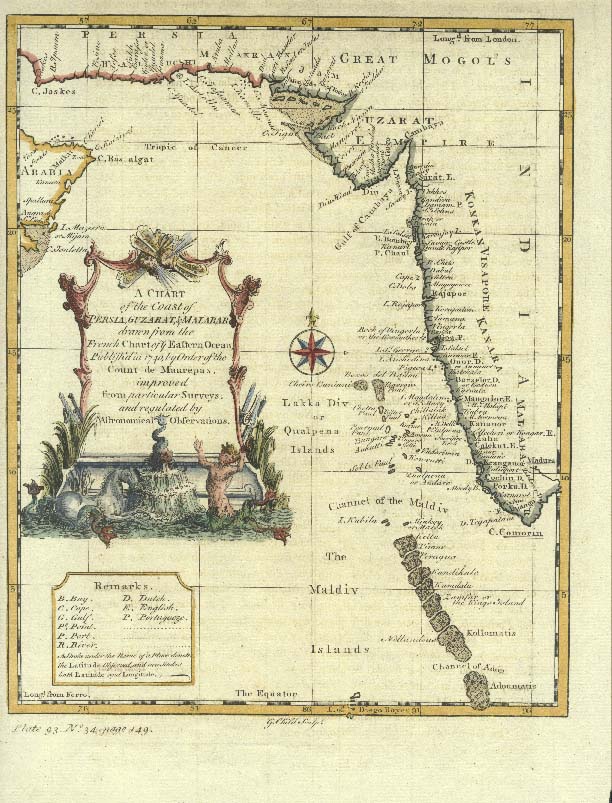
Showing posts with label Malabar Moplah. Show all posts

Power brokers and Saints – The case of Sayyid Fadl – The Mambram Pookoya Thangal

Posted by Maddy Labels: ,

Malabar & Istanbul – Late 19th Century

Two things made me pick up this topic for study. One - the fact that Sayyid Fadl spent his last years in Istanbul, a city I love, and two -the remark made by his recent biographer WC Jacob. Jacob was kind in mentioning a couple of my earlier articles on the Cherman Perumal in his book and remarked - That the myth is still relevant today, even in far-flung exotic locales such as North Carolina, is evinced in online blogs and amateur history sites. The blogger going by the name Maddy who is an electrical engineer in North Carolina maintains the blog Historic Alleys: Historic Musings from a Malabar Perspective. Well, Jacob, I doubt if anybody in N Carolina is interested in the Perumal, or Malabar, it just so happens that this Malabar history enthusiast who has written scores of articles on Malabar, lives in N Carolina, just like you are a resident in California. But your studies on Sayyid Fadl are top-notch, and I had the pleasure of reading all of them.

The Arakkal Swaroopam

Posted by Maddy Labels: , , , , ,

 Its Checkered History

In the medieval history of Malabar, there existed but one Muslim kingdom, and that was known as the house of the Arakkals. Legends about the way it came into its being can be read in the Keralolpathi, the Aithihyamala, various travel diaries, as well as the ledgers of the Dutch VOC and the British EIC. They do hold a reader’s attention, and fleeting reports of the power and wealth it possessed at some stages in the past still pop up now and then, in the news media. Let’s take a look are some highlights and the family’s interaction with the many global players who swooped into Malabar to enrich themselves on its spice produce.

The Shahbandar Koya – or the Kozhikottu Koya

Posted by Maddy Labels: , , , ,

And his importance in Medieval Calicut

As we peruse the many accounts of foreigners trading at or visiting Calicut, we come across the mention of a Kozhikottu Koya who became a very close ally of the ruling Zamorins. In fact, he had a very special relationship with the ruling elite of Calicut over time. But the accounts, like they did on many an occasion, tend to conflict with each other. In early accounts, the title was held by an Arab and some later accounts place the title on a Moplah of non-Arabic extract. Perhaps it would be a good idea to do a little digging to see what this bloke and title was all about. Was it just one person or one of many, was it a harbormaster, a port officer, or a consul? Let’s find out.

The Moplah Rifles (1902-1907)

Posted by Maddy Labels: , , ,


A Short Lived experiment

Many have asked me why I continue to use the word Moplah, and not the word Mappila. I have no real answer to that, perhaps it is because it is more often used in historical text and finds more results in searches. I have also never been a great supporter of changing well accepted names like Bombay to Mumbai and Madras to Chennai, but then I should not digress. We will spend some time today studying the creation and the untimely disbanding of the Moplah Rifles in the British Army.

Uneen ‘Ramasimhan' Saheb’s story

Posted by Maddy Labels: , ,


Some years ago, Nidheesh introduced this story to history enthusiasts. It was certainly a sad tale, and a classic case where bigotry and fanaticism were at a peak in Eranad. The exact details are still shrouded in a bit of mystery but I thought it would be interesting to revisit the area and retell the events leading up to the macabre incident, consolidating details gleaned from Abdurahiman KP’s thesis (for which I extend my thanks to him) covering Mappila heritage and the court ruling.

Chowakaran Musa and the Mapla Por of Bombay

Posted by Maddy Labels: , , , ,


Musa Mapla, the EIC and his Bombay residence

Many decades ago, when I was working in Bombay and a bachelor, I would walk aimlessly through the Colaba, Ballard estate and Flora fountain areas often, stopping finally to munch a good meal at the Fort Ananda Bhavan. In many of the road corners you could spot youngsters from Malabar desirous of going to the Gulf, doing part time work by selling smuggled goods on the sly. Well before all that, they sold coconuts or mats i.e. nariayal walas and chatai (grass mat or pullu paya) walas of Malabar, but in my time those professions were not popular and the malayali street hawker sold Casio calculators, perfumes, cigarettes and small electronics like radios cassette players on these streets.