
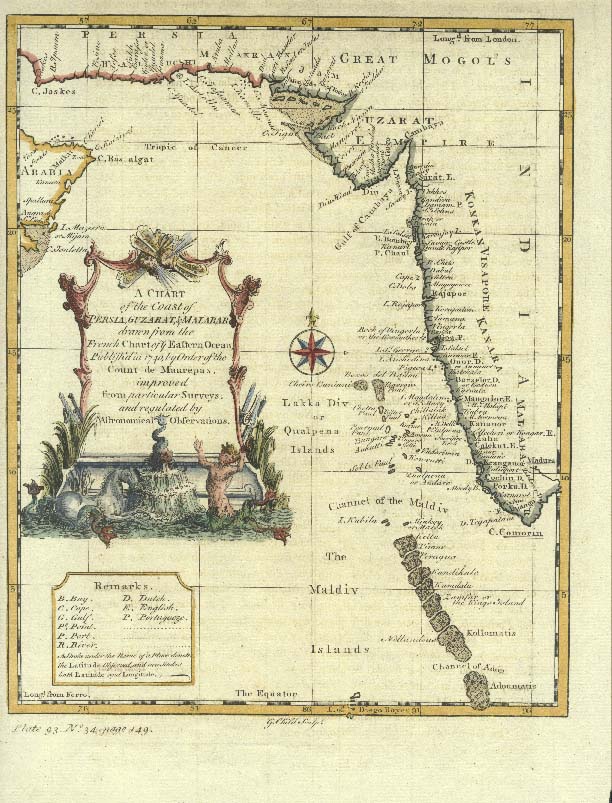
1258 and Calicut

Posted by Maddy Labels: ,

Most people will veer off in different directions seeing this title. In fact one of the possible linkages that I will introduce is somewhat new and requires to be studied in depth by those interested. As you will see, stars crossed for some in different parts of the world, they proved to be better aligned for Calicut and its people.

The year 1258 was to prove to be of great significance to Calicut. In fact as the Mongol descendants of Genghis Khan roared into Baghdad on their horsebacks, the city of Calicut was perhaps not even well formed. The city was yet to be completed on well understood Vasthu principles. But as you all know, it would soon imprint its name on the world map, thanks to a number of enterprising Karimi traders and the need for spices around the world, not to forget many other lasting contributions by way of the spice trade with the East and the West.

Trade in Malabar and the areas south of Malabar, focusing on ports such as Muziris, Quilon and many others were originally controlled by some guilds notably Anjuvannam and Manigram. The former was composed mainly of Jewish and Christian traders whereas the latter was run by the Chettys of the Coromandel. The western traders had yet to make a large impact, but they were already established at Quilon and Muziris. Soon enough it had moved upwards to Calicut and a number of surrounding satellite ports following the move of the Nediyirippu swaroopam out of inland Ernad and their settling down at Calicut after a tussle with the Porlathiri’s (a story which I recounted earlier). The Zamorin rule quickly stabilized and he soon became the suzerain of the mid Malabar region. Why did the traders flock to the new port city during that time?

Interested readers might come up with questions about the Kulashekara’s of Mahodayapuram. Whatever happened to the famed Muziris and other related ports? How did the Kulashekara Empire disintegrate? Some years back, we looked at the story of the Cheraman Perumal and his leaving for Mecca. Whether he did that or move elsewhere like the mythical Kailasam is mired in historic myths and is not clear in anyway, but we will embark on collecting more details eventually, but before all that, let us stay on the topic of the formation of mercantile Calicut.

Well originally, the trade routed stretched from the Persian Gulf to Quilon and the key control was exerted from Baghdad. Once Baghdad fell to the Mongols in 1258, the route heads changed to the Red Sea ports and were controlled out of Mamluk ruled Egypt. The Karimi merchants of Egypt (including the Genizah Jews) gained ascendance and they favored the Malabar ports, paramount among them being Calicut due to the strong and just rule of the Calicut Zamorin and the open trade facilities provided in the region by him. Equally important was the military strength the Zamorin could marshal to keep any usurpers at bay and the resulting stability to business this produced. Calicut as I mentioned in my Pragati article on medieval trade, was a medieval trade hub and soon the trading communities comprised the Karimis, Maghribhis, Bohras, Chettis and Vanias to name a few. Thus the importance of Calicut started with the decline of international trade emanating from the Persian Gulf after the Mongol conquest of Abbassid Baghdad (1258) and the concentration of the Al-Karimi at the port of Calicut.

Now let us move southwards and go to the events centered on the formation of the Cochin harbor, the island of Vypeen and what is called the Puthu Vaippu era. Vypeen (the Portuguese form of writing Vaippu) itself lying between Cochin and Kodungallur (Cranganore) is sixteen miles in length, three miles broad and was known as Puthu Vaippu. The various geographical changes which affected Cochin, Vypeen and Cranganore were apparently commemorated by what is called the Puthu Vaippu Era. Vypeen, also known as Puthu Vaippu (Puthu Vaipu, i.e. new formation or new deposit) and the people there commence an era from the date of its formation A.D. 1341. This phenomenon was responsible for opening a new harbor which is what we know as today's Kochi (Cochin) harbor loosely meaning Kochazhi or ‘small harbor’ (Kochangadi of the Jews is the place where the Jews first resided - clarified by Thoufeek).  As events played out, this new harbor would soon outdo Calicut, but it would take all of 500 plus years and the support of many a foreign nation, notable the Portuguese, the Dutch and the English, not to mention the internal rivalries between the Zamorin and the Cochin king which as we saw, these nation cleverly manipulated for their own good.

Back to 1341. How did this event take place? The north bank of the Cochin River is formed by the island of Vypeen, which is said to have been created in 1341 A.D. by a cyclone or earthquake. It is said that the island was formed by the deposits of silt brought down by the rivers discharging into the backwaters and sea. Elsewhere, it is said that the Periyar river mouth silted destroying the access from the sea and thus finishing off the trade which the port of Muziris conducted with many a country for eons. The Cochin royal family or the Perumbadapu swaroopm moved from Vanneri to Cochin with the support and permission of the Paliyath family, the real landlords of the region. Perhaps they to saw the opportunity of increasing seaborne trade, spilling out of Muziris and now suffering from the recent events. Some accounts even mention that there occurred a severe earthquake along the Kerala coast in 1341 due to which the Vypeen Island was raised above the sea level, and the Cochin bar mouth was formed. What could have been a more supportable fact?

Let me now veer away to some 100 years before the 1341 event and talk about a massive tropical volcanic eruption which shook the world in 1258. In fact, I was discussing the 1258 eruption and the British mass graves with esteemed blogger Nick Balmer and he asked a simple question as to what would have happened in Malabar at that very same time. This will perhaps be an attempted answer.

January 1258 – One of the largest volcanic eruptions of the Holocene epoch occurred, possibly from a 
tropical location such as Mount Rinjani, Indonesia, El Chichón, Mexico; or Quilotoa, Ecuador. Observed effects of the eruption include the following anecdotal accounts: dry fog in France; lunar eclipses in England; severe winter in Europe; a "harsh" spring in Northern Iceland; famine in England, Western Germany, France, and Northern Italy; and pestilence in London, parts of France, Austria, Iraq, Syria, and South-East Turkey. This event is still being studied and the previous locations as well as locations in Saudi Arabia were finally discounted and the present focus is at the Rinjani Volcano of Indonesia.The eruption was so big that it injected somewhere between 190-270 megatons of ash and other material into the atmosphere (or 300 and 600 megatons of sulfuric acid). This was one of the possible triggers to the little ice age.

The Muziris port reportedly silted up as the result of unusual flooding by the Periyar River in 1341 AD. What if the Tsunami of 1258 started the issue of the silting?? To check the veracity of all this we have to see how the mention of the 1341 flooding get substantiated.

A non-academic account mentions that geographical layout Cochin City as we know it today traces back to the great flood of 1341 CE, caused by a tsunami triggered by a gigantic undersea volcanic eruption (but is not referenced to any source). During this year the river Periyar flooded like never before (or after), and changed its course. The hitherto flourishing port of Cranganore silted up from the mud up-stream. Only that no such recorded volcanic eruption event took place in 1341. Perhaps there was a strong Pacific Rim earthquake and we will get to that soon.

How did 1341 become important in the annals of history? We know that the first synagogue was built by Jospeh Azar in 1344 after the Jews from Shingly arrived at Kochangadi. Many a book mentions the great Periyar flood of 1341. WW Hunter is the first to detail the connection between the flood and the Puthu vaippu era. He states ‘The date at which this island was formed by the action of the sea and river, a. d. 134 1, is sometimes used in deeds as the commencement of an era styled Puttuveppu (new deposit)’. Others mentioned ‘the floods in the river Periyar in 1341 choked the mouth of the Cranganore harbor and rendered it useless for purposes of trade’. Padmanabha Menon mentions this as an extraordinary flood which opened up an estuary. As you delve into the usual Malabar history sources you see mentions that the 1341 year had record monsoons resulting in the Periyar flood and the silting up of the harbor mouth.

The following extract is from Dr. Thomson's paper on the Geology of Bombay (Mad. Lit. Trans.) It bears directly on the subject, and carries us three centuries further back: I have not considered the description specific enough for the text, but fee no reason to doubt the authenticity of the fact:—" The Island of Vaypi, on the north side of Cochin, rose from out the sea in the year 1341: the date of its appearance is determined by its having given rise to a new era amongst the Hindoos, called Puduvepa, or the new introduction. Contemporaneously with the appearance of Vaypi the waters, which during the rainy season were discharged from the ghaut, broke through the banks of the channel which usually confined them, overwhelmed a village, and formed a lake and harbour so spacious that light ships could anchor where dry land formerly prevailed."—Bartolome's Voyage to the East Indies. Borne 1796 ; Translation 1800.

The geographic Survey of India Vol 132 mentions a severe earthquake in 1341 resulting in the floods. Bilhm’s paper on Earthquakes in India mentions thus - A storm near Cochin in 1341 caused an island to emerge, but inspection suggests this to be a common accretional feature of storms along the Malabar Coast (Bendick and Bilham, 1999).

Rajendran, Biju, Sreekumari and Kusala in their fine paper on Malabar earthquakes studies this in more detail and discounts the earthquake – Quoting them

Another glaring example is the oft-quoted Malabar Coast earthquake of A.D. 1341. The report by Ballore (1900), one of the earliest studies on seismic phenomenon in British India treats this event as “a severe earthquake” as a consequence of which Vypin ‘Island’, (referred in Newbold’s report as Waypi), was raised above the sea level. Newbold (1846) considers the 1341 catastrophe as a large storm, which brought about remarkable changes in the vicinity of Cochin,including the emergence of the new sand bar known by the name Vypin (see also Bendick and Bilham, 1999, for details),and consequently a new harbour. The critical evaluation of the available data suggests that the 1341 event was not an earthquake but a storm.

We have obtained independent evidence of flooding in the Bharathapuzha River basin that occurred sometime between A.D. 1269 and 1396. This probably represents the 1341 flood – a severe event that probably affected many river basins of Kerala.

Now we move eastwards to the 1258 Indonesian volcanic eruption suspect. We do know that there is a connection between earthquakes and volcanic eruptions. What if the 1258 eruption followed a massive undersea earthquake in the Pacific Rim? An earthquake which created the eruption could create a bad tsunami as we witnessed recently, the effects of which were felt with some severity on the South Malabar coastline. We know that such massive eruptions, especially near the sea level produce large Tsunamis. The question is if the Rinjani eruption produced a cataclysmic tsunami. Quite doubtful and occurring a hundred years before the recorded facts in Cochin. So let us move to Cochin and discount any effect of the eruption on the formation of Cochin

While we see some mention of a massive earthquake off Japan in 1341 we have no real details at hand. Perhaps that caused the tsunami which resulted in the silting events at Muziris and the formation of Vypeen, but then again we can conclude that there was no direct impact of the 1258 volcanic event on Malabar.

VKR Menon (History of medieval Kerala) is a person who studied the Putu vaipu Era and wrote about it. He believes that the start of an era in 1341 has nothing to do with the purported overnight formation of an island, but is related to the founding of the Vijayanagar dynasty instead. He concludes that in 1341, the Cochin raja entered into a treaty with Harihara of Vijayanagar (to keep away the Tughlaqs) and in order to pay the tribute imposed taxes for this purpose on his subjects, all for the first time in 1341. Therefore Pudu Viapu means ‘New foundation’, supporting this theory. What this alludes to is that the island was formed over time, that the silting occurred over time, and that the cause is not necessarily one severe event in 1341. He also makes it clear that such a disastrous calamity was never explicitly mentioned in temple records, or by Ibn Batuta or Feristah and so did not possibly occur.

Nevertheless, let us get back to 1258, the year without a summer. What impact did it have in Europe and the rest of the world? RB Stothers provides a summary of general effects as follows in his interesting paper, He explains - Tropical eruptions in modern times generate globe-girdling stratospheric aerosol veils (dry fogs) that persist for several years, slowly settling out. The aerosols block some of the incoming sunlight and alter atmospheric circulation patterns, and by these means cool much of the Earth’s surface. This temporary disturbance of the world’s climate, often involving increased precipitation, can adversely affect agriculture. Consequences may be a greater human susceptibility to famine and disease, leading ultimately to social and political unrest.

As an example in Britain -  During the four-year period 1258–1261, only the year 1258 fits this criterion of universality. The heavy summer and autumn rains in 1257 and 1258 ruined crops throughout England, western Germany, France, and northern Italy. Severe famine is explicitly attested in many localities, and can also be inferred elsewhere from the high prices of staple agricultural commodities. England was especially hard hit. Famine in the countryside drove thousands of villagers into London, where many of them perished from hunger. Richard of Cornwall, the king of Germany, was able to ship some grain from Germany and Holland into London to alleviate the distress of the poor who could afford to buy (Matthew Paris, 1259). The price of food throughout England rose, nonetheless, and eventually specie itself became in short supply, having been already depleted by heavy tax exactions at the hands of both the church and state. France had a similar situation. In England, the cold winter and spring of 1258 produced outbreaks of murrain in sheep, as well as various famine diseases within the human population, especially among the numerous urban paupers.

Soon the mass burials that were resorted to became the norm and until the 1258 eruption mystery was solved, historians accounted it to a plague epidemic, calling these burial pits as the plague pits which numbered upto some 18000 skeletons at Spitalfields.

But interestingly, the problem was equally severe in the Middle East. Stothers explains - Finally, in the Middle East the historian Bar-Hebraeus (1286) reports a famine during 1258 in the general region of Iraq, Syria, and southeastern Turkey. Nevertheless, this disaster may have been just one of the side effects of the Mongol conquest of Baghdad in that year, which brought about the end of the Abbasid caliphate. But what else other than the 1258 eruption could explain the arrival of pestilence in the Middle east. In the Middle East, there was also reported a great pestilence in 1258, affecting Iraq, Syria, and southeastern Turkey (Bar-Hebraeus, 1286). It was called ‘plague’ by the 14th century Syrian chronicler Abu l-Fid ¯ a’ (Dols, 1977), and was said to have been especially severe in Damascus; it is also mentioned by the 15th century Egyptian historian al-Maqrızı (von Kremer, 1880). Because the Middle East has been historically prone to epidemics of bubonic plague, possibly that is what it was.

Anyway the habitants of Baghdad were soon to see the ‘scourge of god’ or the khans of the Mongol. At around the same time as the eruption occurred in Indonesia, the Mongols led by Hulagu Khan swooped down astride their swift horses into Baghdad, sacking the city and pillaging it, to bring to an end the Islamic golden age. That Mongke, Hulagu’s brother planned this siege carefully since 1257 is clear, and the resulting massacre was so macabre that Hulagu himself moved his camp upwind of the city, due to the stench of decay from the ruined Baghdad. Tigris waters were red from the blood of the massacre, and the city of the Arabian nights was no more one.

"They swept through the city like hungry falcons attacking a flight of doves, or like raging wolves attacking sheep, with loose reins and shameless faces, murdering and spreading terror...beds and cushions made of gold and encrusted with jewels were cut to pieces with knives and torn to shreds. Those hiding behind the veils of the great Harem were dragged...through the streets and alleys, each of them becoming a plaything...as the population died at the hands of the invaders." (Abdullah Wassaf as cited by David Morgan)

The Ayyubid head An-Nasir Yusuf at Damascus then sent a delegation to Hulegu asking for peace. Hulegu refused to accept the terms and so An-Nasir Yusuf called upon Cairo for aid. As it happened, this plea coincided with a successful coup by the Cairo-based Mamluks against the remaining symbolic Ayyubid leadership in Egypt. The Bahriyya Mamluks were soon in power in Cairo which became more prominent as a result and Cairo remained a Mamluk capital thereafter. As KM Mathew explains - Eventually the entrepreneurial activities of the Arab/Al-Karimi traders of Cairo, who were commercial allies of the Mamluk Egypt and gradually settled down in the city for the furtherance of their trade, favored the rise of Calicut as a prominent exchange center in the Indian Ocean region.

In summary, the events in the Middle East of course was a reason for the emergence and resulting maintenance of the trade links with Calicut. The Periyar floods that occurred around the same time resulted in the necessity of the move of trading ports northward from Muziris to a more stable area geographically and politically, thus resulting in the choice of Calicut. As this was happening, I would come to the conjecture that the worrisome situation in Europe and the Middle East owing to the 1258 volcanic eruption, resulted in increased export volumes and profitability, speeding up the maritime passages and numbers, which at one time were forays by smaller groups of Jewish traders like Abraham ben Yiju.

As you can imagine, Europe was in recovery mode - coming out of the horrible effects of the 1258 dry fog. This recovery needed larger amounts of spices, not just as a possible cure for pestilence but also to enhance preservation of smaller supplies of meat.

Soon larger convoys of merchant ships sailed the oceans, men and states became all the more richer, wars were fought and soon enough after Europe had recovered, brought in even bigger and greedier players like the Chinese, Portuguese, Danes and the English to the equation. It was as if nature itself had deemed that trade had to be conducted where the winds stopped and as we know, the monsoon winds stop at Malabar. The little spot on the world map named Calicut thus became the spice capital of the world. Soon the city and its trade areas were  teeming with Tamil Chettiars, Gujarati Vanias, Tunisian Jews, Karimi traders, Maghrabhi Arabs and Jews, Italians, Turks, Persians, African slaves, Chinese, various half castes, Malabar Moplahs, black Jews and Syrian Christians.

Interesting eh? How events from a particular year had so much to do with the people of a distant land- a place somewhat equidistant between the location of the catastrophic event and the locales teeming with sufferers, diametrically across! Mt Rinjani on Lombak Island these days is a picturesque site, and some adventurous visitors do climb up the mountain to take a look at this sleeping dragon. What next??

But then again these are perhaps the curious ways of the world or the mysterious ways by which it works…

References
Maritime Malabar and the Europeans 1500-1962 - edited by K. S. Mathew
Climatic and Demographic consequences of the massive volcanic eruption of 1258 – Richard B Stothers
Reassessing the Earthquake Hazard in Kerala Based on the Historical and Current Seismicity - C.P. Rajendran, Biju John, K.Sreekumari and Kusala Rajendran
History of Medieval Kerala – VKR Menon

Arnos Pathiri (Fr. John Earnest Hanxleden) in Malabar

Posted by Maddy Labels: , ,

I started out on this subject some months ago, but drifted away into other topics. In the meantime, I got some great research material on the subject from my friend Bernard and finally after months of procrastination, got a little deeper into this subject covering yet another person who came to Malabar as a missionary and who then decided that to live here and to complete his mission, he had to learn the life, ways and the language of people so alien to his culture. In fact so deep did he get to it that he even created the very first dictionary of the Sanskrit Malayalam language in the early 18th century!

Some years ago I wrote about Robert Nobili and his contributions. He was certainly not the first for Beschi and Paulinus had worked with Sanskrit and had written some lengths of prose in it, with or without assistance. However the works of the person we will get to know in the succeeding paragraphs are still fondly remembered by a cross section of humanity living in Kerala. They are the works of Arnos Pathiri or Johan Ernst Hanxleden, a person of German origin.

How did he get to India and carry on with his mission? It all started in 1699 for the 18 year old Hanxleden, after his completion of philosophical studies. Fr William Weber was at that time touring Germany to find the right candidates for the new Jesuit mission planned at Calicut.  Weber was impressed with the earnest man, justly named Earnest and took him for further tests at Augsburg where he was provisionally accepted into the Society of Jesus. Little were the missionaries to know how difficult the days ahead were going to be. They set out for India in Oct 1699 by ship to Turkey, then by land through Persia and by sea from Bandar Abbas to India, all of which took a full year. His mentor Weber and a companion Fr Mayer died during this voyage and Kaspar Schillinger a barber was the only one left with Earnest when they reached Surat in Dec 1700. Hanxleden moved to Goa shortly thereafter and we come to know of many of these events from the diaries of Schillinger.


At Goa, Hanxleden joined the St Paul’s college for Jesuits and after completing his novitiate (period of training and preparation that a member of a religious institute has to undergo prior to taking vows, in order to discern whether he is indeed called to the religious life) proceeded to Kerala, the place he was destined to serve at. Proceeding to Ambazhakaad, he got formally ordained and started out with religious teaching of his subjects. But his real interest was language and literature and he soon moved to Pazhur, with an intention to learn Sanskrit.

During that period there existed a famous Sanskrit college in Trissur. That he learned Sanskrit at Trichur is clear and it was a center for such studies at that time. The Chovvannoor "Sabha Madam" was the seat for such studies, but Ernst had no admission there as a non-Brahmin. Somehow a couple of Brahmins were enticed with presents and brought to Pazhur and from them Hanxleden learnt Sanskrit and Malayalam off and on for a long period of 10 years. The Brahmins were perhaps named Kunjan and Krishnan according to PJ Thomas.

Hanxleden was a short and sickly person, and apparently inarticulate in speech, but was a master with his pen. We know a little bit of his life actually from Fr Paulinus’s (the famous Carmelite scholar) writings.By1708 he had associated with Archbishop Ribeiro of Cranganore and started his missionary work in the Trissur area and Calicut and by 1712 he had retired to Veilur. Around 1729 he moved back to Ambazhakad and Pazhur and in 1732, he breathed his last at Pazhur. Riberiro himself had a lot of problems establishing himself in Cranganore, for that was in Dutch hands at that time and so he had to operate from the Zamorin controlled Puthenchira area.

Various factions were then in existence and the St Thomas Christians were in the grip of the Padroado Propaganda rivalry. Interestingly the Propaganda supporter Ernest was still accepted by the Padroado Portuguese at Goa! At that point in time, the Jesuits under the Padroado and the Carmelites under the Propaganda were vying with each other for the control of the Christians of Kerala. Hanxleden naturally took the side of the Jesuit Archbishop of Cranganore and worked as his secretary. Hanxelden’s task was to wean the Malayalee Christians to the Ribeiro Catholic fold. To make matters worse, an East Syrian - Mar Gabriel landed on the scene. But let us get to the rivalry so as to understand it better.

When the Portuguese were the principal European colonizers in India their King accepted the burden of supporting missions in the East and received a Padroado monopoly or the patronage of these missions. As time passed and the power of the Portuguese in India was shaken, this arrangement became no longer suitable and the Dutch refused to tolerate a Portuguese priest within the Dutch territories and their various spheres of influence in India. The papal Propaganda was therefore compelled to send to India, missionaries of nationalities other than Portuguese. The Portuguese resented this and even disputed the power of the Pope. This dispute lasted for more than two hundred years and as historians detail, did much harm to Christian missions in India.

Visscher, in his Letters from Malabar, says:— "At present there are two Bishops, Mar Gabriel, and Mar Thomas, who do not agree well together, as each of them, especially the latter, claims authority over the other. Mar Gabriel, a white man and sent hither from Bagdad, is aged and venerable in appearance, and dresses nearly in the same fashion as the Jewish priests of old, wearing a cap fashioned like a turban and a long white beard. He is courteous and God-fearing and not at all addicted to extravagant pomp. Bound his neck he wears a golden crucifix. He lives with the utmost sobriety, abstaining from animal food. He holds the Nestorian doctrine respecting the union of the two natures in our Saviour's person. Mar Thomas, the other bishop is a Native of Malabar. He is dull and slow of understanding. He lives in great state; and when he came into the city to visit the Commandeur, he was attended by a number of soldiers bearing swords and shields, in imitation of the Princes of Malabar. He wears on his head a silken cowle, embroidered with crosses, in form much resembling that of the Carmelites. He is a weak minded rhodomontader and boasted greatly to us of being a Eutychian in his creed, accusing the rival bishop of heresy. According to his own account, he has forty-five churches under his authority the remainder adhering to Bishop Gabriel."

It appears Hanxelden was not too successful in his evangelization efforts. He moved on to Chetuva, Muthedath, then to Calicut finally returned to Velur where he built a chapel and took up residence and eventually started writing. Hanxleden, then became the vicar of St. Francis Forane Church Velur, which, according to many, was established by him. As per the legends it was while here that some hostile fellow Christians tried to assassinate Hanxleden. He was believed to have been tipped-off by a woman in the area about the plot to kill him. Ernst made a dummy of himself and positioned it on his cot with the priestly gown on. The assailants hacked the dummy and fled thinking that they had actually killed Arnos Padre, who was in fact clandestinely watching the whole scene. He, however, decided to leave Velur that night itself and spent his remaining years of life at a church in Pazhuvil. His cot can still be found at the church there as reported in the Hindu.

Let us now take a look at Ernst's dabbles with literature and lexicology. He wrote in Latin grammar text covering Sanskrit on the lines of Kerala’s Sanskrit grammar text called Sidha-Rupam, and as a companion volume, he added a Sanskrit-Portuguese Dictionary. He was a great scholar in Malayalam and also composed a dictionary and a grammar in that language. Father Johann Ernst Hanxleden of the Malabar Mission was, as far as we know, the first European to write a grammar of Sanskrit(It is likely that Roth, who died at Agra in 1668, had compiled a Sanskrit grammar before Hanxleden: it has never been found, although it could perhaps be recovered in the Vatican archives). Vezdin Paulinus brought back Hanxleden's manuscript covering the Sanskrit grammar to Rome and made use of part of it, in fact Paulinus pronounced Ernst as the best Sanskrit scholar of his time.

By March 1732, he was gone. Fr. Hanxleden, apparently died of a snake bite at Pazhuvil in March 1732.His name is held in benediction among the Keralites mainly for his Puthenpana (a Life of Christ in 10,000 couplets and Parvangal (Treatises on the four last things).

The Puthenpana is one of the earliest Malayalam poems scripted around a Christian theme and is held dear by the Malayali christians The `padams' (or cantos) of `Puthenpana' are recited by Kerala Christians on various occasions. It has 14 `padams'. The 12th padam, portraying the lament of Virgin Mary at the Crucifixion and death of Jesus, is considered to be the most important of them all. The other padams centre on Fall of Man (second), Annunciation (fourth), Nativity (fifth), Sermon on the Mount (seventh), Last Supper (10th), trial and Crucifixion (11th), Resurrection (13th) and Ascension (14th). The poem is believed to have been composed just before Arnos’s death or the preceding year.

Hal and Vielle explain the literary work of Ernst - Hanxleden copied, introduced and annotated several manuscripts of Sanskrit lexical and grammatical works. He also commented on Sanskrit poetical works, esp. the Yudhiṣṭhiravijaya (Paulinus 1799: 6). Moreover, he authored grammars and dictionaries of Malayaḷam and Sanskrit. Several manuscripts are now preserved in different European libraries (although a complete inventory is still to be made). Hanxleden composed two dictionaries. A (high or Sanskritized) Malayaḷam - Portuguese dictionary which is the ‘Hanxleden’s dictionary’ referred to by Paulinus. Apart from his Sanskrit grammar Hanxleden also authored a Malayaḷam grammar text, a copy of which is preserved in the Carmelite Archives in Rome and remains to be published. Remarkably, Hanxleden chose Latin as the metalanguage for his Sanskrit grammar, whereas he uses Portuguese for his (lexical and grammatical) work related to Malayaḷam language. While the Grammatica Grandonica based on the Sidharupam deals with Sanskrit, his Arte Malavar is a Malayalam grammar work compiled in Portuguese. However I am not so sure yet if it was a revision of the original done by Fr Henriques working on the Parava coastline. And then again, I will get to the evolution of Malayalam, another day.


‘According to the traditional method of studying Sanskrit in Kerala, pupils have to study Siddharūpa containing all the representative forms of declensions and conjugations, along with Bālaprabodhana [by Putumana Nampūtiri, which deals with all preliminary grammatical rules with examples in simple Sanskrit mixed with Malayāḷam] and Samāsacakra [of unknown authorship, general treatment of compounds].’ As a missionary working in the South-West of India (Kerala), Hanxleden wrote Sanskrit in Grantha Malayāḷam characters.

Paulinus undoubtedly introduced Hanxelden and his work, but also suppressed it to a certain extent. His own most precious manuscript was the Sanskrit grammar written by Johann Ernst Hanxleden. When it was suggested that he had plagiarized Hanxleden’s work, he responded in his De manuscriptis codicibus indicis printed in Vienna in 1799, that they both used the same Sanskrit sources. He said - ‘Hanxleden far surpassed all other foreign missionaries in elegance of poetic composition, in the profound knowledge of Sanskrit. The incredible diligence he showed in pursuing studies and in writing books which are widely admired. John Ernest was most proficient in Sanskrit; no European scholar was ever equal to him’.

Hal and Vielle continue - We could cautiously conclude that Paulinus had always intended to publish a Sanskrit grammar, but that after his return he found out that Hanxleden had done a better job. This being the case, he decided to merge Hanxleden’s grammar and his own versions into one grammar, in which he probably deliberately failed to mention the name of his ‘co-author’ who authored the very bulk of the book’s contents.

Padre Ernst or the Malayalee Arnos Padiri is indeed the father of the Christian literature of Kerala having composed the Puthen Pana (the ‘New Ballad’ on the life of Jesus Christ), which is still received enthusiastically by readers even today, after almost three centuries. His other poetic works include Genoa Parvam, Ummade Dukham and Chathurandyam, and a Malayalam version of the Latin hymn Ave Maris Stella.

References

Christianity in Travancore - Gordon Thomson MacKenzie
An unknown oriental scholar – Ernst Hanxleden – A Mathias Mundadan
Grammatica Grandonica - The Sanskrit Grammar of Johann Ernst Hanxleden S.J. (1681–1732) Introduced and edited by Toon Van Hal & Christophe Vielle

The Padroado propaganda rivalry

BerchmanKodakal explains - The Padroado (Portuguese) or "patronage" (English), was an arrangement between the Holy See and the kingdom (and later republic) of Portugal, affirmed by a series of treaties, by which the Vatican delegated to the kings of Spain and Portugal the administration of the local Churches. The partition of missionary zones between Spain and Portugal led to some bitter rivalry. Wherever the two nations met, as for example in East Asia, there was open hostility between the Spanish Patronato and the Portuguese Padroado. The missions were also tied to the government of kings who claimed rights and privileges that encroached upon the spiritual domain. Spanish and Portuguese missionaries were often regarded by the local people as mere agents of white penetration rather than as harbingers of Christ, so much so that in India conversion was described as "turning Parangi".One of the steps the Propaganda envisaged to advance the cause of the missions independent of the colonial patronage was to promote indigenous vocations. The clergy who worked under the Padroado, even with the de Nobili Movement, were mostly foreigners. In the early decades recruitment of local vocations was not very much encouraged. So when Propaganda thought of starting an ecclesiastical unit under its full control in India, namely, the vicariate of Idalcan or Bijapur outside the Goan jurisdiction, the Congregation chose Matteo de Castro, a Brahmin Christian of Goa. The relations between Padroado and the Propaganda became tense during the Matteo de Castro episode and continued to be so for a long time. An attempt to resolve these tensions resulted in the establishment of the double jurisdiction system, whereby churches and clergy were established by the Portuguese Padroado separate from Propaganda. This unfortunate system lasted until 1928, although the Padroado system was previously annulled by the Pope Gregory XVI in the early 19th century, but restored with the Concordat of 1886.

Thomas Koonammakkal in his fine paper ELEMENTS OF SYRO-MALABAR HISTORY states - Troubles for Nazranis began to abound under the Carmelites and Propaganda. A series of reunion efforts between Puthenkur and Pazhayakur were thwarted by Carmelite missionaries. In 1778 the Pazhayakur sent Kariyattil Yausep Malpan and Paremmakkal Thoma Kathanar to Lisbon and Rome for reunion of Puthenkur. Their miseries, adventures and achievements are recorded in Varthamanapusthakam written in 1786. Kariyattil was consecrated as archbishop in 1783. But he expired in Goa under dubious circumstances and foul play. To pacify the anger of Nazranis, Paremmakkal was tolerated as Administrator. These two heroic and saintly sons of Pazhayakur wrote a glorious chapter towards reunion and identity of the Church. A noble layman Thachil Mathu Tharakan did his best for Nazrani reunion. Though a reunion took place in 1799 it fell apart due to the apathy and intrigues. (If you recall I introduced Mathu Tharakan in the Veluthampi story)

To see pictures of the Velur church, check out this link.

To listen to Puthenpana – click this link

Who is Toon Van Haal? In Nov 2010, the Grammatica Grandonica was rediscovered in an Italian monastery after having been lost for many decades. Authored in the early 1700's by the German Jesuit Johann Ernest Hanxleden, the Sanskrit grammer text was found by the Belgian scholar Toon Van Hal of the Center for the History of Linguistics, K.U. Leuven, the Katholieke University, Netherlands. Toon Van Hal rediscovered the lost manuscript by retracing the previous inquiries of Luxemburg scholar Jean-Claude Muller in and around Rome, uncovering it at the Convento di San Silvestro, a Carmelite monastery in Montecomprati, Lazio, Italy.

Grammatica Grandonica is the earliest known missionary grammar on the Sanskrit language and had a great deal of influence on the emergence of the first published Sanskrit grammar ever printed in Europe, in 1790. This first published grammar, by the Carmelite missionary Paulinus a Sancto Bartholomaeo, is thought to have been taken directly from Hanxleden's original work.

The Raja in Ravi Varma

Posted by Maddy Labels: , ,


Raja Ravi Varma - The painter’s ancestry and Calicut, a brief study

Some years ago, Calicut Heritage Forum wrote about theinvolvement of Raja Ravi Varma in the Calicut soap factory. CHF stated - Calicut has another legitimate claim on the works of Raja Ravi Varma - but thereby hangs a tale! In 1904, the Viceroy, Lord Curzon conferred on the great artist the title Kaiser-i-Hind on behalf of His Majesty the King Emperor. The citation mentioned the title, 'Raja' for the first time against the name of Ravi Varma. The Maharaja of Travancore, Sri Moolam Thirunal objected to this 'usurpation'. Ravi Varma, however, defended the title by claiming that his ancestors belonged to the royal family of Beypore, near Calicut.

Anyhow, he continued to use the title 'Raja', since then and both the grand daughters of Raja Ravi Varma were later adopted by the Travancore palace with one of them becoming the mother of the next Maharaja, Chitira Thirunal Balarama Varma!

Ravi Varma, also a businessman knew that the title of Raja would help him when hobnobbing the gentry in North India and Europe, as well as his eventual patron the Gaekwads of Baroda and he found a way to get that with some amount of legitimacy. Let’s first try to figure out how he defended the claim. He told the detractors that his ancestors of the Beypore house of Malabar had the title of Raja, and if that were not sufficient, he could adopt part of his uncle’s (who was also his traveling partner and secretary) name which was Raja Raja Varma.

Ravi Varma actually has yet another interesting relation to the environs around Calicut, that of stopping by in 1870 to execute his first paid commission at Chalappuram, a place I grew up in - the portrait of Sub Judge KP Krishna Menon’s family (a not so flattering piece according to art critics - pictured here), the father in law of Congressman Sir C Sankaran Nair. But that was not the discussion, let us get back to the ancestry of Ravi Varma and for that you to have get a working knowledge of the ancient area called Parappanad and the Parappanad kovilakoms.

The Keralolpatti mentions the seventeen nadu’s and lists them as Tulunad, Kolattunad, Polanad, Kurumbranad, Puravalinad, Eranad, Parappanad, Valluvanad, Ravananad, Vettattunad, Tirumanasserinad, Perumpatappunad, Neduganad, Venganad. In the writings of the Portuguese and Dutch the kovilakoms are called Pappukoil and Repoecoil, in other words, Parppucoil ruling over Beypore and Pappucoil ruling over Parapanangady.  Parapannangadi was termed at times as Purparangari in English accounts. 

Nerumkaitakkotta, near Kadalundi, is incidentally, the ancestral abode of the Parappanad Raja and their family deity (called Paradevata) was the deity of this temple. Another interesting fact is that the Mahadeva Kovil temple of Beypore, south of Calicut, in both design and construction is said to be a copy of a double-roofed Nepalese temple. The various references below point to the connections between the Kolathu Swarupam and the Venad families at Kilimanoor and Anathapuram and their main points of connection from the Parappanad Kovilakom.

In 1425 or thereabout, the areas below, divided broadly into Northern Parappanad (Beypore kingdom) and Southern Parappanad (Parappur Swarupam). Northern Parappanad (Beypore kingdom or Karippa Kovilakam) included Panniyankara, Beypore and Cheruvannur of Kozhikkode Taluk. Southern Parappanad included parts of Tirur Taluk and the town Parappanangadi. Parappanad Kingdom went on to become dependents of the Zamorins of Calicut. During the Portuguese conflicts the Parappanad raja’s nairs fought for the Zamorin. In fact when the Portuguese fort at Chaliyam was captured by the Zamorin, it was turned over to the Parappanad Raja. But during Tipu’s charge, the reigning Raja was forcibly converted by Tipu and circumcised. In the middle of 18th century, the royal families of these kingdoms found refuge Travancore during to the invasion of the Mysore Sultans. The Haripad family in the Travancore region, to which the famous scholar and poet Kerala Varma Valia Koil Tampuran belonged, was originally set up by the members of the Parappanad family who migrated there. The palace remnants were as I understand, located in the Naduva desom of Parappanangadi village.

Ravi Varma the painter, actually claimed lineage to the Tattari Kovilakom of Parappanad. Now I had mentioned the Zamorin’s vassals at Parappanad while talking about the Sha-mi-ti mystery some months ago. So before the Zamorin acquired suzerainty of the Beypore and Parappanagadi region, who were the regional feudal lords or Thampurans? Originally there was just the Parappanad Raja, and later there came into existence two main branches of this family, one settled at Beypore near Calicut and another at Parappanadu near Tirur (the present Parappanangadi). As the Gazetteers explain, the Beypore amsam itself had four Kovilakams called - Manayatt kovilakam, Nediyal kovilakom, Puthiya kovilakom and the Panangat kovilakom belonging to the family of the Beypore branch of the Parappanad family. So we have North and South Parappanad factions to start with, branching off the Parappur lordship. The North faction was further split into Beypore, Cheruvannor and Panniyankara Kovilakoms. Considering that Ravi Varma and his brother mentioned Beypore and the specific Manayyat location, let us for a moment assume he hailed from the forerunners of the present Manayyat kovilakom.

The Manayam rajas were from the erstwhile Thattari or Tattari kovilakom which was deserted when Tipu Sultan and his not so merry crew were making hay while the sun set and shone. We also note from historic renderings that the Parappanad branch known also as Aliyakot line was attacked by Hyder Ali during his invasion of Malabar in the latter half of the 18th century and Kunjikkutty Tampuratti, a female member of the branch, fled from Malabar to Travancore. Keralavarma Valiya Koyil Tampuran, or Kerala-Kalidasa as he is popularly known because of his translating the Sakuntala into Malayalam, belonged to the Parappanad royal family, and was born in Lakshmipuram palace at Carinanasseri. The famous Pazhassi Raja a member of the western branch of the Kottayam royal clan is also connected to the Parappanad Kovilakom and his lineage can be traced back to the Parappanad dynasty.

Raja Raja Varma in his diary states - Near this ‘Beypore’ Kovilakam or house is a temple of Vettakaruman or the Hunter God which it is said and acknowledged by its present owners, the Manayam Rajahs, once belonged to us of the Tattari Kovilakam house, by which our family was known.Based on all the above, I would assume that the original Parappanad rajas named their home the Tattari Kovilakom. It is from this home, which incidentally is further linked to the Kolathunad Rajas (Kolathiris) that various rulers (such as Marthanda Varma) and consorts as well as adoptees to the Travancore kingdom originated. Of course as we see, the ruling kind usually reserved the right on the name raja and took affront to another cousin using the title while a raja was in power and complained, but then again, Ravi Varma in reality had some self-projection in mind, as we note.Now let us study the relations between the Parappanad Kovilakoms and the Travancore royal family to see where and how Ravi Varma fits in.

TSM Vol 2 Nagam Aiya provides the following inputs - The Koil Tampurans, also known as Koil Pandalas form a small community made up of the descendants of the immigrant Kshatriya families from certain parts of Malabar lying north of Travancore and Cochin. There are now ten such families of Koil Tampurans in Travancore, viz., those of Kilimanur, Changanachery, Anantapuram, Pallam, Chemprol, Gramam, Paliyakkara, Karama and Vadakkematom. Of these, the Kilimanur Koil Tampurans were the earliest settlers in Travancore. It is not known definitely when they immigrated into the country. As already stated in the History chapter, four children, two princes and two Princesses, were adopted into the Royal Family in the reign of Umayamma Rani. These were the children of a Koil Tampuran of Tattari Kovilagam and belonged to the Futiapally (puthupalli) Kovilagam house, a branch of the Kolattunad Royal family. The elder of the two princesses having died soon after, the younger was married to a nephew of the same Koil Tampuran, her father, and as a result of this union Martanda Varma the Great was born in 881 M. e. (1705 A. D.,). Again in the reign of Unni Kerala Varma the elder of the two adopted princes, another lady was adopted and was given in marriage to one Ravi Varma Koil Tampuran, another member of the Tattari Kovilagam family. The issue of this marriage was Rama Varma the Kilavan Rajah who was born in 890m. E. (1723 A. D.) and ruled for 40 years. It was while this prince and his mother the elder Rani were being conveyed to Attingal from Trivandrum, under the escort of the Koil Tampuran that a strong party of the rebels who lay in ambush near Kazhakoottam rushed to attack the Royal party. The brave Koil Tampuran who got scent of the plot contrived to send the Rani and the prince in safety to Attingal, himself staying behind to give fight to the enemy. When the insurgents whose main object was the assassination of the Rani and the Prince found that their foul plot had been frustrated they fought furiously but were entirely routed by the Koil Tampuran and his followers. The success, however, was a dearly bought one, for the hero (the Koil Tampuran) received a deep sword-cut across his abdomen and succumbed to it. This was in the month of December 1727 A. D. (903 M. E.)In recognition of this act of heroism and self-sacrifice the estate of Kilimanur was granted as a free-hold to the descendants of the Koil Tampuran. The grant is enjoyed to this day. It was from this time that Kilimanur became the permanent residence of the Koil Tampurans of that name. All the sovereigns of Travancore from Unni Kerala Varma to Parvathi Bayi (Regent) who ruled for a period of more than one hundred years were the offspring of the Kilimanur Koil Tampurans—a fact of which they are so proud to this day.

Thurston provides additional insight of the relation with the Kolathunad and how successive families migrated to Travancore- The first family of Kolasvarupam Rajas immigrated into Travancore in the fifth century M.E. As the Travancore royal house then stood in need of adoption, arrangements were made through a Koil Tampuran of the Tattari Kovilakam to bring two princesses for adoption from Kolattunad, and the first family of Rajas, known as the Putupalli Kovilakam, settled at Kartikapalli. The family is now extinct, as the last member died in 1033 M.E. The next family that migrated was Cheriyakovilakam between 920 and 930, also invited for purposes of adoption. These latter lived at Aranmula. The third series of migrations were during the invasion of Malabar by Tipu Sultan in 964 M.E., when all the Rajas living at the time went over to Travancore, though, after the disturbance was over, many returned home. The Rajas of the Kolasvarupam began to settle permanently in the country, as they could claim relationship with the reigning sovereigns, and were treated by them with brotherly affection. There were only two branches at the beginning, namely, Pallikovilakam and Udayamangalam.

TSM Vol1 Nagam Aiya also provides this information - The Kilimanur Koil Tampurans are the natives of Parappanad in Malabar. Their northern home is known as "Tattari-kovilakam". The great Martanda Varma Maharajah, the founder of Travancore, and his illustrious nephew Rama Varma, were the issue of the alliance with Kilimanur—a circumstance of which the members of that family always speak with just pride, as the writer himself heard from the lips of one of its senior members, a venerable old gentleman of eighty summers.

To summarize, the lineage of Raja Ravi Varma can be traced to the Tattari Kovilagom of Parappanad. But all male members of such families cannot usually assume the title of Raja, nevertheless Ravi Varma did, like many others do these days. Not much of an issue, though at that time, it was a big matter, considered an affront to the reigning Raja.

References
Travancore State Manual – Nagam Aiya
Edgar Thurston. Castes and tribes of Southern India (Volume 4)
The Diaries of Raja Raja Varma


Raja Raja Varma Diaries – The Varma’s visit to Calicut (Acknowledged with thanks -Phalke factory)
Monday 12TH Jan 1903- We are the guests of the Raja of Puthya-Kovilakom one of the branches of the Beypure House. We are all relatives though we had separated from each other long long ago. The title of Koil Thampuran is peculiar to Travancore, here we are all Rajas. Beside Puthiya Kovilakom there are three other houses closely related to it, Manayam and Nadial and Panangad. The last house is unoccupied, its members having emigrated and settled in Travancore, Malabar being taken by Tipu. 

Tuesday - We breakfasted at Manayam this morning where there are two male members left now. Near this Kovilakam or house is a temple of Vettakaruman or the Hunter God which it is said and acknowledged by its present owners, the Manayam Rajahs, once belonged to us of the Tattari Kovilakam house, by which our family was known before we settled at Kilimanur in Travancore. We drove to Calicut this evening and are the guests of Ms KC. Shrivirasayan Raja at Chalapuram. 

Wednesday- This morning at 11 we paid a visit to Ms Pinhey the Collector and his wife. Mrs Pinhey is an amateur painter and she showed us many of her paintings and sketches. Some of them were very good indeed. At 4 p.m. Mr T.G. Vargese the Deputy Collector called on us and we requested him to help us in getting on the old accounts in the Huzur office and trace some of our lost property in the Ernand Taluq. He has promised us every help. At 6 p.m. we visited the Cosmopolitan club at the invitation of its members. The secretary of the Calicut Native Society were present to welcome us. We visited next the Putiya Kovilakom and the Railway Station and returned to our lodging.

Thursday - We left Calicut this morning and drove to Nadial where we were to breakfast with our relatives. In the afternoon we started on foot to Nerumkaith Kotta where there is an ancient temple of Sastha, our tutelary deity. The distance is about five or six miles and the way extremely bad. We had to cross two ferries and pass over a rugged hill. We reached the place at sunset. The temple stands on the side of a barren hill and has the appearance from below of a castle with stone walls.

Friday - On the top of the Hill stands another temple dedicated to Bhagavati or Goddess Kali with a solitary mango tree now in bloom to the north west of it. From this point there is a commanding view of the country around and the sea to which the river that winds round the hill empties its waters. When we finally settled at Kilimanur nearly a century and half ago our ancestors took care to build their temples both to Sastha and Kali. It is said that at one period when we all lived in one family we had our palace on the top of this hill near Kali's temple.

Saturday - Early this morning walked two miles to the south west of the temple to the site where our Kovilakam (Tattari) stood before our migration to Travancore. There is no doubt that we owned extensive estates here once, but 'most of them have now passed into other hands. The object of our present visit is to trace and recover the lost property if possible since the settlement is now going on. The greater portion of our property is in the Vallikunnu Amshom.

Sunday - Yesterday was a festive day in the temple of Sastha and at night in the small hours when fireworks [were] being let off a rocket fell on a house close to where we were staying. The house was in flames and we were roused by the screams of the inmates for help. People came for help and put out the fire.We gave the sufferers Rs 10. Left the place.


Monday - We received the arrears of rent from some of our tenants. After breakfast we left Puthiya Kovilakam for Feroke to catch the train. We went in boats. Brother stepped into the sub-registrar's office to register a power of attorney to authorize Purnam Pillay whom we leave behind and another to manage the property in this place.

The Kollam Calendar Mystery – A discussion

Posted by Maddy Labels: ,

Kolla varsham- that is what we call the Malayalam calendar. The interesting aspect is that here again we have two versions, the Malabar version and the Travancore version, the former centered on Pantalayani Kollam near Calicut and the latter around Kurkeni Kollam or todays Quilon. In some old records they are mentioned by experts like Kielhorn and Sundarama Pillai as the Trivandrum calendar and the Calicut calendar. The two calendars are separated by a month with the year starting in August in Calicut and September in Quilon. But getting to the well accepted Kurkeni Kollam calendar, how would one explain the origins of this calendar, so different from some of the others of the region, like the Tamil calendar? Let’s take a look at the various legends, theories and stories. None may provide a clinching answer, and as usual, various communities and groups are satisfied by the one they empathise with!

To get to the obscure origins of the Kollavarsham, you have to go to the Gregorian months August or September of 824 AD. Typically anthropologists and historians contend that these things start by commemorating an event. What could it be? Here is where multiple stories and legends get cited, the construction of a Siva temple, the opening of a new port town, the departure of Cheraman Perumal to Mecca or Mount Kailasam, the death of Sanakaracharya and so on. We will get to them one by one after noting that while most calendars are Lunar or Luni-Solar (note that adjustments needed to be made in these calendars for the extra month), the Kollam era is entirely Solar. While most others start with Aries, the Kollam era starts with Leo. Also peculiar is that while other calendars are expired years calendars, the Kollam era is a current system (Note that the year zero does not exist in the Anno Domini system of the Gregorian calendar and the Julian calendar where the year 1 BC is followed by AD 1 and the 20th century for example begins on January 1, 1901. However, all eras used with Hindu and Buddhist calendars, such as the Saka era or the Kali Yuga, begin with the year 0. All these calendars use elapsed, expired, or complete years, in contrast with most other calendars which use current years). The months are named after the rashis in the North of India whereas they are given lunar names named after nakshatras in the South.
One of the popular stories mentioned in oral accounts is that of the departure of the Cheraman Perumal to Mecca. If you for a moment assume that to be the case, then the question comes up about the one month difference between the two calendars. Does it signify the time he took to sail from Quilon to North Malabar from where he eventually veered westwards to the Red Sea? But why would he go to Quilon to sail off when he was possibly based in Kodungallur which was an active and popular port where many vessels bound towards the Arab ports embarked? Then again why would a predominantly Hindu Malabar celebrate an event such as his conversion to Islam? That too after an event which in addition disintegrated the Chera country into petty warring kingdoms! Why would these Hindu kingdoms celebrate such an event? Not quite a justifiable explanation.

Now we get to the other account related to the Perumal (we will talk about this Perumal and his departure in greater detail in the next article), namely the Periya Puranam which is much older than the oral tradition or the medieval Keralolpatti where it says that when it was time for the perumal’s friend and Saivite saint Sundaramurti to leave Tiruvanjikulam (Cranganore), the Perumal also followed him to Kailasa. While it is somewhat farfetched, it does establish that the Perumal disappeared mysteriously, but again provides no reasoning for a new calendar to be established in Quilon or Calicut. Nevertheless, it is a fact that this event is dated pretty close to the start of the Kollam era.
The next legend is connected to the Sankaracharya who died around 820 AD. Now you can see that he died a full 4 years before the Calendar started. Why would one celebrate his death? So it could not have been his death. Keralolpatti mentions that Sankaracharya established the Kerala anacharam or irregular customs on Aug 25th, 825 AD or the new Kollavarsham at both Kollams’s. To lend weight to this is the chronogram A car ya va ga bhed ya (which literally means that the acharya’s word is unalterable) which stands for 0 6 1 4 3 4 1, to be read backwards. If you do that it becomes the Sept 25, 824 which is the first day of Malabar’s Kollam era in the Kali era. Sankaracharya perhaps died in 820 or some time earlier, so we see a 4-5 year difference. The details of the anacharams are mentioned in the Sankarasmriti and this itself was written only after the 12th century or perhaps even later (as it lays down rules for the Portuguese, Dutch, French and the English!). And then again, after considering the 11 day Gregorian calendar adjustment by the British, the Kollam era in reality, started on July 25th 825 AD. And then again, after considering the 10/11 day Gregorian calendar adjustment by the British in 1752, the Kollam era in reality, started on August 15th 825 AD. But why start a new calendar because new rules are being laid?

The only event of some importance in 824 was the appearance of a comet over China, hardly the reason for a New Year establishment unless the Chinese were in control of Quilon at that time or this had something to do with Chinese New Year. Again we see no points of commonality here. There is also a general issue that the Kollam era is mentioned in written records only dated after the 12th Century AD! Why did it take so many years for its acceptance? We do not have a real answer for this as yet.
Consider for a moment that the Nambuthiris and Nairs came from somewhere in North India as legends put it. Would the Kollam year have anything to do with the older era current in places like Jammu and Kashmir, i.e. the Saptarshi era or the Sastra Samvatsara? This was the era where the first two digits had been removed from a 4 digit running calendar, i.e. 4292 would become 92 in writings. But then what happened after 99? Sundaram Pillai explains that the two calendars were the same until the year 99 of the Saptarshi calendar. But even that does not run to a conclusion for the Saptarshi calendar starts in Mesah and the Kollam era started in Simha. Then again the Saptarshi era was Luni-solar while the Kollam calendar is solar. Was the difference a correction to make the former to a solar calendar (Then again the Saptarshi calendar runs with a 25 year difference with the kali yuga)? How would one calculate and drop out a few months? Did the mathematicians of Malabar and Travancore differ about the formula which explains the one month anomaly Simha and Kanya?

Perhaps the answer comes with the next account which is narrated by Shangoony Menon in his History of Travancore – “In the Kali year 3296 when King Udaya Marthanda Varma who was residing in Quilon, convened a council of learned men in Kerala with the object of introducing a new era, and after making some astronomical researches, and calculating the solar movements throughout the twelve signs of the zodiac, and counting scientifically the number of days occupied in this revolution in every month, it was resolved to adopt the new era from the first of Chingam of that year, 15th August 825, as Kollam year one and to call it the solar year." But this was found to be wrong when the source date he used from the Padmanabha Swami temple inscription proved to be 801 years later than originally thought and secondly due to the fact that there was no Udaya Marthanda Varma in the Kollam era origin period.
Pillai goes on to state that this also sounds a little obscure for it was perhaps better to use the Saptarshi year in that case, rather than create a new calendar. But then again, the Kollam era seems to have been devised by somebody who understood the difficulties of adjustments in lunar calendars.

Herman Gundart however was of the opinion that the “Kolla Varsham” started with the erection of a ‘Siva’ temple at Kollam. But this does not make sense as there is no such temple and the establishment of a temple cannot be the reason to create a new calendar. Others mention that its origination was strictly local and religious, and “Kolla Varsham” was not accepted by the people living in other regions, but, when Kollam or Quilon became a major trade center trading with the east and the West, the traders and the people of other countries began to follow “Kolla Varsham”. But then how do you explain the Northern Quilon? Now could it be to commemorate the establishment of both Pantalayani and Kurkeni Kollam port towns? Unlikely since both of them were popular centuries before the Kollam calendar was formed. But a usage Kollam Tontri allows us to conclude literally that it was after the establishment of a port of Kollam, or perhaps more correctly after the establishment of the Kollam era. Sanskrit texts incidentally mention the Kollam era as the Kolamba era. Tamil texts name the area around Quilon as Kolamaba so it was perhaps associated with Quilon in the South.

The next theory is that it was started by Christian settlers in Quilon. Since it took a month for news to travel to North, the start in Pantalayani differs by a month! But according to Sreedhara Menon, this is not acceptable as the Christian community was insignificant and did not have the weight to create a new system in both Travancore and Malabar.
M.G.S.Narayan in his paper on Cera Pandya conflict in the 8th – 9th centuries which led to the birth of Venad writes, “It is not surprising that the Chera king who was contemplating the development of the new harbor town at Kurakeni Kollam welcomed the foreigner and permitted him to settle down at the new harbor site. This was the period when the Cera-Pandya conflict was developing in the south. Subsequently Vilinjam was retained in the Pandyan sphere of influence while the Vel country with new headquarters at Kurakkeni Kollam became a division of Cera kingdom. The foundation of Kollam in 825A.D. must have coincided with this victory of Cera in the Vel province. Therefore it is easy to understand the anxiety of the Chera king to please foreign merchants and settle them at Kollam so that the harbor might grow quickly and compete effectively with Vilinjam further south which had passed under the control of the Pandya. This incident reveals the practical wisdom of the rulers and throws light on the economic –political motivations of men who promoted ideas of religion and culture. The Syrian Christian merchants who took advantage of the situation were equally clever and resourceful .In the absence of materials for a detailed history, it is difficult to ascertain whether Mar Sapir Iso was a merchant or a (priest) missionary. Perhaps he was both at the same time and there was no inherent contradiction between the two roles.

Logan however opines also that the Kollam era was perhaps established by the Kolathiri rajas, of which two factions existed, one at Malabar and one at Quilon to commemorate events at both places. This again is refuted by astronomers who maintain that it was not a political announcement or change which started the new calendar. This line of thought is also untenable since the Kolathiris rose to the fore only around the 12th century.
Others like Col Warren connected it wrongly to the Parasurama cycles. The era of Parasurama or Parasurama Sacam is a cycle of 1000 years, which is said to have begun in B.C. 1175 ¾ complete, or 1176 B.C. current. It is also mentioned that the Nambuthiris travelling southwards brought it with them and made the necessary adjustments to start the third thousands of the Saptarshi eara which originally started in 1176BC.

Even more theories follow with people trying to exercise their brains to create reasons. One such theory states that Onam celebrations started with the Kollam era, but Onam hardly starts on the first of Chingam and then again this is also not correct since Onam was celebrated even in the Sangam era. Sreedhara Menon concludes his discussion by agreeing with Sundaram Pillai that it was the continuation of the Saptarshi era after it counted down to 100. He adds that it took a few hundred years to be accepted and became popular only by the 10-11th centuries after the Namboothiris gained ascendancy in Kerala and that the month difference between the Malabar and Travancore calendars is accounted for due to the calculation methods used by the North and South astronomers!

Other theories hover around the lost Jewish tribes, with the Namboothiris being actually the Nampthali Jews and so on, but all of them fall on the wayside. Prof Jayaprakash’s theory, the newest is perhaps the closest to reality and has some grounding, but requires more study to reach conclusions. According to him, the Buddhist culture appeared in Cheranad or Cheralam during 3 B.C. and it had an influence on all religions which were later introduced in this land. According to him, after the brutal annihilation of the Buddhist culture by the Brahmins from the North, Cheralam was christened Keralam. Through the annihilation, many of the important Buddhist shrines were converted into Hindu temples. He opined that the biggest influence Buddhism had in the Subcontinent was in Kerala and it was Kollam which was the citadel of Buddhism and that it was after destroying the Buddhist culture that the Brahmin enforced caste system got established in Kerala. Kollam was earlier called Kolam, and when it came under the rule of Jayashimhan Perumal, the land came to be called Deshinganad. He also had specific comments about the establishment of the Kollavarsham.

According to late Historian M.S. Jayaprakash the launch of Kollavarsham marked the complete transition of Kerala from the Dravidian-Buddhist tradition to the Aryan-Vedic system. According to him, Kollavarsham also marked the political transition of the land from the reign of Perumals to a caste-based rule. The commencement of Kollavarsham was in fact the declaration of a political and cultural change in Kerala. He also opines that the Kollavarsham declaration was made by two separate sessions of almanac experts and mathematicians held simultaneously at two places known by the same name Kollam – one the present headquarters of the southern district and the other one near Kozhikode in the north. So that is another train of thinking about the reasons for a new system, we need to get into. The implementation still follows the earlier theories.
In conclusion, one can assume that the rather unique solar, current calendar was developed by the immigrants moving in from the North, perhaps the Namboothiri’s who settled down in Malabar and later in Quilon, and then the calendar got a little bit adjusted to what we know as the Kollam calendar. This has some traction due to the fact the calendar was first established in Malabar and a month later in Quilon, though it does not explain it satisfactorily. Nevertheless, due to the fact that it is also called Kolamba era, it is somehow more associated with Kurakkeni Kollam. But these are all assumptions based on obscure documents and you can perhaps imagine that with more research on the Buddhist – Jainist past of Kerala more facts will slowly come to light including the Sankaracharya aspects and you may even see the conclusions of Dr Jayaprakash gaining more credence.

New input - Please refer linked paper 
Malayalam Year alias Kollavaṟṣaṃ by Joseph Don Bosco which gives a mathematical explanation and another reason.

References
Dates of the Kollam or Kolamba era – Kielhorn
Miscellaneous Travancore inscriptions – P Sundaram Pillai
Kollam era - KV Sarma
Survey of Kerala History – Sreedhara Menon
HinduArticle
Cera- Pandya conflict in the 8th – 9th centuries which led to the birth of Venad- Narayan,MGS,


Notes – Just to establish some perspective, why did the Buddhists and Brahmins start this big quarrel? Interesting legends and perhaps lots of caste politics – It seems that King Pasenadi (Prasenajit) of Kosala admired the Sakyan clan as Buddha was from that clan and decided to marry into it (second marriage) and strengthen the alliance by asking for the hand of a Shakyan bride. But then, he was sent Naga-Mtinda the daughter of the Sakyan chief whose paramour was actually a naga worshipping slave! Not knowing this, Pasenadi married her; and had a son, Vidudabha and a daughter Vajira.  When the truth came to light, both mother and child lost their royal honors but were reinstated after Buddha pacified Pasenadi. However after Pasenadi’s death and Vidudabha’s accession to the throne, mayhem occurred resulting in the massacre of the Shakyan clan who fled Kapilavastu to various places like Nepal and we also hear mentions of Lanka and the South of India, perhaps Quilon and other locales.
 The Vedic revival during the 8th century A.D. was referred to as the revival of Hinduism by the Western Scholars. This was initiated by Adi Shankaracharya in the Gangetic plains of Bengal, Bihar and Orissa. During this time, devotion to the Buddha was sought to be replaced by devotion to Hindu gods such as Rama and Krishna.

The East India House - Casa da India

Posted by Maddy Labels: , ,

The offices that controlled the Estado da India

It was as if fate decreed it, in return for the plunder of Malabar for 250 years. A Deeply religious Lisbon, locked in rituals like the inquisition, then Europe’s 4th largest city, was planning a merry start of the All Saints day on Saturday 1st, Nov 1755. As the sleepy city woke up, a massive earthquake (9.0R) shook Lisbon for all of 10 minutes, bringing it down to dust and then proceeded to light it with fires which burned for a whole week destroying much of what she had made with the trade money. The city which was defined thus – “He who has not seen Lisbon has seen nothing”, was not visible any more. Many tens of thousands of people were killed and their fortunes destroyed, bringing the once proud country rapidly to its knees with a thud, for perhaps it was the wrath of God!

Well, if one had done a trip to medieval Lisbon and got through to the commercial and political heart of the city on the banks of the Tagus, or the Palace square - Terreiro de Paco, you would have noticed the large palace or Paco da Riberia to the left of the square, a handsome building designed by architect Terzi, remarkable for its grandeur, tapestries and riches therein. An extension of the original building actually housed the Casa da India where all the goods from Malabar were destined to and which the king standing on his balcony could watch being loaded or unloaded, with a lot of reassurance. The pepper that came from the vines near the hills, dried and blackened in the sun, carried over to Calicut, fought over by the many people eager to trade it to the white man, passed hands finally and found its way to the hulls of the ocean going ships belonging to the Portuguese and vying for valuable space with other spices, articles of plunder and sometimes even slaves. These articles were the ones being unloaded and taken to the building they called Casa Da India.

We have all heard and read so much about the East India company, but how many of you know about the much powerful office that existed even earlier called the India house of Lisbon? That is the Casa da India that decided the futures of Goa and Malabar, let alone many other acquisitions of the Portuguese in India, between the 1500-1800 timeframe. The bureaucrats of the building decided and guided the kings in what was to be done and what was not though actually in existence even before Vasco Da Gama set out to Calicut. Let’s take a look at the organization which started out as the Casa de Guine, Mina e India.

Business representation in overseas locations became a necessity when the trade links grew and that was how the Portuguese factor or feitor came into existence. If you recall we saw this usage many a time in books covering the medieval periods in Malabar when it came to the Portuguese, Dutch French or the English. The concept is hardly new; in fact we saw the same in our studies of early Jewish traders in India and the Arabs. The factor or Feitor was slightly different, for he was not only the Portuguese ambassador, but also the person who had a ruling command over the Portuguese community in such far flung locales. Such a community was called the feitoria and this term morphed sometimes to the word factory and as you can see, it did not mean the building was a manufacturing unit. They usually had their own chapel and burying place and in the case of the Portuguese, not only decided quarrels between merchants but also represented the Crown.

As Portugal’s King Joao II came into power after Henry, he inherited the lucrative African trade and the first feitoria was established in Arguim Island. The second was at Sao Jorge da mina (Elmina) on the Gold Coast. The third was at Wadan. As trade increased, new feitoria’s were established on the African east coast. The next step of course was to establish them at the Malabar Coast and Cabral was entrusted with the responsibility after Gama had discovered the route to the wealthy Indian West Coast. We read about the story of the first Portuguese factory in Calicut in the previous article covering Koya Pakki where Ayres Correa and the others were killed. Eventually, Cabral settled an agreement in Cochin and Gama established the first formal working fetoria there. Later many more were established, to formalize Portuguese representation in India.

But the organization back home in Portugal which implemented the crown’s capitalism as Diffie and Winus explain, was the Casa de Guine, Mina e India or as it came to be called the Casa da India. Basically it started out as the warehouse, storage sheds and the customs post, serving to outfit and receive the many ships that were sent out in the name of trade. They also served to collect the percentages of royal duties from authorized merchants. Interestingly there was another separate organization, the Casa dos escravos to handle buying and selling of slaves. Henry’s early organization in Lagos was moved by Joao II to Lisbon in 1481-82 to serve as the home office, clearing and accounting house of the Feitoria’s. Not only did it do that but also the powerful function of setting prices for purchase and sale as well as issuing licenses and certificates for personnel. Interestingly it also handled postal services for the outposts. The most important position in the Casa was that of the treasurer or the provedor, the king’s most trusted.

In 1508, King Manuel I started expansion works on the palace, which ended in 1510, and appointed Diogo de Arruda as head architect of the project. The King was an absolutist in all manners, and sought to concentrate all his powers in Ribeira Palace, by holding the Portuguese Cortes and installing the Casa da Índia, the imperial administration, in the palace's walls. The hallmark of the palace, not just in the Manueline era but in all it's history, was its Tower of the King, in the southern wing. During the Manueline era, the Casa da Índia was installed in the tower, which hoisted a large sculpture of the Royal Coat of Arms of Portugal on the exterior of the tower, facing the river.

Joao was not too savvy a merchant, and had his own problems dealing with the system of financing fleets. Initially he had private companies from other countries of Italy, Spain and Germany as partners, paying a 30% duty, but all this ended up in quarrels on prices till the Fugger’s became a major player in what was to become a formal monopoly during Manuel’s reign. As all this was going on in the 1520’s the hub of business slowly moved to Antwerp where the goods supplied from Lisbon were sold at very high retail price levels. An Antwerp merchant syndicate was formed and as major purchasers from the Casa da India, wielded immense power over Lisbon, taking over from the German banking houses. Trade in Antwerp was routed through the local feitoria there. Portugal soon found itself in a state of indebtedness as the syndicate increased its grip on King Joao III’s neck. Anyway let us not ramble on about the business sense or ethics of the Portuguese monarchs, but concentrate on the Casa da India which as you saw was essentially the market for Indian spices, and as some opine, slaves as well. Suffices to note that in a hundred years the Portuguese fortunes were going downhill, so to say but still large enough to be prominent in medieval Europe.


The Casa da India also facilitated the flow of goods from Europe to India, items such as copper and silver ingots, and also tried a hand at controlling the saltpeter trade. As we see, it grew from the Casa da Cueta (1434) to Mine e Guine and finally to Casa Da India. The Casa da India was popularly known as the India house and started receiving formal orders from Joa II in 1509.All imports and exports were stored there for registration, customs, freight expenses were met, sales were arranged, ships were chartered, loaded and unloaded at the Armazem da India or the India dockyard in Lisbon, inspection for contraband was carried out and crew payments were made. All registers were held there for safekeeping, so also all routes and maps, in strict secrecy. In addition, it was also a premier center for cosmography and cartography (Barros whom we came across in our studies was the factor in 1532). Just imagine what the records from 1490-1755 would have revealed, for the records were voluminous and meticulous.

The palace was remodeled later - The highlight of the Philipine renovations was the reconstruction and enlargement of the Tower of the King, which transformed a three-story Manueline tower, which housed the Casa da Índia, into a five-story Mannerist tower, complete with an observatory and one of the largest royal libraries in all of Europe.

What a powerful organization it must have been, not that such organizations do not exist today, but to imagine this amount of discipline and controlled from Lisbon, was unimaginable in the minds of one in mediaeval Malabar. Every scrap of valuable history the building housed was consigned to the roaring flames, obliterating the stories of voyages, pioneering, trade, adventure and avarice, as well as destroying a valuable resource on the history of Malabar. But some accounts of how the house looked and functioned exist as secondary sources, so let us take a trip to Lisbon in the 17th century, even though it was a time of decline for the once famous Casa da India.

 As we saw, when it was first established on the river bank of the Terrario do Paco, it was housed at the ground floor of the royal palace so that the king himself could see the loading and unloading of the ships. The Casa da India collected duty and tolls on all merchandise from overseas and sold the pepper on the king's account; while its officials supervised the loading and unloading of the ships, inspected them for contraband, and paid the crews. The East India House (Casa da India), as it was also known, was thus responsible for fitting out sails and the trade in monopoly products of the crown. While at the Lisbon end, trade and to a certain extent administration of it was supervised by Casa da India, at the Indian end, the Estado da India with its headquarters at Goa was the principal seat of power. Later the king established a general royal monopoly over the spice trade, and had it regulated by the official Casa da India, but after a couple of hundred years of existence, the India House’s fortunes took a trip south when parts of the building had to be sold to pay dues to the royal army. But during the heydays, the India house incomes were used to maintain the Fidalgo’s of Portugual, just imagine amounts to the tune of 18 million reis, which incidentally was just a fifth of the income of the India house!!

Borrowing the words from ‘Lisbon before the earthquake – Panoramic view’ –

Following in the same direction as the sea current, starting at the new customs house and store house, there is a wide open space, closed on the northwest by beautiful constructions and to the south by a colonnade that is worth seeing, the oriental side opens out into the sea. In the western corner of this space is the Casa de Seuta. Not far from this building in a sequence of adjoined buildings stands the sixth monument, a magnificent and marvelous work. In this building known as Casa da India, there are abundant collections of combat bounty, spoils of war with many peoples and where, thus the name matters about India are dealt with. I am of the opinion that it should be called the emporium of aromas. Pearls, rubies, emeralds and other precious stones are brought here every year from India. Perhaps it would be truer to call it a warehouse of silver and gold, stored both in bars and artifacts. There exhibited for whoever want to see, divided into numerous compartments, distributed in an ordered and artful manner is all the precious stuff – and mark my word, it has to be seen and touched to be believed, this accumulation of marvels.

Early in the 17th century, the Casa Da India had been moved under the Conselho da Fazenda (council of finance) which had responsibility for fiscal, juridical and administrative aspects of royal government. During the times of Spanish authority, the Casa da India was supervised by Spanish officials as well. Can you imagine how much the monarch made from all this business with the Eastern lands? In 1510, the figure almost a million cruzados per annum from the spice trade alone. This was how King Manuel I of Portugal got to be called "le roi épicier", that is, “the grocer king”.

Royal monopolies were also leased out sometimes by Casa da Índia to private traders for a certain period. As we see - After 1570, the monopolies were abolished, except for the purchase of spices and the trade in copper and silver. By about 1560 the income of the Casa da Índia was not able to cover its expenses. The Portuguese monarchy had become, in Garrett Mattingly's phrase, the owner of "a bankrupt wholesale grocery business." But it was also the time when pepper ruled.

But interesting things which benefitted the world also took place in the Casa da India, such as the first versions of the nautical map of the world called the Padrão Real, and in 1709 the Jesuit priest Father Bartolomeu de Gusmão demonstrated the principles of hot air ballooning by levitating a ball indoors at the Casa da Índia in Lisbon. He narrates - His Majesty invited us to the Casa da India for a royal dinner. The reception was held in the grand saloon, where shafts of the last remaining sunlight shone through its tall narrow windows then I made a second balloon which landed on the palace roof, and finally I made a third balloon, which went out through a window of the Casa da India, never to be seen again. He later fled from Portugal to Spain, for fear of being accused of performing magic by the Inquisition. This was also the location where the famous Elephant Rhino fight took place in 1515, one that I will detail some other day the event when the two animals confronted each other in a courtyard enclosed by high walls between the Paço da Ribeira and the Casa da India.

Quoting David Bressan wiring in Scientific American - At 9:40 all the bells of the city began to ring simultaneously and only seconds later the first buildings collapsed. Three major shakes followed in the next 10 minutes, most people were killed by the collapse of the churches, full of believers attending the second mass of the day. People fled in the direction of the seaport where the large squares of the royal palace promised shelter from the debris of the collapsing buildings. It was there that they witnessed a strange phenomenon: The Sea had vanished and the riverbed of the Tejo was dry. At 10:10 a 12 meter high tsunami-wave reached the city and destroyed the entire harbour, thousands of people standing along the shores were swept away and killed. After the earthquake and the tsunami a terrible fire broke out; raging for five days, it destroyed what earth and water had left over.
What actually happened after the Earthquake hit Lisbon? Did the buildings catch fire or did they get inundated by the Tsunami that followed?  To get to that story which is not usually told, one has to take a look at a number of private letters that were sent and published in England – in magazines such as the Gentlemen’s. One such letter testifies that the Casa da India was actually set afire by a French deserter. The letter goes thus -

Several villains have been apprehended and executed, mostly foreigners, and to our reproach, among other nations, some English sailors, for robbing and plundering the palace. The others were French and Spanish deserters, and some from the common prisons, which, in the general havoc (except those under the ruins) let forth their contents in common with other edifices. A Moor, who got out with the rest from the Calleas, where the galley slaves were confined, confessed, before he was hung up, that he set fire to the city in seven places, after the cessation of the first shock. A French deserter confessed he did the like in three places, one of which was to the India-house adjoining to the palace.

So that was how the India house, perhaps the most powerful gate keeping institution of the world, met its end, consigned to smoke by an irate Frenchman.

The Prime Minister, the Marquis of Pombal, coordinated a massive rebuilding effort. The Royal Palace was not to be rebuilt, and the square was given a regular, rational arrangement in line with the reconstruction of the new Pombaline Downtown, the Baixa.

The royal family abandoned the Ribeira area and moved to palaces in the areas of Ajuda and Belém. The old Palace Square (Terreiro do Paço) gave rise to a new square, the Pombaline Commerce Square (Praça do Comércio). The two towers at the corners of the square are still reminiscent of the old tower of the Ribeira Palace. The Alfandega Grande on the S. side of the Rua da Alfandega, became the new fire proof custom-house of Lisbon built on the very site of the Casa da India. Fittingly it maintained its high bureaucratic past, they say it took no less than 16 signatures (1874)to clear something through it!!

But Portugal had by then become a minor player in the world arena. The renaissance glory had faded away and the last vestiges were lost with the Earthquake. Brazil left its clutches in 1822 and the Industrial revolution overtook the vastly illiterate Portugual which was still trying to get a firm foothold in Africa. Finally in 1961, Goa was liberated under VK Krishna Menon’s orders and Lt Gen Candeth’s actions, to end the 460 odd years of Portuguese presence in India, ironically under the leadership of these two people from erstwhile Malabar!

References

Wrath of God – Edward Paice
A History of Portuguese Overseas Expansion 1400–1668 - Malyn Newitt
Gentleman’s magazine Vol 83, part 1
History of Portugal: vol. 2, António Henrique R. de Oliveira Marques
Asia in the Making of Europe, Volume I: The Century of Discovery- Donald F. Lach