
Introducing the Muziris Papyrus

Posted by Maddy Labels:

I have deliberately been staying away from the topic of Muziris. There is such a lot out there for public consumption and there are many experts working on this subject. So with many contributors on a regular basis covering the history, geography & anthropology of that ancient port, I decided to instead work my way through other confusing chapters of Malabar history. Nevertheless, when a friend Nikhil asked me an interesting question, I dredged a bit into my treasure chest of Indian Ocean trade which has a large collection of books including the Goitein collection and the India book, to get to the appropriate answer.


The question was - Why did the people of the Chera kingdom import Olive oil from Rome? The gist of the answer I gave him was - that the presence of Amphorae actually signified the import of three liquids from broad studies of the ports in the West & East coastal ports, namely Olive oil, Wine and Garum. The consumption of fragrant Italian wine is something we see mentioned in ancient scripts like the ones from the Sangam era – e.g. Manimekhalai& Silapadhikaram. It was imported for local but possibly upper class consumption. It is also concluded that olive oil was never staple in South Indian diet and is an acquired taste which was never acquired into S Indian cooking to date. Garum is a smelly fish sauce predominantly found in ancient Roman cooking. Thus olive oil & Garum signify consumption by foreigners resident in Muziris and Kaveri Poompattanam. This as you can figure out implies the presence of Yavana colonies in these two locations.

So now having answered the question in a somewhat satisfactory fashion, I thought I would share a bit more of a complex discovery at Muziris and introduce you to a fascinating document called the Muziris Papyrus. Even though fairly recent (1985) in terms of discovery, it added a strong base to ancient international and trade laws in particular and has been studied at length by economists, lawyers as well as historians. The outcomes from the former is pretty dense, to say the least. But first let us start with a very quick summary on Muziris and the various discoveries over the last decade.

Muchiri pattanam, a location close to today’s Kodungallur, was not really a sea port as some believed. It was a city on the banks of the Periyar somewhat inland and accessed through the maze of canals. Roman Ships anchored out in the sea and transported their goods in small boats guided by local pilots through the canals to Pattanam. From centuries in the past until the 14th, the city was well known to the Arab and especially the Roman sailors who conducted trade with Malabar. Sometimes the ships went to Barygaza or Baruch, sometimes to Nelycinda (will be covered in a separate blog) other times, they landed up in Muziris. They came in with Western luxury goods and gold and took away spices and Eastern goods. Sometimes the ships went around the Cape Comorin and docked at Kaveri Poompattinam close to Pondicherry. The Romans had expatriate settlements or colonies in both places as I mentioned before and much information about them can be found in Sangam Era writings like the Silappadhikaram and Manimekhalai. The Peutinger table shows Muziris on the Roman map and even alludes to an Agustus temple (later studies assume it was an Agasthya temple) in Muziris. Writers like Ptolemy, Pliny and so on had written much about the trade, so also the Tamil poets. So let us conclude that robust trade took place, until the floods of the Periyar wherein the riverbed got silted in the 13th Century. Since that event and due to other issues at the Roman and Arab areas, the trade petered off and veered off to other places like the Cochin and Calicut. But by then the Arab traders had a stronghold on the route and they staved off any competition until the next aggressive bunch – the Portuguese came in – followed by the Dutch and finally the English who eventually settled down and colonized the lands they came to trade with. But we will not talk about all the events that took place in the process, we will instead focus on the Muziris papyrus, something that you do not see often mentioned in mainstream media. And so we go to the rather active Roman Colony or river port called Pattanam well before the advent of Christ. But then you have to say ‘hello’ to Rajappan.

Rajappan. I do not know him, nor does anybody else I know. I do know however that he consented to have his land in the Paravur area dug up. And when that happened, around his house Krishna Nivas, they unearthed confirmation and sufficient archeological information finally enabling the announcement by Dr Shajan of the rediscovery of Muziris at Pattanam. There are still plenty of places to dig, but Kerala as you may know is densely populated, so the idea of relocating people for the purpose of archeology needs real hard sell and lots of monetary infusions. And so, thus far only about two hectares have been dug up.

More details can be found on this attached article and this.

When the trade with Muziris started is not known, however a document discovered recently, the Muziris Papyrus in 1985, takes us back to the 2nd century, by which time it seems to have been well established. During the Ptolemaic Roman period (third century B.C. to sixth century A.D), Berenike for example served as a key transit port between ancient Egypt and Rome on one side and the Red Sea-Indian Ocean regions on the other. Exotic goods from Rome and Egypt flowed into Berenike along the same desert road before being loaded into large ships bound for the Indian Ocean as I have explained in the past. According to most accounts, one of the major centers in India that ships from Berenike travelled to, along with the monsoon winds, was the emporium of Muziris, on the Malabar Coast. The presence of much teak in the finds at the red sea coasts also suggested that many of the ships were built in India, one of the indications of a major Indian role in the trade. But Dr. Casson, a specialist in ancient maritime history, says it was also possible that the teak timber was shipped to Berenike and turned into vessels there. Written records refer to ships in the India trade being among the largest of the time. That means, Dr. Casson says, that they could have been as long as 180 feet and capable of carrying upto 1,000 tons of cargo. Such ships had stout hulls and caught the wind with a huge square sail on a stubby mainmast.


The Roman ships with their square sail was not quite appropriate for sea travel with the winds, but it is more likely that the ships used were of Arabic Indian design as concluded by scholars. Even though the Muziris area was infested by pirates according to Pliny, and the need for transshipment to smaller boats, it figures to have recived more prominence than other like Nelcynda. One major spice the Romans sought via Muziris was Gangetic nard, spikenard or Jatamansi, after the popular Pepper. What the people in Malabar & Tamil regions needed was ( after the wine) the gold, which they never used as currency (the coins were mostly partly split making them non legal tender in S India) but possibly melted the coins and made ornaments.

What then brings us back to the Muziris papyrus ( also known as the Vienna Papyrus as it is kept in Vienna) ? It is the mention of a loan agreement made in Muziris. Now did Muziris therefore have a Roman settlement? Evidence points to that in two ways, one by a statement in the Periplus “enough grain for those concerned with shipping, because merchants do not have use for it’. The merchants are thus rice eaters, the Indians. Those concerned with shipping are the Yavana trader’s resident at Muziris. To this, one must also connect up the evidence of wine, olive oil and garum jars found at Arikumedu which date to the 3rd Century AD.

Of inestimable value for a study of the organization of trade are the Muziris papyrus and the archives of Nicanor. The Nicanor archives provide detailed information on the taxes levied on a variety of items transported along the desert roads from Myos Hormos and Berenice to Egypt. The papyrus confirms the distinction between those engaged in travel to the orient and local merchants.

The creditor lived in Alexandria in the 2nd century, the papyrus was sold by a collector in Egypt in 1980, and the loan agreement was drawn in Muziris and the papyrus is now housed in a Museum in Vienna. Two merchants documented their contract in the said document, listing the items, the costs and the people who owe and are owed money. Customs duties are listed, so also all the links in the chain such as the camel driver and how much he should be paid. I t mentions many people, signifying that this was not a financiers copy but by the trader himself. Interestingly the creditor had the first right of purchase which may possibly have been the first intention. The text also estimate steh value of the goods after a 25% tax has been deducted, but this amount itself is staggering, one shipload worth some 7 million Drachmas or sestertia (A solider was paid 100 drachmas maximum a month or around 800 per annum). The tax due at Alexandria was paid as goods, so the state itself did not get the money immediately. Possibly the trader had only to pass on a credit of the 25% tetarte (tax) and not the goods itself as moving the sates portion of the goods across the Coptos desert was not the traders responsibility. Considering the immense value it was carefully tracked from point to point. The Nard, the cloth and the ivory were the most valuable items in the holds. Camels and donkey owners handling these valuable items minted money from this trade billing the Roman government and were possibly escorted by military compared to the usual caravans. Towns along the Coptos desert charged tolls, and it is seen that the toll was dependent on the financial strength of the payer, thus variable.

No considering that Strabo talked of an average 120 ships going to Muziris every year, and multiplying the figure of 7million drachmas with the ships, you can imagine how much money flowed into Muziris and Malabar. This was how much goods of luxury were worth in those times. The question of if individuals had these kinds of fortunes or if a group worked together is not clear. However it is clear that the cost of failure meant death, so big were the amounts. Imagine a ship wreck or piracy, not thoughts meant for the faint hearted as eminent writer Sidebottom mentions in his book.

The first and second pages of this contract letter are lost so we are unable to know the name of the merchants who were engaged in business and the exact transactions at Muziris. In 1985 H. Harrauer and P. Sijpesteijn published the contents of this papyrus

It reads as follows (for complete paper check this link)

... of your other agents and managers. And I will weigh and give to your cameleer another twenty talents for loading up for the road inland to Koptos, and I will convey [sc. the goods] inland through the desert under guard and under security to the public warehouse for receiving revenues at Koptos, and I will place [them] under your ownership and seal, or of your agents or whoever of them is present, until loading [them] aboard at the river, and I will load [them] aboard at the required time on the river on a boat that is sound, and I will convey [them] downstream to the warehouse that receives the duty of one-fourth at Alexandria and I will similarly place [them] under your ownership and seal or of your agents, assuming all expenditures for the future from now to the payment of one-fourth-the charges for the conveyance through the desert and the charges of the boatmen and for my part of the other expenses.

With regard to there being- if, on the occurrence of the date for repayment specified in the loan agreements at Muziris, I do not then rightfully pay off the aforementioned loan in my name-there then being to you or your agents or managers the choice and full power, at your discretion, to carry out an execution without due notification or summons, you will possess and own the aforementioned security and pay the duty of one-fourth, and the remaining three-fourths you will transfer to where you wish and sell, re-hypothecate, cede to another party, as you may wish, and you will take measures for the items pledged as security in whatever way you wish, sell them for your own account at the then prevailing market price, and deduct and include in the reckoning whatever expenses occur on account of the aforementioned loan, with complete faith for such expenditures being extended to you and your agents or managers and there being no legal action against us [in this regard] in any way. With respect to [your] investment, any shortfall or overage [se. as a result of the disposal of the security] is for my account, the debtor and mortgager...

According to the Historian Thur, the contract between ego and tu was drawn up in Alexandria in two separate documents; one that spelled out the maritime loan and another that spelled out the security involved what the papyrus contains is a portion of the latter, the document that dealt with the security.

As Casson concludes - One of the great contributions of the papyrus is the concrete evidence it furnishes of the huge amounts of money that the trade with India required. The six parcels of the shipment recorded on the verso had a value of just short of 1155 talents almost as much as it cost to build the aqueduct at Alexandria The parcel of ivory and the parcel of fabric together weighed 92 talents and were worth 528,775 drachmas. A Roman merchantman of just ordinary size had a capacity of 340 tons; it was capable of carrying over 11,000 talents of such merchandise. And the weather conditions on the route to India were such as to require the use of vessels of at least this size. Loaded with cargoes of the likes of that recorded in this papyrus, they were veritable treasure ships.

With the listed part of that ships goods (only a part load) pegged at 131 talents, one could buy 2500 acres of finest farmland in Egypt and if there were 150 such ships every year, what would have that trade been worth? Immense, to say the least. The historian Pliny, who died in 79 A.D., has left us a contemporary account of these early voyages. "It will not be amiss," he says in his Natural History, "to set forth the whole of the route from Egypt, which has been stated to us of late, upon information on which reliance may be placed and is here published for the first time. The subject is one well worthy of our notice, seeing that in no year does India drain our empire of less than five hundred and fifty millions of sesterces [many many million dollars], giving back her own wares in exchange, which are sold among us at fully one hundred times their cost price.

Strangely the Malayali’s acquired taste of fancy Italian wine seems to have been eroded from the genetic code, to be replaced by the stuff from Scotland.

Note: this is only a brief introduction. I have deliberately not got into the depths of the analysis of the complex subject of trade for fear that this would then turn out into a long & boring paper.

References
New Light on Maritime Loans: P. Vindob G 40822 – L casson
Ships and the development of maritime technology on the Indian Ocean- Ruth Barnes, David Parkin
Periplus Maris Erythraei
The Natural history of Pliny
Rome's eastern trade: international commerce and imperial policy, 31 BC-AD 305 -Gary Keith Young
The monetary systems of the Greeks and Romans -William Vernon Harris
The Red Land: The Illustrated Archaeology of Egypt's Eastern Desert - Steven E. Sidebotham, Martin Hense, Hendrikje M. Nouwens
At empire's edge: exploring Rome's Egyptian frontier - By Robert B. Jackson


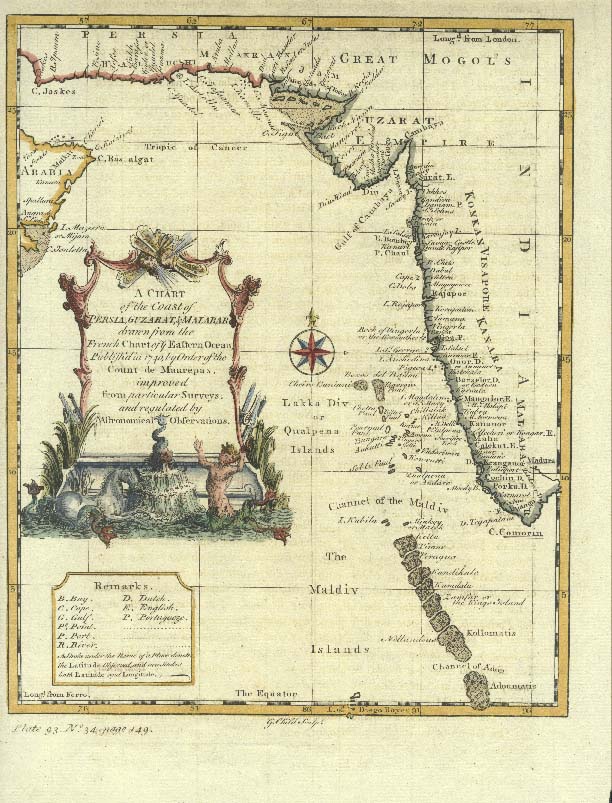
Pic courtesy - Trade map pic – Archeology news

The Ravi Varma’s of the Padinjare Kovialkom

Posted by Maddy Labels: ,

In hindsight, I feel it was not the valor of Tippu or Haider or their soldiers or their French training and discipline or for that matter, European armaments that really defeated the Nair’s of Malabar. Some times I think it was purely the fear of losing caste and fear of hunger and lowly death that drove families out of the Malabar area to Travancore. Such was the grip of the Brahminical caste system on the masses of Kerala at that stage. Samanthan Nair Kings wanted to avoid the stigma of being branded Sudra and instead wanted be known as a Khatriya kings from the Suryavansha and lower down, the other Nair’s wanted to hold on to their dignity and class status as long as possible.

I will get to the details and reasoning of the above aspect some time later, but this article is mostly on the semblance of resistance offered by two resolute individuals in the face of possible ignominy and utter despair after the elderly rulers and their families fled Calicut. Working with enemies who became friends and friends who became enemies as the tide of these wars crept higher and higher, they played a desperate game to hold on to the powers and possessions of the Zamorin of Calicut, as the old man and the ladies of the family boarded boats and went into exile in Travancore. We will now look at a crucial period of Malabar history – 1732-1805, not really at the Padayottam or the Sultan’s reign, but specifically the role that these two gallant gentlemen played in the affairs of the land and the battles of the time.

The individuals that are in focus are the Padinjare Kovilakom Zamorin princes. Perhaps the first of the freedom fighters of this era, these two Varma’s proved to be an enigma. Variously allied with and against the British at different times, and even with one or against the Mysore Sultans at times, they finally ended up fighting against both. The Ravi Varma and his uncle lived to be termed as the rebels or brigands of Calicut during these dark days of Hyder & Tipu in Malabar followed by the British take over of the Zamorin’s lands & power. While the old Zamorin and his family were exiled in Travancore, the uncle and nephew were the leaders of a lightly armed ragtag guerilla army of Nairs, fighting a useless battle on foot against the heavily armed, French trained army of the Sultan’s riding on horseback. Ravi Varma (normally synonymous with the nephew) is mentioned as a difficult customer by the British, and a close ally of the more illustrious Pazhassi Raja, but why do we not have much written material about him? I tried to delve as deep as I could, but information is still scarce. Here is a scant reconstruction of the time, of the two men, who did much more by way of sustained resistance, compared to the last and more talked about Pazhassi Raja. Yes, you may recall from the movie the boast by Pazhassi that only he remained while the nobles fled to Travancore, but he forgot to mention the uncle and nephew who held on till their respective deaths. The anger of the populace at the absconding Zamorin and the absence of the family nobles meant that the Varma’s fame virtually died with their deaths.

They were probably the first of the leaders who fought against not just the Mysore sultans and other oppressors, but also the English. They alone saw through the plans of the foreigners. Their method was guerrilla warfare on foot and for this purpose, were accompanied by a small & loyal band of Nairs right through their life spans.

The Ravi Varma’s of Padinjare Kovilakom, one of the seats of the Zamorins of Calicut can be first traced to the days of Hyder Ali when Kishen (Krishnan) raja was an Eralpad, 2nd in command or deputy of the Zamorin. It was the period when Malabar’s famed prosperity declined rapidly as the power rapidly leaked away from the Zamroin’s hands first to the Mysore Sultans and later to the British.

As the power of the Zamorin’s grew rapidly through the medieval centuries, the Palghat Achans curried for favor with Cochin. South of the Nila River, the Nambitis adopted the same strategy whenever they felt oppressed by Cochin and held on the alliance with the Zamorin. This cat-and-mouse game continued until the invasions from Mysore in the mid-eighteenth century pushed Palghat and Malabar into one of the infamous stories of the British conquest of south India and the war against the Muslim rulers of Mysore—Hyder Ali and his son, Tipu Sultan.
 
Hyder first walked into Palakkad and Malabar in 1766 and then again marched into Malabar via Thamarassery in 1767. He quickly understood the Nair psyche and pride and tackled it cleverly. First he deprived Nair’s of caste privileges, equating them to Paravas and outlawed them, also prohibiting them from carrying arms, but offered privileges back to anybody who converted to Islam. The Zamorin’s retaliation starts around 1768 as Hyder’s rule is headquartered in Manjeri. The British offer some support and command positions to the rebels from 1767, against the Sultans. The French recognize the American declaration of Independence in 1769 and the Anglo French wars start. The Zamorin families are soon in exile at Travancore after the reigning Zamorin, unable to meet Hyder’s demand, immolates himself in the Kottpuram palace, setting the ammunition room on fire, thus bringing a curtain down on the Zamorin’s rule of Malabar.

Haider is later aligned with the French. In 1780 Haider signs a treaty with the Kottyam Rajas. Kottayam gains importance while tax evaders (tax to the Mysore Sultans) find safe haven there. The British have to support the Kottayam rebels (the very same ones they went against later) as the Tellichery fort lies within the Kottayam kingdom.

New troops arrive from Bombay, and the British aided by the rebels defeat Hyder & later Sirdar Khan commits suicide. Further rebellions start in Malabar. It is 1782 now, Hyder dies and Tipu continues his forays into Malabar to quell the riots. In 1784 the British establish a peace treaty with the Sultans and the Malabar kings lose out in the agreement. They are mortified, especially the Calicut Zamorin’s families and the warring princes.

By 1788 Tipu is reestablishing his capital at Feroke, based at the Mammally area in today’s Cheruvannor. He now orders forced conversions. The Nair’s rise up in arms again to support the many Brahmins who were caught in a noose. Tipu crushes the rebellion and the exodus to Travancore starts. Then in 1789 the Pazhassi raja rises in prominence in Kottayam.

Meanwhile, Tipu cements his position by creating a family alliance between his son and the Arakkal Beevi’s daughter. The Beevi however quietly supports the EIC. Tipu increases taxes and alienates all of the public including the Moplah’s. He then sets his sights on Travancore. 1792-99 is the period covering the Anglo – Mysore wars. Tipu loses and British get Malabar. That in essence is the time line that we will look at.

The Nair rebellions were very interesting in the sense that they were a combination of passive and active resistance. The passive rebellion was by flight, by refusal of tax payment (very important to note as they had control over tax collections and the Sultans did not yet have a dependable set up of their own) and by providing false valuation. It was a big come down from the honest levels they once maintained, in the name of rebellion. The active rebellions were skirmishes, fought by minimally organized militia, some of whom were led by one or both of the Ravi Varma’s.

So now we take up the story of the Varma’s. Hyder marches to Malabar via Chirakkal. The Zamorin has just ended his life 1766 by self immolation and the 600 year reign of the Zamorins of Calicut had formally come to an end. However the uncle and nephew from the Padinjare kovilakom branch have sworn to take revenge on Hyder.

The Eralpad Kishen Varma who takes over moves to Ponnani and then Tanur – and orders the retaliation. The Moplah’s join Hyder’s troops. Hyder soon returns to Mysore. The period of 1768-74 is characterized by a period of some peace – The new Zamorin returns to Calicut & is back to his old ways of picking up a quarrel with the Cochin king and quibbling over unnecessary things instead of fortifying the area for the future or building an army. By 1774 the Zamorin signs a treaty with the French, but Hyder’s troops are on the march again into Malabar, this time led by Srinivasa Rao. The French walk away offering no support to the Zamorin. This Zamorin also flees by boat to Travancore. The Eralpad and his rag tag army of Nairs led by his nephew Ravi Varma on foot is no match for the Mysore troops and quickly disperse in different directions planning to meet up again in Calicut. In 1779 discussions take place between Hyder & Malabar chiefs with the Chirakkal Raja mediating. Ravi Varma is allowed personal collection of taxes for his support as a personal tribute and the Zamorin family is offered reinstatement if they agree to certain terms. The discussions break down as Ravi Varma is suspicious of some movements and returns to Nedunganad (KV Krishna Iyer).

He soon returns to Calicut, his traditional area of influence and authority, for better co-ordination. Tipu sent a large Mysore army under the command of M. Lally and Mir Asrali Khan to chase and drive out the Zamorin prince from Calicut. However, during the above operations, Ravi Varma princes assisted not less than 30,000 Brahmins to flee the country and take refuge in Travancore" (p. 508). Later in 1782 Ravi Varma helps the British occupy Calicut after a war with Hyder, now fighting under British command.

It is soon 1783 and the British have made definite and alternate plans, playing towards their main game step by step. Fullterton goes to Palghat to capture the fort with the Zamorin’s troops supporting. The Eralpad agrees to support the British in exchange of reinstatement of the Zamorin at Calicut , soon the fort is taken and handed over to the Zamorin. The British however hand it back to Tipu. The Zamorin has to abandon Palakkad and the fort as a consequence. As part of the Anglo Mysore discussions, the British give up their claim on Malabar in 1784.

Ravi Varam is back & fighting. 1785 is the period of the Manjeri Gurukkal revolt which I had written about some time ago, Ravi Varma is now seen joining Tipu’s troops in crushing it. Ravi Varma is thus allied with Tipu Sultan in 1784 where he gets a Jaghire of land (Land Control in Indian History: A Case Study of Malabar, 1766-1835 - By Loren Howard Michael). It was a clever ploy. Though Tipu conferred on him a jaghire (vast area of tax-free land) mainly to appease him, the prince Ravi varma, after promptly taking charge of the jaghire, continued his revolt against the Mysore power, more vigorously and with wider support.

Kishen Raja the Eralpad returns to Malabar, some books confuse him with Ravi Varma and mention that he proclaimed himself Zamorin. In 1788 the Varma princes again discuss a reinstatement of the Zamorin at Calicut. Tipu refuses to accede. The Earlapad Kishen Raja is invited by Tipu in 1788 for discussions. Kishen sends Swaminatha Pattar, who is told that Kishen will be provided a compensation for cooperation. Tipu tells Swaminatha Pattar that the Nediyirippu swaroopam will be reinstated if they support Tipu in his war to take over Travancore, by spearheading the attack. Tipu himself would not attack Travancore since it was under a British treaty of protection. Kishen apparently agrees but does not cooperate (some books mention he refused outright to cooperate). Tipu believed that Kishen raja has broken his word and lashes out in fury against the Malabar populace again with religious persecution, forced conversions, and general mayhem.

Calicut was again attacked by Tipu in November 1788. Tipu's officers also lay hands on the Karanavappad of Manjeri. The Nairs of Calicut and South Malabar headed by Ravi Varma and other princes of the Padinjare Kovilakam turns in despair against their oppressors. Tipu sends 6,000 troops under M. Lally to raise the siege, but Ravi Varma could not be driven out of the field though he has to leave Calicut and took to the forests. The fires of rebellion have again been fanned by the Varmas. The Chirakkal Raja also come to the support of the Varmas, but Tipu retaliates by threatening to circumcise and convert him, when the Chriakkal ruler apparently commits suicide.

1790 Tipu takes the last misstep and invades Travancore by himself. The British, whose successes have so far been mainly owing to the ground support received in the wars from the Varmas, now play the end game to perfection when Lord Cornwallis invites the Varma princes for discussions, agreeing to restore the Zamorin all his lands and commercial powers should the rebels render long term cooperation to them. Accordingly Ravi Varma meets Gen Meadows at Trichy and conducts negotiations. A Cowlnama is drawn up between Kishen Varma and the British which says

Cowl Nama from his Excellency, Major General Meadows, Governor and Commander-in-Chief , on the part of the Honourable Company to Kishen, Zamorin Raja of Calicut.

"Whereas the English forces have by the blessing of Providence possessed themselves of the fort and district of Palghaut and certain adjacent countries of the Malayalam, and design further to extend their possessions in that quarter, and whereas Kishen, Zamorin Raja of Calicut has on the present and former occasions evinced firm attachment to the British interests and proved himself useful in supplying their armies, it has therefore been resolved that the said Zamorin shall be invested, and he is hereby invested with the sole management of all the countries heretofore included in the province of Calicut which are or may be conquered by the British troops.
The said Zamorin is therefore directed to exert his authority and influence in embodying the Nairmars of that country and in directing their operations against the common enemy either separately or in conjunction with the British forces as he may be instructed by the Officer commanding in that quarter.
He is to exert himself in establishing magazines in such places as he may be required to collect them, aid in supplying, as far as may be practicable, every thing necessary for the prosecution of the war, for which regular receipts will be given, and the amount duly accounted for, at its conclusion.
This instrument to which strict obedience is enjoined by all, whom it may concern, is to be considered as a Cowl Nama and authority for administering the revenues during the present war, and at its successful conclusion by the favour of the Almighty, the Murassie or right of inheritance of the said Zamorin, and of every Raja, Zemindar and Polygar shall be strictly examined and justly determined to the rightful inheritor agreeably to established custom,and then also the Peiscush to be paid to the Honourable Company shall be equitably adjusted. Given under my hand and seal at Coimbatore, the twenty seventh day of September in the year of our Lord, one thousand seven hundred and ninety.
(Signed) W. MEADOWS, Governor and Commander in Chief. 27th Sept 1790

With the help of the Varama’s and their Nairs, the Mysore armies are routed by the British in Malabar. In 1791, the Cochin king after having been at first under the Portuguese and later the Dutch, agree to the suzerainty of the British and to pay an annual tribute. With Mysore under simultaneous attack by the British, Tipu sues for peace in 1792 and cedes Malabar to the British in compensation. The Varma princes were in the meantime busy restoring order in Malabar and fighting and taming the Muslim leaders who were persecuting them under Tipu’s reign. It was to prove a mistake.

What followed was a mixture of misused opportunity and undue faith in the legality of the 1790 cowl nama. A meeting called by Cornwallis was not attended by the Malabar princes. The old Zamorin, more interested in celebrating his ‘ariyittuvazcha’ or coronation in Chavakkad possibly missed the significance of the British call for a meeting in Cannanore to discuss the rights. The British were miffed that the Zamorin crowned himself without discussing the matter with them and were disappointed with the Zamorin still not sending a delegation. Assuming that the Zamorin was playing a delay tactic, they leased a number of his lands to the Kurumbranad raja. If one were to look at the palace intrigues of the time, they would perhaps see the hand of a very clever man who played the cards – He was Swaminatha Pattar. As things turned out, the Zamorin finally deputed his Munalpad (not the Eralpad Kishen raja!!) and Swaminatha Pattar for the meeting with the British.

The hard negotiations lasted two months. The British decided against reinstating the Zamorin and other Malabar princes with all their powers using the argument that they would continue wars with the Moplahs who had been against them in the Hyder - Tipu reign and that the British will have to spend time, money and maintain an army to keep peace. Swaminatha Pattar swayed the Zamorin and other princes by explaining their cause as lost (and by also mentioning that Dewan Keshava Pillai was planning to add Malabar to Travancore). Finally an unsatisfactory agreement was arrived at, the details of which I will get into some other day, but in essence providing a title to the Zamorin and other chiefs but no authority though burdening them with all the liabilities and responsibilities. Swaminatha Pattar was thence named a British agent to collect taxes (the responsibility that the Zamorin originally had) and later titled a Dewan. The Padinjare Kovilakom princes, especially the Ravi Varma’s were aghast when all this happened. They insisted on restoring the kingdom to the Zamorin, though the Zamorin himself had given up the right based on the Pattar’s persuasion.

The Padinjare kovilakom branch of the Zamorins was provided with the Nedunganad area, to be lorded by the Eralpad Kishan Varma. The Varmas moved to Kalladikode which had by then also become a haven for Pazhassi raja’s fleeing rebels. Here they were aided by the Ravi Varmas who were dealing with the area but they soon had a lengthy quarrel with the Zamorin’s family (according to Logan) from the Kizhakke kovilakom of that time. The Varmas fortify their home in the Kalladikode Attapadi area, aided by the tribal’s and the Chetty’s who had supported them in the previous wars. It soon became a meeting point where many dissatisfied Malabar nobles and leaders met often, discussing strategies. The Kottayam Raja Pazhassi was by then also in league with them. The British were wary and wanted to nip any further rebellion in the bud.

Ravi Varma first got a warning letter from Stevens accusing him of conspiracy against the EIC, for taking over the Zamorin’s position, forceful collection of revenues and taxes due instead to the EIC and weakening the position of the reigning Zamorin. However he also said that more than everything the main EIC grouse was the threat of body injury to Swaminatha Pattar. Accordingly they were ordered to pay 100,000 due to the Zamorin immediately.

It is 1793 now. Seeing more treachery played by Swaminatha Pattar, the two Varma’s get enraged. They decided on executing revenge and a move away to the fortified palace in Kalladikode and away from Calicut. But first they summoned the Pattar to the Mankavu Kovilakom where he was stabbed (For more details of the event read my blog on the scorned Dewan).

The Varma’s decide to cork the hole in the leaky boat by planning an assassination of Shamnath for his treachery after luring him to the ancestral Zamorin house or the Mankavu Padinjare kovilakom. One can imagine the extreme state of agitation in their minds, for a Nair to harm a Brahmin in those days was unthinkable. The Kovilakom itself is a huge courtyard with the Bhagavathy temple in the middle and the men’s quarters on the left and the Women’s lodge on the right. Between the temple and the women’s quarters is the Thampuran’s dwelling. Behind the temple is located the Ayappan Kavu and the Kalari where martial arts are practiced.


Swaminatha Pattar was lured to the temple and stabbed by the young Ravivarma Unni Nambi and his uncle Ravivarma. Shamnath does not die though and the Ravi Varma’s flee to the Wayanad hills. The Rani or Amma Thamburatti is deeply troubled by the terrible act committed on a Brahmin and orders that a special puja be conducted. Accordingly a Brahmarakshassu is installed between the Ayyappan temple and the Kalari at the Kovialkom. I have since then seen a mention that it was not one of the Ravi Varma’s but an 5-amkur (5th in the succession line prince) Manavikraman who actually stabbed the Pattar.

The upstarts take to the hills. They are joined there by Unni Moota Mooppan, some Coimbatore poligars, Kunhi Achan from Palakkd etc. The East India Company offers a reward of Rs 5000/- for their capture. Capt Burchall pursues them through the Anamalai’s in Waynad, but they escape to Travancore.

The elder Ravi Varma is soon arrested by Capt Burchall but dies a day or two later in custody. His nephew Ravi Varma is also taken into custody by the British but released on receipt of a surety by the Kizhakke Kovilakom Thampuran - Nalam thampuran (and after payment of some Rs100,000 arrears due to the EIC).

At this point the history books go a little hazy and time lines are blurred as we are not sure who dies in captivity and who retired. Somewhere in 1793, the elder Ravi Varma dies from complications arising from an old bullet injury according to one book. It has been 27 years of unsuccessful fighting; he died without seeing his ambition of restoring power to the Zamorin clan. He was cremated at Kalladikode. Accolades came from far and near, including Pazhassi raja and many other Malabar chiefs. The younger Verma was also captured soon after by the British and interned in the Cherplassery jail where he was found dead of poisoning the next day. However this part of the story is not corroborated anywhere, Logan mentions as follows

The Kalladikode kovilakom is razed to the ground. The 5am kur manavikraman who stabbed Swaminatha Pattar is interned in Coimbatore, also dies in jail. The year is 1797, and the Ravi Varams are finally erased from the scene. The prominence of the next freedom fighter, the Pazhassi raja commences.

In 1797 the rest of the Zamorin princes agree to give no trouble to the British and settle down in Calicut. In 1806 four senior member of the Zamorin family are offered a malikhana or pension, and the Puthiya kovilakom is constructed.

With that the last of the rebels or freedom fighters, whichever way one may term it, had passed on, leaving the reins of Malabar fully in the hands of a company which came to trade honorably. The terms of the 1790 cowl nama were soon forgotten and the hey days of Malabar were sadly consigned to history, only to be mentioned in passing as a place where Vasco De Gama landed or sometimes with respect to pepper, the black gold that grew there.

Notes: I have come to the conclusion that some history books have made wrong connections due to the existence of the ‘padinjare kovolakom’ in two families, the Calicut Zamorin family and the Kottayam family (where Pazhassi raja gained importance). Many of the earlier rebellions attributes to the Padinjare kovoilakom princes actually refer to the Western faction of the Zamorin family and were spearhead by the two Ravi Varmas. Sadly no picture or detailed life story of either prince remains even after checking with present day representatives of the Padinjare kovilakom. The above is an attempt to trace it into some kind of a cohesive narrative, but no personal portfolios of the two princes can be obtained, their personal life, family life, descendants (if any) or details of their normal life and times.

Another confusion lies in the identity of the Ravi Varma, the nephew Ravi Varma Nampi and the Eralpad Kishen raja (Varma). Some books mention that the Kishen raja and the uncle Ravi varam were one and the same.

An astute reader would note the absence of flesh and blood to the two characters. They are not described anywhere as small or big, tall, short, stocky or muscular, but simply as two souls working in unison against enemies. They are not painted or embellished, no songs are made about them, no letters recorded, no paintings made. One could assume that the absence of scribes and poets in the war torn area may have been the reason.

Many blame the Zamorin’s for flight, but remember the power structure in the late medieval. The suzerain has little direct control and the fighting hundreds or thousand Nairs reported to individual clan leaders who had by then bolted to Travancore with possibly their fighters leaving only a rag tag army and the symbolic Zamorin’s nephews to try & spearhead a rebellion and reclaim an empire from the shambles.

So these two will always remain as enigmas, fighters with faces unknown, and fighters with no personal life, who spent their entire youth and middle age fighting the Mysore Sultans & the British, mainly the former. The populace in the eagerness to name only the British as the oppressors and conquerors forgot the two lone fighters who fought for Malabar against both. Nevertheless, the Pazhassi raja that joined later got into the limelight mainly because his fight was against the declared invader the British and much better chronicled.

The reader today is not possibly interested in the atrocities committed in the name of religion, hatred and contempt by the Mysore Raja’s who have by now been declared in the annals of history as the ones who bravely fought the British. But that is how history is, unkind to some, grateful to others, forgiving to some and glorifying the remaining. The Ravi Varma’s alas rest in the group of forgotten people.

One possible source I have not been able to get access to is the Joint commissioners report 1792-3. In addition to the above, if anybody has more information to provide, please let me know.

References
Zamorins of Calicut – KV Krishna Iyer
Malabar Manual – W Logan
Manjeri revolt
Scorned Dewan
Palakkad fort

Kavalappara, Bharatapuzha and Vaniamkulam

Posted by Maddy Labels:

Part 2 – Bharatapuzha, Vaniamkulam and their roles


In the first part I tried to introduce one of the large families that lorded over this very important area at the base of the Palakkad gap. But one of the factual aspects that the reader must keep in mind is that the Palakkad Achans were the family in control of the Palghat area itself and the pass. The place we are focusing on is actually lower down, in the plains where the rushing waters from the Anamalai hills meet, creating the great Bharatapuzha or what is historically known as the Nila River system. The Nila continues its serene course over these fertile plains and finally pours its all and soul out into the Arabian Sea, the very sea that in history enriched Malabar.

Strange isn’t it? Quite a bit of the history of Malabar actually revolves around the river and the sea, the story of the common main, the tiller, the weaver, the immigrant from Tamil Nadu and the artisans. While much history was written around Calicut and Cochin and Kottayam where the figureheads, the raja’s and Thamburan’s lived, the cultivated grain and the forest produce to feed the populace and the export markets came mainly from these plains and from the forests up in the hills. From there they first travelled to the markets in the plains. It is for this reason that there were so many tussles between the two warring factions of Cochin and Calicut over the Valluvanad and Palakkad area and the race thence was to lord over the great water or river festival, the month long trade fair at the very banks of the Nila, at Tirunavaya – the Mamakham. The purpose of many of earlier wars between the chieftains in Malabar was to become the master of trade and maintain control over these food supply lines, eventually to be the greatest of them all – the Thamburan at the Mamankham. As a reader Kerala Varma reminded us in a comment some days ago, the race for lordship over the festival traversed thus

It appears that the Perumpadappu Mooppil originally got the right to preside over Mamaankham after Cheraman Perumal and Valluvakonathiri was in fact his staunch ally. After the Zamorin defeated the Vanneri, he became the head of Mammankham.

A little thought over all this would give you some plausible answers. Why would the Cochin Raja or Perumabadappu Moopil inherit the power after Perumal? It would be a natural assumption that it followed the success of trade at Muziris, where the Cheraman Perumal had his capital. As he left, he passed it on to the neighboring chief of the Perumbadappu Swaroopam. Calicut as you will remember was just a thicket of brushes or ‘chullikad’ that was converted to a large trading town much later. But to lord the trade over the Malabar region was the ultimate aim as explained earlier and the Mamakhom Thamburan was the title to strive for. The Zamorin’s eventually attained this after unraveling all the historical unwritten laws and rules regarding Melkoyma, caste rules governing regional rulers - the Rajya Bharanam such as Khsatriya-hood. The Samanthan Zamorin threw those rules away and wrested power after systematically establishing his suzerainty over the smaller principalities neighboring him, Polanad, Valluvanad, Palakaad and the Kavalappara areas. With that slash through that fabric of tradition, he took over the reins and was the overlord of them all. Retiring to Calicut, he then made sure that the very important food bowl of his empire was personally controlled by the Eralpad or 2nd in hierarchy (and the 2nd in command).

With this basis established let us once again go to the plains, but to reach the plains, we have to follow the majestic river, for the river that was paramount, the river that every Malayali knows, from the stories that arose from the banks, the people who lived there, the lords, the Nampoothiris, the Nayars, the Pulaya aborigines, the Thiyas, the Chettis. They all mentioned the river in their stories, books and thoughts. This is the Nila River or the Bharatapuzha, the very banks of which was where the Panchapandavas of the Mahabharata once rested.

Like a student at large, I am now entering this hallowed ground holding the fingers of a stalwart who studied and wrote the history of this land by studying the people and the land, asking questions as why they were there in the first place. He is the well known historian and Sanskrit pundit Dr N M Nampoothiri, whose works I frequently consult, understanding it little by little, and continuing to trudge on, step by step, each door groaning open to a new world.

And so we go back to the majestic Anamalai hills, or the elephant hills that firmly split the west and the east land mass of south India, home to teeming wildlife, dense forests and untold riches, places where only the aborigines ventured, dark and dangerous corners of those old times. But as fate would so decide, the mountains provided a small crack for history to be created, at the Palakkad gap or pass. As stories of the Yavana traders visiting the rich Cheran ports of Muziris in Malabar possibly on their way back filtered back the rich towns of Kaveripatanam & Poompuhar, they themselves were undergoing religious upheavals of their own, aligning right and left and bringing in caste systems for heavier control of the masses. As a result some artisans and traders took flight, together with the many hundred carts and carriers of trade, through the Palakkad gap to settle around the plains of the Nila. There they lived, among the aborigines, the Malayalans, in the plains bordering the serenely flowing Nila River. The river valley spreads through today’s Taluks like Mannarkkad, Palakkad, Chittur, Ottappalam, Chavakkaad, Perinthalmanna, Tirur and Ponnani. The river unmindful of all this new activity quietly hums its way in a northerly flow through Palakkad, Thrissur and Malappuram districts and finally merges after a 150 mile run in the Arabian Sea near the Ponnani port. It has more than twenty tributaries spread over many parts of three districts of Palakkad, Malappuram and Thrissur.

The Nagarthar Chetties of Kaveripoompattanam had been walking a long way; it was finally time to rest. Their westerly trek followed the route taken by their Para Devatha or clan goddess, the great Kannagi who had fled the Madurai regions and settled down in Muziris – Muchiripattanam. See that, yet another important vignette, a Pattanam or market or emporium in the Malabar regions? This is only one port area in Malabar which carried such a name in history, while we had many a Pattanams in the Cholamandalam or Coromandel.

What the newcomers found was a place where herbs, medicinal plants and forest produce where in plenty. The local Pulayans were content with bringing some of them to the weekly market fairs at the big markets, places where we will soon head to. It was fertile beyond imagination. It was the Valluvanad the land of Valluvan (Pulayan) in the mid Malabar area. The aborigines or the Pulayar’s lived in the hills and the valleys, living their life, in small villages, living off the produce from the hills. The area was then known as Kudanadu (not Kuttanad) and they were under the Cheras. Subsequently the control of the regions of Palakkad, the Nila region etc passed on to the Perumbadappu Swaroopam. But it appears that before they took their seat and based the Swaroopam at Cochin, they were apparently Palakkad based, near the gap. That perhaps explains the Melkoyma (overlordship) of the Cochin king over the Palghat and Kavalappara rulers

Let us start around the turn of the millennium. The Chera’s of Mahodayapuram or Cranganore (today’s Nedumperiyar or Kodungallur area) ruled over Kudanadu, while the Nannan at Ezhimala ruled over Pulinad the northern area. Until the 11th century the scene is a bit clouded with the Kulaskehara Chera’s reigning over the region after which appeared the Manavikrama brothers on the scene and from then on the rule of the Zamorins. While they created Calicut and the infrastructure around them,

Now we have to bring together the two factions who controlled the trade, the Pulavars of Vaniamkulam and the Jain traders at Cranganore. The Pulavars were Nagaratar chetties who had come in from Kaveripoompattinam westwards like the Kannagi. They were the ones who later created the ‘onnukara ayiram’ or one less than 1000, i.e. 999 warriors used by the Cheras which army later turned into another reason for the interest by other rulers in the area. The main trade route extended through the Palghat gap to Ponnani port and there are a number of other ancient roads and routes to various banks on the river like Thrithala and Thiruvanavaya. The early settlers worshipped deities mainly goddesses (Vana Durga the ancestral mother of the karakkatu moothar – some even mention that this is Kannaki) in a Kavu and their own homes. The Nagarathar Chettys were chalias (see my previous blog on Chalia) and were formally known as Konnathara Nakarathar.

Vaniamkulam was also interestingly a formal nagaram or trade corporation in those times. The head was the Karakattu moothar. His cousin was in control at Alathur, the Melarkot muthar. The other members of the area were the large numbers of Jains that migrated from various Chola areas due to the Saivism pressures around the 11th Century.

The Kavalappara family also perhaps has some Saivite origin, possibly through a Chola Muttarayan, looking at their family deity which is Siva in the Eruppa temple in Aryankavu. How the kavu system evolved to a Kshetra system is another interesting development in the Nila area. It is well covered in Dr Nampoothiri’s study, which shows the presence of various forms of worship, intermingling and connecting up nicely, the festivals of the Parayas (pooram), the festivals of the Chettis and (chettivela) so on.

If one looks at the history of the arrival of the Nattukottai Chettis at that area, you will be taken to 1288 when there was turmoil at Ariyurpattinam and some 64 families came to Korattar. They were some of the original settlers who in its heydays, made Vaniamkulam, the nerve center for the trade in artifacts, herbs, cloth etc while the larger ports indulged in sea trade with spices, grains, metals etc. The weekly markets hosted cattle and other trade, possibly even horses. The river later was the means of transport of goods all the way to Ponnani. The trade increased from 1500 and that was possibly the period when a major Tamil temple was erected at Kalpathy in Palakkad and it is believed that this was the time that Kampa Ramayanam also reached the area with one such migrating family. This now takes us back and connects up to the puppet play at the Aryankavu Pooram in the Kavalappara area which I mentioned about in the earlier article.

But today Vaniamkulam and all the trade and other connections seem gone, barring the weekly cattle market. Since the last decade, Vaniamkulam is more popular as the famous shooting location of Malayalam and Tamil films, mainly around the two famous "manas" located in Vaniamkulam panchayat ("Varikkasseri" and "Kunnath").

This introduction is just a start. As you can imagine the medieval Malabar story is a fabric with a number of threads, the story of the Chettiars, the weaver classes, the Thiyas, the Nairs, the Pulayas, the immigrant Brahmins, the Christians, the Nampoothiris and so on.. each running sometimes in different directions with cross purposes. A lack of coherent text recording these times makes it a necessity to conduct more of an anthropological study to arrive at the historic conclusions and this by no means is an easy task, requiring sometimes a long and abstract thought process. Without a definite story line, it is sometimes a bit difficult to weave together a narrative...but I will try

To be continued..........


References
Vaniaymkulam Vijnaniyam – NM Nampoothiri
Inside the drama-house - Stuart H. Blackburn

The Zainuddin Makhdum's of Malabar

Posted by Maddy Labels:

While we have a number of first person reports of medieval Malabar from European writers such as Castaneda, Correa, Barbosa, Jordanus, Pietro Della Valle, Varthema and so on, they are relatively circumspect in that those accounts are tainted by religious fervor or tilt to glorify the greatness of the European king and his minions the admirals or viceroys such as Vasco De Gama, Cabral and so on and the barbarism of the natives of Malabar (viewed using a European Christian standard). Nevertheless, they provide an account of the times which are sometimes amusing but at the same time providing a historic setting, accounting the valor and courage of the European traders who believed in wresting away the riches of Malabar by might, all because of the fickle European palate which could not stand rotting meat and needed pepper to preserve it a little longer.

Alas! If only refrigeration had been invented earlier!

In the middle of them all, we have a few others who put pen to paper. We do have Jewish traders who wrote about their trade from even earlier times, like those found in the Genizah scrolls, we have accounts of Pliny from ancient times, we have Chinese travelers like Ma Huan and we have other travelers like Ibn Batuta and Marco Polo.

From the Malabar side though the scribes were busy writing palace chronicles and financial accounts or ‘Granthavaris’, they hardly made a mention about the politics of the time. During the late medieval, we even had Vella Namuthiri writing in highly original Malayalam style about the brief Hyder Ali interlude. Much of those except the Vella chronicles are still not available in the public domain for a student or history buff. But there was one other who lived and wrote in the early medieval; and that was Sheikh Zainuddin 2 (Zainuddin 1's writings are unfortunately rare). The Tuhfat al Mujahideen is a valuable piece of writing though exhorting religious action in the end, but only against the Portuguese invader. So let us now see what this is all about. To get to Zainuddin though, you have to read through two translations of his work, one made by Indian experts in Arabic, while the other was the old English translation by Lt Rowlandson.

Zainuddin 2' s 'Tuhfat al-Mujahidin' or 'Tribute to the strugglers' (gift to the holy warriors) was perhaps one of the two documents that provided the Moplah perspective during those turbulent times, a time when the age old peaceful trade equations were threatened. It was a period where the Moplah or Arab or Jewish trader in Malabar or even their very existence was threatened by the marauding Portuguese in big ships with the might of their guns and the use of deceit, bribery & treachery. The equation of balance where the traders traded and the rulers maintained peace and prosperity for a commission from the trade, was threatened by these men who came to conquer, pillage and perhaps continue their European wars against Islam which was until then of no consequence to the Moplas of Malabar. It was this spillover from Europe of resistance and outrages against the Ottoman hold over the Indian oceans that upset this equilibrium.

It was the time when crusades were waged to liberate Europe from the Ottomans, not any longer to take over the holy land at Jerusalem as the earlier crusades were meant to do. This was when in an ironic series of events, during the middle of the 15th century, the Latin Church (Roman Catholic Church) tried to organize a new crusade aimed at the restoration of the Eastern Roman or Byzantine Empire which was gradually being torn down by the advancing Ottoman Turks.One important reason was the need to overcome the expensive eastern trade routes, dominated first by the republics of Venice and Genoa in the Mediterranean, and then controlled by the Ottoman Empire after the conquest of  Constantinople in 1453, barring European access, and going through North Africa and the historically important combined land-sea routes via the Red Sea. Both spice and silk were big businesses of the day, and arguably, spices which were used as medicine drugs and preservatives was something of a necessity—at least to those Europeans of better than modest means.
 
So we come to Malabar, the land of pepper and ports where all the goods from the orient were made available by traders of many nations for transshipment via the Red Sea to Alexandria and ports of the Mediterranean. Here in Malabar situated the kingdom of the Zamorin where the Arabs, Jews, Chettys, Syrian Catholics and Moplah’s traded in peace, eking out their means to peaceful livelihood, broken occasionally by quarrels between the Zamorin and the Cochin king. Here lived the Makhdums of Ponnani, notably the two Zainuddin Makdum’s.

But before we get to Zainuddin Makhdum 2, we have to learn about the learned Zainuddin Thangal 1 and other members of the illustrious family.

The family traces their earliest origins to a place very similar in name to Malabar called M'abar in Yemen, some 30 km north of today's Dhamar. But I am not convinced that the Mabar used in this context is really the same as Ma’bar in Yemen, for around that time, there existed a Sultanate of Ma’bar covering the South Indian Coromandel region(M'abar means crossing point – perhaps signifying the crossing point to Ceylon or to the Eastern oceans).. Originally the Coromandel Coast (Kayal, Kilkara, Madura, Trichy, Nagore etc – creating the Cholamandalam) was termed Ma’bar according to historians with the name going back to the 12th century. For the moment I will leave this piece of information in the backburner and get back to the Sultanate of Ma’bar separately in another blog. Let us just conclude that Sheikh Zanudin1 was from the Coromandel Ma’bar, possibly Kayal. Zainuddin's ancestors chose themselves to add the Al M'abari themselves denoting they were from Ma’bar in the Kayalpatanam area (later the Marakkars came from that region as well - refer my earlier article on this subject).
 
Zainuddin 1


Shiekh Ali Ahmed Al Ma’abari was the first to move from the Kayalpattanam area to the Kochangadi in Cochin around the 15th century. His relocation was meant to provide religious education to the many Moplahs in Cochin. Accompanied by brother Sheikh Ibrahim Ibn Ahmed Maabari, they settled down in Kochi. Zainuddin 1 was born to Ali Ahmed around 1465. His full name was Shieh Zainudin ibn Ali Ahmad Al Ma'bari or better known as the Makhdum Thangal 1, Abuyahya or as Zainuddin 1 (Some writers mention Al Malbari but it is actually Al Ma'bari). Zainuddin 1 was brought up by uncle Ibrahim after his father died. They soon moved to Ponnani where Zainuddin mastered the education basics and then moved to Calicut for further studies under Quadi Abubakker Fakhruddin. Later he travelled to Mecca where he continued his education for 7 years. After this his next natural destination was the Al Ahsar University in Egypt. The master finally returned back after spending another 5 years there. His first observation after return was the oppressive atmosphere created by the Portuguese settlers. To counter that in an organized way, he decided to create a place of learning for the youth and that was how the Juma (Juma Ath) mosque and the open Madrassa attached to it in the lines of Al Ahsar Cairo were first created. The people of Ponnani gave him the honorable title Makhdum (acc to Prof Abdu Rahman). Zheikh Zainuddin Makhdum thence became a revered teacher of Malabar and his weapon to the youth was learning. He brought in the 'vilakkiruthal' (sitting by the brass lamp) ceremony to honor the best students who were interested in higher studies. The Vilakkathirikkuka ceremony is when the most learned student or students sit next to the brass lamp in the Juma Masjid and next to the Makhdum himself. Such a chosen person is thence called Musaliyar. As the Portuguese attacks increased Zainuddin worked with the Zamorin in ensuring that there was a united Nair - Moplah response towards them even as a few Moplah traders were happily working purely for profit with the Portuguese traders. The Tahrid jihad war poem was written by him around this period exhorting Moplahs to align themselves with the Zamorin's forces. It was unique in the sense that it was not a religious jihad, but a call for united confrontation towards the Portuguese oppressors. It is believed that Zainuddin 2 also used these verses in his Tuhfat Al Mujahideen which of course obtained much better coverage in later times. A history reader should therefore note that the first record of the times was actually provided by Zainuddin 1 in Tahrid (Tahrid Ahlil Iman ala jihadi abda tilsulban) many years before the Tuhfat was written. These were the writings that prodded the Marakkars forward in their fight against the Portuguese. Zainiddun 1 passed away in 1522, aged 57 and lies buried in the Juma Masjid at Ponnani.

The amicable relations between the Hindu and Muslim communities at that time is exemplified by this interesting observation. The mosque at Ponnani was built for Zainuddin 1 (the big Juma Masjid or Juma Ath mosque) by a Hindu carpenter or Ashari fondly known as Ashari Thangal. Even today you can see his signature on the mosque beam (see picture). The mosque was constructed around 1519-20, and renovated in AD 1753-54. Until the arrival of the Mamburam Thangals (of Sayyed origin) in the 17th century, the Makhdums were the religious leaders of the Moplahs in Malabar. Parallel to the 'wilayat' concept of the Chistis, the Zamorin used to send a ceremonial robe to the Ponnani leaders during the Ariyittuvazhcha or accession ceremony

After Zainuddin, his son Sheikh Abdul Aziz became the Makhdum of Ponnani. This Abdul Aziz was the one who led an attack against the Portuguese at the Chaliyam fort in 1571. His second son Sheikh Ammed Zainuddin ibn Mohammed Al Ghazali was the Quadi in North Malabar – located in the Chombal Mahi area and to him was born Zanuddin 2. As the Zainuddin 2 was from Chombal in Kanchirapalli near Mahe, the Chombal sheikhs or Soubals as Arabs called them are next in importance to Ponnani sheikhs.

Zainuddin 2

Zainuddin 1’s son Muhammad al Ghazali bore Zainuddin 2 into the 16th century, in 1531 to be precise, and the boy quickly followed the footsteps of the illustrious grandfather. His father died when he was young and soon the boy found himself in the care of uncle Abdul Aziz Mukhdam at Ponnani. After primary and Islamic education at Ponnani, he traveled to Mecca where he spent some ten years mastering the religious texts. Coming back to Ponnani he became a revered teacher at the Madrassa, where he taught for another 36 years. He was a skilled orator who always despaired in the fact that the Moplahs never had an Emir to follow, though always working hard with the Zamorin as an emissary in building alliances with the rulers of Turkey, Egypt and neighboring lands such as Bijapur. It was tragic that all these allies were faced with bigger problems of their own around the time Malabar had the Portuguese as foes and could not thus forcefully support the Zamorin against them. But as a historian he was reasonably fair in documenting the times. Let us now take a look at the book. Zainuddin wrote the book sometime before 1583. The text was first translated in 1833 by Lt Rowlandson after a Portuguese translation was made by David lopes. Many other translations followed and today we have the authoritative version by SMH Nainar.

The book details some of the background of the Moplah origins in Malabar, the story of Cheraman Perumal, the arrival of the De Gama and the later fights by the people of Malabar against the Al Afrunj or the franks. (The English were termed Al Inkitar and the Spaniards Al Andaloos, whereas the French were Al Fransawee). In the middle chapters he details the Nair society and the various differences with the Moplah culture.

The Tuhfat is one of Shaikh Zainuddin’s several works, and is the best known among them. A chronicle of the resistance put up by the Muslims of Malabar against the Portuguese colonialists from 1498, when Vasco Da Gama arrived in Calicut, until 1583 when the author died, it describes in considerable detail events, many of which Zainuddin 2 had witnessed and lived through. It was intended, as Shaikh Zainduddin says, as a means to exhort the Malabar Muslims to launch a struggle or jihad against the Portuguese invaders.

Sheikh Zainuddin explains the curious customs of Hindu Malabar to the uninitiated, such as the concept of Koodipaka, where entire generations fight against what they feel is injustice, until death. He also mentions the complete absence of treachery and deceit in Malabar wars, a situation that was used by the Portuguese and the Dutch to their advantage. They brought into the fray the new moral – that nothing is unfair in war. He mentions how the Hindu customs of inheritance and other matters are followed by some Muslim families especially in North Malabar. He mentions how the rule of seniority is strictly followed in ascension to the throne, be the person be an aged person, invalid or mute (Note this is actually jut a figure of speech as I am aware of such a happening only in the case of Mookarasu in nearby Karnataka & not in Malabar. But there have been many aged Zamorins).

The Tuhfat describes how the Zamorins turned down bribes offered by the Portuguese to expel the Muslims, and of how they, along with Nair Hindu and Muslim forces, engaged in numerous battles with the Portuguese, who are said to have singled out the Muslims for attack and persecution.

Shaikh Zainuddin’s observations about the Hindus of Malabar are remarkable for their sense of balance and sympathy. Of the Hindu rulers, he says, ‘There are some who are powerful and some comparatively weak. But the strong, as a matter of fact, will not attack or occupy the territory of the weak’. He continues to show amazement about how nobody usurps the throne by breaking this rule. Zainuddin confirms that the Nairs were a warrior caste and were always involved with such activity. As he writes all this, he clarifies that he is only explaining the communities & their culture and that they have no bearing whatsoever on what is to come or what he has to say, but mainly providing perspective.

Zainuddin 2 also despaired about the lack of coordinated support by the various Muslim leaders in the plight of Malabar - He says as follows on the contrast between the response of the Zamorins to the plight of the Malabar Muslims with that of several Muslim Sultans in other parts of India, who were approached for help in expelling the Portuguese. ‘The Muslim-friendly Zamorin’, he writes, ‘has been spending his wealth from the beginning’ for the protection of the Malabari Muslims from the depredations of the Portuguese. On the other hand, he rues, ‘The Muslim Sultans and Amirs—may Allah heighten the glory of the helpful among them—did not take any interest in the Muslims of Malabar’.
Interestingly Zainuddin chose Adil Ali Shah as his patron for some special reason. Whether it was due to increased monetary support is not clear and it is even more strange that Zainuddin, obviously a Sunni found support from a Shiah ruler in this cause.

As the book blurb puts it - In appealing to the Malabari Muslims to launch jihad against the Portuguese, Shaikh Zainuddin makes clear that this struggle is purely a defensive one, directed at only the Portuguese interlopers and not the local Hindus or the Hindu Zamorins, for whom he expresses considerable respect. Nor is it, he suggests, a call to establish Muslim political supremacy and control. Jihad, then, for Shaikh Zaiuddin, was a morally just struggle to restore peace in Malabar and expel foreign occupiers, to return to a period when Muslims and Hindus in the region lived together in harmony.

He died in 1583 AD and lies buried in Chombal. The death at a critical juncture robs historians of a perspective of the times when the Zamorin established a treaty with the Portuguese and the period of his estrangement with the Kunjali marakkar.

Even though small in size, the text provides much information of the medieval period in Malabar history, when the Zamorins grip on Malabar weakened and when the age old culture was overrun by the Portuguese, hastening the curtain drop on the 500 odd years period during which the Zamorins had nurtured Malabar. But the Portuguese were to be overrun soon by the Dutch, followed by the Mysore forces who rode down to wreak havoc and finally the English would rang the death knell to that period of Malabar’s glory.

References
Tufat al Mujahideen - Nainar
Tufat al Mujahideen - Rowlandson
Historiography of the Muslim world - Vol 1A Samiuddin & NK Singh
Kerala Muslims - KT Hussein
Kerala Muslim history - P SyedMohammed

Pics
Courtesy Twocircles

Environs of the Palakkad Gap

Posted by Maddy Labels:

Part 1 – The Kavalappara family in history


While Malabar history books never fail to mention the usual suspects like the Zamorin’s and the Nediyirippu swaroopam, the Moplahs, the Marakars, the Perumbadappu Swaroopam Cochin royal family, the Kolathunadu rulers, the Palakkad Achans, the Ali raja’s, the Valluva Konathiris and so on, smaller but very influential families such as the Kavalppara are usually sidelined or barely mentioned in passing. If one were to cast a critical eye on the role of the Kavalappara Nair’s he or she would see that they had an important role in the final tabulations. Like for example the role of the Kavalapaara nairs in establishing the ascendancy of the Travancore raja’s such as the Marthanda Varma over Malabar during a critical phase, or various aspects of trade. Now to understand that to some extent, one must go back and study the details of the family and their role.

Many readers of Malabar history would have gleaned by now that much of the prosperity of the area was decided by the need of the people of the West who wanted to better their lifestyle and thence aided by the Indian Ocean, the Arabian Sea and the monsoon winds came to the source. The money came from across the seas…the goods and satisfaction came from the east. It may also be noted that whether it was rice from Bengal or Orissa, cotton from the Coromandel farmers, the pearls and gemstones from Tamil lands, or the spice from the Ghats and the hills, the Malabar nobility did little to further local production. They were the aristocracy ruling the trade and the traders and realizing the full advantage they had in controlling the ‘location’.

To understand this even better, one must look at a very popular word used in trade, communication and economy. The word is ‘hub’. Today importers have a hub, airlines have a hub, and multinationals have a manufacturing hub. Well, then again history students always knew about hubs. A hub is in simple terms a transfer point or the central part of a hub and spoke model. Thus Calicut was a hub for trade. Material, be it raw or finished goods reached here. Buyers and sellers congregated in the peaceful environment and conducted honest trade. Both made money and the aristocracy by mediating and providing the infrastructure, collected the cream which was roughly 20% of the proceeds of the final sale plus the ad hoc protection money (the nair pada’s kaval panam) levied on the easterly suppliers and some landowners. The go betweens were of a number of castes and nationalities, providing insurance and comfort for the far flung big wigs and lynch pins. For example the Chetty’s helped maintain a relationship with the major Tamil suppliers, the Chaliyas helped maintain a relationship with the cotton suppliers of the Coromandel and the Jews and Arabs stationed locally with the master traders of the Red Sea. As we see today, the hubs moved along from time to time for various political and weather related reasons (e.g. the Periyar floods ruining the Muziris port or the Moplah traders moving from Quilon to Cochin to Pantalayani due to harrasment). Quilon was a pre medieval hub, and then it was the Calicut region which in the 19th century shifted again to Cochin. For recent international hubs, one only needs to look at Dubai, Singapore as examples….

During all this activity between the early times and today, there is one location which was the main conduit for the passage of goods and people from the lands around South India to Malabar, Cochin and Travancore. It was the Palakkad region. It proved to be very important due to the topography of Kerala, protected from the East by the uninterrupted & heavily forested Western Ghats opening up just one ‘major’ pass around Palakkad. And for this very reason the rulers of the area profited. They controlled and protected the people and trade material that went back & forth through the inhospitable terrain over many centuries. As time and tide went by, these local rulers and chieftains held their own, using treaties and relationships with the rulers on either side, the Cochin Rajas to the South and the Zamorins to the North. The Valluvakonathiri’s, the Palakkad raja’s and the Kavalappara Nairs are these regional rulers. While the other two claimed royal lineage, how did the Kavalappara’s stand neck to neck? How powerful where they? So to find that out, we will cover the Kavalappara family in this essay.

The Kavalappara family

The Kavalappara Moopil Nayar or Karekkat Moothar lays claim to the area as a grant from the inimitable Cheraman perumal. The legend goes very much like the Zamorin’s, the departing Permual gives a sword and told the Nayar that the land he clears is his. The strong lad finally cleared the space between Ongallur hill and Kaniapuram canal and became the ‘adhipan’ of 18 desams, with the title karekkad moopil nayar. Thus the Kavalappara Swaroopam’s geographical limit stretched from Kaniyamburam canal in the east to Ongalloor in the west, Bharatappuzha in the south and Mundakkottukurussi in the north.

But the gift of approximate15 square miles of land around Shornur was not prime property. It was somewhat rocky, and the Nayar named it Kavalappara or false rock (I feel it could be Kavala ppara or rocky region at the cross roads). The kavalappara moopan had initially some 1000 nayar warriors (which later grew to 5000 at the height of his powers) aligned to him. This was I believe the main reason why the leaders of Travancore, Cochin and Calicut needed him, so also his control over the Palakkad gap and the main retail and wholesale open markets at Alathur and Vaniamkulam.

Interestingly, historian NM Nampoothiri points out - Circumstances clearly prove that the ruling family of Kavalappara belonged to a group of Migratory Saivites, their family deity is Siva, worshipped in Eruppa temple, west of Aryankaavu.

And so we go to Kavalppara (Historians have termed it Kavilppara, Caulparra or Cowlpara) a desam in the Karekkat Amsom of the Valluvanad taluk. The origins are said to be from the kulam (not pond but lineage) formed by Karalla atta or amma who was one of the 12 born to the Pulayai/parayi caste beauty and the Brahmin saint Varuchi (Refer Parayi petta pandirukulam – Aithihyamala). The family rose to fame in the area and held on to their reigns allied to either the Rajah of Palakkad or the Rajah of Cochin until the hostilities with the Zamorin starting around 1748. They have variously been mentioned as the naduvazhi’s under the suzerainty of the Palakkad Achan or the Cochin raja at different times and indirectly under the Zamorin at other times. Until they became enemies, the Kavalappara Nair stood to one side of the Zamorin in the ceremonial Mamankham festival. The complex relationship with the Zamorin’s rule is interesting, and to understand it a quick explanation is needed. The Kavalappara was earlier under the Valluva Konathiri whom he had defeated. Then the Zamorin used a policy of appeasing the feudatories of Vellaattiri and conferring upon them the areas they originally held under Vellaattiri. He was thus able to win over Dharmoth Panicker, Pulappatta Nair and Kavalappara Nair. That is how the Samoothiri became the master of Malappuram, Nilambur, Vallappanattukara and Manjeri as well as the Palakkad regions, which were under these feudal lords. The Eralpad (Samoothiri’s second in command) had the responsibility to rule over these lords as supreme commander over them, with Karimpuzha as his base.


At the peak of his glory, the Moopil Nair of Kavalappara lorded 96 villages from Muttangal to Thottungal and from Bharathappuzha River to Mandakkottukurasi near Shoranur (Chiramannur). The junior members in the Kavalappara family were known as Unni Elaya Nair and the female members were known as Nethiyar. The Palace of ‘Kavalapara Mooppil Nair’ is some 5 miles off Cheruthuruthy, in Kolapulli..

The Decline

Things changed after the Zamorin decided to wage war against the Palakkad achan and as we know, the Achan resorted to protection from the Hyder Ali of Mysore. As the Zamorins were besieged by the Mysore ruler, the Zamorin family as well as the Kavalappara family fled to Travancore. The wars and struggles went on and on till about 1760-61 when the Kavalppara family got back their independence with the support of the Travancore rulers who wanted access to the pepper & other resources in the region (for supply to the Dutch VOC). In 1762 they attacked the Zamorn’s army at Trichur allied with the Marthanda Varma. This was about the time, the Kavalppara family established a Kottaram in the lines of Travancore custom (and not as a kovilakom as the chief’s of Malabar did) in Kolapulli.

The Nayar then joined hands with the British in the war against the Mysore kings and following their victory was reinstated by the Dewan Kichu Pillai of Travancore as the lord of Kavalappara. Nevertheless, life was not to prove easy for them for the Cochin king claimed the Kavalappara territory. Finally in 1792, like many others he too signed an agreement with the English after getting his property assessed at around Rs 18000. The bickering continued with the Palakkad raja & Cochin kings till 1804 when finally a treaty was signed and a Malikhana was provided (Rs 1,000 per annum) if they all exhibited good & dutiful behavior to the British superiors.

For a long period of time the Moopil did not allow Muslims to settle in his area. It was only in the early 20th century that this changed and in 1950’s land was first allotted to one.

So as you can see, during various periods of history this family was either aligned to the Zamorin or the Cochin king, but finally figured that the Travancore kings were better allies, till of course the British established an agreement with him in exchange for Malikhana. Soon enough they, like the other lords landed in further arrears and by the end of the 19th century had gone under a court of wards. After the death of the head of the royal family, Karakkat Kumaran Raman Kochunni Mooppil Nair in 1964, the family estates were caught in dispute among the family members. The temple and the palace properties were thence managed by the receiver.

The Kavalppara Mooppil Nair has many feudal rights and also rights in conducting certain customs like “Smarthavicharam” and ‘Yagaraksha” of Brahmin communities. But they also produced well known artistes such as Kavalappara Narayanan Nair Asan who became a Kathakali exponent. Under the special powers accorded to him by the Zamorin of Calicut the, Kavalappara Nayar was entitled to sit and eat with the Brahmins.

The Kavalappara Elaya Nair was involved in trying to mediate between Mahatma Gandhi and the Zamorin over the entry of harijans into Hindu temples. He wrote a letter to the Zamorin in 1933, beseeching him to take notice of the changed times, people's mentality, and fast instances, and to find out some way to solve the problem of allowing temple entry to Harijans, at least for the sake of saving life of the greatest man of the world.

Some fanciful legends

As with all these big families, legends abound.

One goes thus - The origin of Kavalappara Swaroopam was at the Pallickal or Pallithodi near Shoranur. A courageous Nair youth who was an expert in martial arts established his rule within the earlier mentioned geographical limits using his intelligence and capabilities and with the help of 999 (Aayirathilonnukuravu) Nair army became the feudal ruler. In the beginning Mooppil Nair was loyal to Valluvakkonathiri but afterwards he shifted his loyalty to the Samoothiri. Due to some misunderstanding Samoothiri turned against Mooppil Nair. He defeated Kavalappara Nair and took away the badges of sword and buckles, the symbol of feudal rulers. It is said that a cunning young Nair went to Samoothiri’s Kovilakam in Calicut and cleverly took back the symbol of authority and took asylum of Venadu Raja. Afterwards he took the post of Ayyazhippada Nair and with the backing of Nair army maintained his power.

The forest area in the name of Anthimahakalan kotta was used for the stay and practice of Nair army of Kavalappara Mooppil Nair. It was for their use Anthimahakalan temple and a 3 ½ acre wide Anthimahakalan kulam (pond) was constructed. For the use of low castes the Moopil constructed Kollanchery pond. Aryan kavu, Anthimahakalan kavu, Kayiliad kavu are also temples related to Kavalappara.

It is said that at one time the Karekkad house was possessed by a ghost. This was the reason why the family established a Kottaram in Kolapulli and moved to the new location.

Another legend goes thus - It appears that the Cheraman perumal has a minister who was from the Tamil lands. His supporters were the Vellala chetties. All of them settled in Kavalappara. They conducted and coordinated the trade in the Alathur & Vaniyamkulam markets and were held in high esteem, the only people who wore their turbans, and retained them even when sitting in front of the Moopil nayar.

Some Rituals

The Aryankavu pooram is an annual event in the area. The vela at the Arayankavu lasts for 21 days, starting on Meenam 1.The first days are the trade fair, followed by the puppet play called Tholppavakkoothu (leather puppet play), which is a ritual art performed during the annual festivals in the Kaali temples of Palakkad district.

The theme of the play is based on the Kamba Ramayana, narrated in a diction that is a mixture of Malayalam and Tamil dialectical variations. The play covers the whole gamut of events from Lord Sree Rama's birth to his coronation as the King of Ayodhya. The shadow play is presented in the 'Koothumadam', a specially constructed oblong play house on the temple premises.


On the 21st day, they have the Nayaru pooram, when the Kavalappara Moopil nayar (in old times) arrives, wearing his ceremonial outfit, holding a sword and wearing the diamond bracelets. Thus he arrives for the nilapadu nilakkal on the specially made Thara or platform. Here he meets the small chiefs of the 18 desams and provides instructions and orders


The Kavalappara family conducted the ritual cornation of a sucessor, much like the Zamorin, titled the Aritittuvazhcha.
The family today

Some members of the family moved to Trichur. The Kavalappara lands are no longer lorded by them, and as the case files gather dust, their history continues to be a collection of vocal legends and stories, much like the rest of Malabar.

In summary, they were a very important family lording over a strategic location and lived by regulating and conduct of trade and transport of goods through the Palghat gap. As a smaller principality they aligned often with differing powers to maintain their status and position and held their sway until the 19th century after which, like the rest of feudal Malabar, disintegrated, leaving only temple rituals, memories, legends and a desolate and unused palace in their wake. Nevertheless, their historical remains are vast, critical, and paramount in understanding Malabar & its history.

Part two will deal with the related history of Vaniamkulam and effect of the higher castes on the traders and the indigenous people. It will for example show how a trading Jainist culture changed with time and invasion.

References

Kovilagankalum Kottarangalum – Murali
Modern Kerala: Studies in social and agrarian relations - K. K. N. Kurup
A comparative study of the tolpavakoothu and the wayang kulit shadow puppet theatre – Nyoman Sedana

Pics

Kavalappara Kottaram – CPUK Krishnan
To see clips of the Aryankavu pooram click here

Calico and its origins

Posted by Maddy Labels:

Some of you would remember weaving units north of Calicut in the Badagara area and Beypore, others may remember the textile trade mentioned in the 12th century Payyanur Pattu in North Malabar. These days you do find coarse crepe material from some remaining handloom units in Malabar but what is the real story of Calico? Did all the Calico exported to Europe get woven in Calicut? Or was it just an exporting center from historic times through its famous ports? Some of you may even believe that British renamed Kozhikode to Calicut due to the textile Calico.


And let us take a deeper look at the name Calico, was the place named after the cloth? Actually it was the other way around - Kozhikode became ‘colicoda’ to the Portuguese tongue and thence Calicut to the British lips. The cloth got its name from the place, not the other way around.

Greeks termed cotton ‘sindon’ from India – Sind. Indian cotton has been mentioned by Heordotus in 445BC, and later by Arraian in 2nd century AD as an article of commerce. It has also been established that the early weaving industry was concentrated in the Coromandel regions. So the route from those weaving units to Malabar would have been through the Malabar gap and any boats that circumvented the southern cape. I would assume that the various guilds were involved in these activities but more about all that later. Anyway the distances and terrain being long and difficult, it became necessary for relocation closer to the exporting ports and then again other reasons which we shall read about forced the weavers westwards.

So, in those early days, Arab traders took the material from Calicut to Red sea ports, where the cloth went by the usual routes to Alexandria and then to the European and Mediterranean shores. Europe used wool, leather and silk for dressing, cotton was not well known. But once it became popular with the ladies, there was no stopping the demand. After the EIC got entrenched in India the EIC had started Calico import from Calicut by1631 and this import went on to create the large mills in Manchester. Later the cheap factory manufactured cloth came back to Indian shores and virtually killed the handloom industry. By the 20th century fine Calico or muslin weaving had petered out though textile weaving was still practiced in villages for domestic consumption. Resurrected somewhat by the Basel Mission, the handloom industry as such continues at a less than steady pace these days, though the practice of children not following the traditional weaving practice meant diversification of the weaving community into other avenues and further decline of the industry.

How about the textile itself? What incidentally is calico cloth? Well, the unbleached coarse ‘Kora’ cotton exported from Calicut got termed as calico cloth. Where did the cotton come from? Presumably from the hot and dry Tamil areas through the Palakkad gap to the Northern Malabar villages. (Looking at some place names and you can probably come up with another hypothesis behind the names. Near Beypore, there existed a Chaliyar weaver’s colony. The river is now called Chaliyam River. Then there is the Kora Puzha near Elathur. Either the river got its name due to its vicinity to the weaver’s colony or vice versa. Kora cloth is Calico. Chaliyam puzha and chaliyar – kora puzha – kora cloth …)

The name Muslin comes from Masulipatanam and the material is same as Calico though sometimes considered a finer or sheerer variety. Muslin clothes were picked up by ancient Greeks from the East Indian port town Masulipatam, known as Maisolos and Masalia in ancient times and the name 'Muslin' originated from the name Maisolos. Muslin in US is Calico in Europe.

So it finally comes down to the weavers. Who were the weavers? They were migrants belonging to the Chaliya or Saliya communities from Tamil Nadu, Andhra or Kanara regions. Who brought them into Malabar? Was it persecution, trade & economy or choice? The first legend is that the Zamorin of Calicut invited the weavers. The second legend states that the Kolathiri Chirakkal Rajas of Kannur brought weaver families from the traditional weaving communities of Saliya from other regions and settled them in colonies. The third states that the weavers of Calicut migrated to the Kolathiri kingdom after being ousted from Calicut by the Mangat Achan. Why were they needed in Malabar? Did they stray in? While legend states that they strayed in during the 13th century after the left hand and right hand caste (read my blog on this subject to understand the details) agitations in Tamil Nadu (Then again it is stated that the Chaliyas of Malabar were either from Karnataka, Andhra or Tamil Nadu – real origins unknown), It could have been due to the desire of these rich families to wear fine cloth that they had seen immigrant Brahmins or visitors wearing at temple occasions and their subsequent monetary proposals.


Nevertheless any settlement of foreign people in Malabar required the supported of the ruling class. So it is safe to assume that the Zamorin of Calicut (Much later the raja of Travancore followed suit and settled a number of families in Balaramapuram) and the Kolathiri’s invited them to stay and follow their trade. Interestingly the immigrant Saliyas adopted the customs of the chosen land and stayed for good. With that started the advent of weaving in Malabar.


The Saliyas or Chaliyas - Quoting Thruston’s castes & Tribes (and F Fawcett)

In dress and manners they resemble the artisan castes of Malabar, but, like the Pattar Brahmins, they live in streets, which fact probably points to their being comparatively recent settlers from the east coast. They do not wear the sacred thread, as the Sale weavers of the east coast do. This is the only Malabar caste which has anything to do with the right and left-hand faction disputes, and both divisions are represented in it, the left hand being considered the superior. Apparently, therefore, it settled in Malabar some time after the beginnings of this dispute on the east coast, that is, after the eleventh century A. D. Some of them follow the marumakkatayam and others the makkatayam law of inheritance, which looks as if the former were earlier settlers than the latter."


It is said that they were originally of a high caste, and were imported by one of the Zamorins, who wished to introduce the worship of Ganapathi, to which they are much addicted. The latter's minister, the Mangatt acchan, who was entrusted with the entertainment of the new arrivals, and was nettled by their fastidiousness and constant complaints about his catering, managed to degrade them in a body by trick of secretly mixing fish with their food.

They do not, like their counterparts on the east coast, wear the thread; but it is noticeable that their priests, who belong to their own caste, wear it over the right shoulder instead of over the left like the Brahman's punul, when performing certain pujas (worship). In some parts, the place of the regular punul is taken by a red scarf or sash worn in the same manner. They are remarkable for being the only caste in Malabar amongst whom any trace of the familiar east coast division into right-hand and left-hand factions is to be found. They are so divided; and those belonging to the right-hand faction deem themselves polluted by the touch of those belonging to the left-hand sect, which is numerically very weak.

Chaliya legends

According to Saliya folklore the community members had a privileged place at the Samuthiri's palace owing to their Brahminhood. But this was not appreciated by Mangnatachhan (a title of minister in Kozhikode region, generally, a Menon). He plotted a plan to degrade Saliyas in the eyes of king. He mixed fish in their food. Saliyas unaware of this duplicity ate the food. The king came to know that Saliyas had non-vegetarian food and in anger he removed their sacred thread and expelled them from the kingdom. It should be noted here that another myth for being barred from Sastha temple entry in Kasargoad also alludes to an event with one of them being caught eating fish unknowingly. Note here that in Malabar we have mostly the Balanga or Valagai (right handed) saliyas. Ganapathi worship also came to Malabar with the Chaliyas

After being expelled from the kingdom of Zamorin, Saliyas took refuge with Kolathiri kings. One day some of the community members killed the king's favorite dog which had interfered with their work. The angry king ordered them to create a golden dog that would eat rice balls from his hand, or else he would destroy all their Teruvus. By invoking their community god, the Saliyas created a golden dog. When king tried to feed it, the dog bit his hand. As it goes, the king got further agitated and expelled the whole community from his palace.

But the legend is silent on where they went, for they did not and stayed on in different parts of Malabar. If one were to look for an explanation, it could be related to the Edanga Saliyars. In the beginning both communities were present in Malabar. The Right-Hand castes and Left-Hand Castes were two opposing groups. In one such fight between Edangas and Balangas, Edanga Saliyas were beaten and driven out of Kannur. The beaten Edangas were forced to live in the areas of Kasaragod and Mangalore while the Balanga’s remained in Cannanore Chirakkal and Calicut.

Other legends abound - Edanga Saliyas do not have surnames. Like many of the declared lower castes in India, they too have their myth of origin ascribing them to higher caste roots. According to this myth Saliyas were of Brahmin origin. At some point of time, they struggled to survive performing only Brahmanical rituals. Since manual labor was forbidden for Brahmins, the only way left was becoming shudras. They removed their sacred thread and tied it onto the spinning wheel thus symbolically ending their Brahmanism and commencing their life as weavers.

Another states - As they were excommunicated from the Coromandel, they started mass suicide. Shiva prevented the last Chaliyan from committing suicide and gave the life-breath back to those who committed suicide. Then ‘Siva’ asked “Haven’t you seen spider weaving its web? Weave fabrics like that and thus started the origin of the fabrics that we are talking about.


In Kerala, Salis or Chaliyans belonging to Balanga (Right Hand caste) division worship Vinayaka as their main deity whereas Chaliyans belonging to Edanga (Left hand caste) are primarily goddess worshippers. The spider story mentioned above lends credence to the etymology of the name - The common derivations in the literature is from Sanskrit word Jalika meaning spider or weaver or Prakrit/Tadbhava word Saliga meaning the same.

The early days of the weaving industry
The chaliyas primarily wove for their community and for the rich folk in the areas they inhabited. It can be assumed that they sourced their cotton from the neighboring areas in Tamilnadu & Andhra. Nevertheless they wove the white cloth used for the vastra worn by the noble classes of Malabar. It was uncommon to find colored cloth in Malabar as everybody men and women alike wore only white, the women possibly having borders on their clothes of color. However it is likely that the Brahmin and chetty women demanded colored cloth with prints. This was all woven and printed by the wonted Calico printing technique

With the advent of the Europeans, plain and colored cloth was exported in larger quantities and the knowledge of calico printing the Chaliyars possessed was quickly learnt and passed on to factories in Europe.
It is reported that, in former days, the original Saliyans (of Tamil Nadu) were not allowed to sell their goods except in a fixed spot called ‘mamarathumedu’, where they set out their cloths on bamboos. During this 11th century migration, many of them also moved further to the kingdom in Ceylon and became known as Salgama’s.In Kannancherry we have the "Chaliya Therivu", located near the town's famous Vinayaka temple. The temple's patrons are the Chaliyas of Kannancherry.Methods of whitening of Calico and muslin with lemon water for example was picked up from the Chaliya techniques.

KN Ganesh in his study suggests another reason for the decline - Calicut was becoming famous for its export of calico and we have seen the establishment of the Saliya therus in Neduva, but the British were no longer interested in clothes being brought to Calicut as they could be procured directly from Tamil Nadu, and the saliya therus began to decline. The Chettiars who traded in cloth became petty traders who met the needs of local consumption

As cotton consumption in Europe and particularly Britain started to increase, the Portuguese had started cotton farming in Brazil. It then resulted in the transfer of a number of slaves from India to Brazil where cotton was cultivated by the Portuguese (Bulletin of the Pan American Union, Volume 45 - By Pan American Union, Union of American Republics)


By the early eighteenth century, worried by the popularity of Indian textiles, wool and silk makers in England began protesting against the import of Indian cotton textiles. In 1720, the British government enacted a legislation banning the use of printed cotton textiles ‘chintz’ in England. Interestingly, this Act was known as the Calico Act. Chintz incidentally was a name for Calico by the Dutch VOC.

Mechanization came, and the Basel mission soon started a steam weaving mill 1883 with a capacity of 500-600 tones of cotton yarn. The Augsberg printers that we mentioned in an earlier blog Savages of Calicut became experts at calico printing. The Manchester mills perfected it. The famed Malabar pit loom was at its last legs by now. The industry that shot to fame from the pits in the small houses on the street had outlived its purpose. Large machines took over.

So we see how trade related migration stemming from persecution moved the saliyas who were born close to cotton cultivation moved first from Andhra to Tamil lands, and then probably to Malabar. It could have been a direct transition from Andhra to Kanara and thence to Malabar, but the origins are a bit murky. The causes and reasons are clouded by legends and religion, but then such is the tale of most communities of India. Eventually, the weavers migrated again, not in location, but to other professions. The name ‘Calico’ however remains, probably trademarked by some multinational, proudly connecting for time immemorial, at least the textile to the Chaliya weavers of Malabar and the place that shot it to fame, Calicut.
 
References

Traditional handloom industry in Kerala – KKN Kurup
Padmashali weavers
The story of textiles: a bird's-eye view - Perry Walton
Mercantilism and the East India trade - Parakunnel Joseph Thomas
The Great industries of the United States - Horace Greeley
Castes and tribes of Southern India, Volume 1 - Edgar Thurston, K. Rangachari
Socio-cultural Processes and Livelihood Patterns at Tirurangadi- KN Ganesh

Pics
Saliya weaver from Padmashali’s notes