


Pepper consumption in China and Zheng He’s last voyage
Posted by Labels: Cheng Ho Calicut, Chinese trade MalabarThe importance of the pepper trade in China
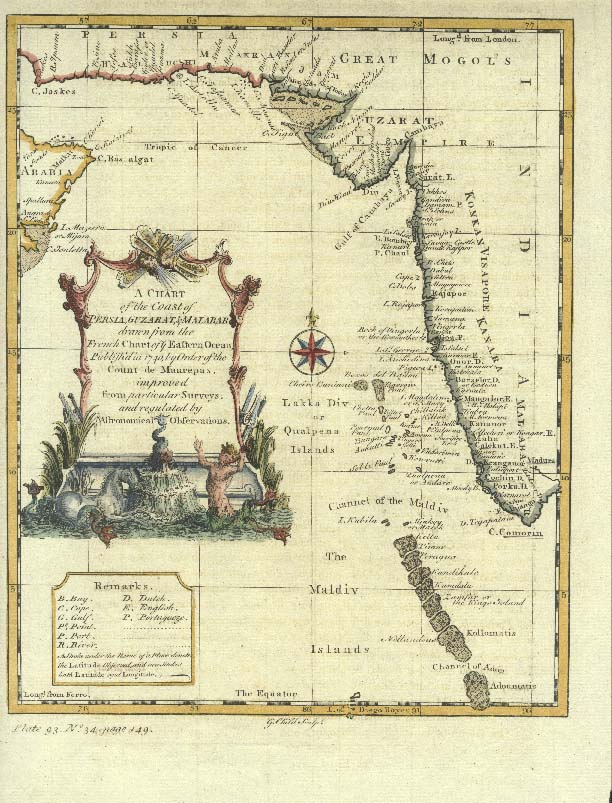
We spent considerable time and space studying Zheng He's voyages, the Ming tributary system, Ma Huan's accounts, the Selden map, and Arab traders' reactions when a couple of Chinese treasure ships ventured as far as Jeddah in the Red Sea. This post will cover the importance of pepper not only as a spice but also as currency in China, and it will also discuss the ousting of the Chinese from Calicut and Zheng He's death.

Nevertheless, a final voyage set out in 1431 to attract new
envoys and returned after three years, this time also touching new shores in
Africa, the Middle East, and Jeddah. Zheng He, as it appears, died at Calicut
during this last voyage of 1433. The Chinese economy continued to deteriorate;
troubles in Annam worsened. Up North, the Chinese lost to the Mongols, and the
Ming king was taken prisoner. And with that, Ming China shuttered its gates,
ports, and shores, effectively walling itself off from the outside world. That
said, let us go back and check some details.
Pepper Hu Chiao as Spice and currency
T'ien Ju-kang’s paper offers valuable insight into this
aspect. Calicut's status as the leading pepper exporter on the Malabar Coast
was likely the main reason for this Chinese interest in the port.

In the 14th century, shipbuilders received pepper bonuses: a pound per worker. This increased to as much as 4 pounds in the 15th
century. Servicemen were paid in pepper instead of winter clothing.
Nevertheless, only the wealthy and servicemen could consume pepper, not commoners.
Many other measures kept pepper prices high within China. As time went by and
pepper stocks grew and entered the market, rewards increased during Zhu Di’s
time. The price was generally maintained at 1 catty of pepper equaling one tael
of silver.

Interestingly, during the decades of the voyages, paper
money in China lost value, and almost all salaries were paid in pepper imported
from Calicut, making Calicut the most important destination! Many scholars have
overlooked the importance of the pepper trade in China, but strong demand for
pepper eventually led to the development of pepper plantations in Java and
Sumatra. With the arrival of the Portuguese, most of the pepper went westward
to Europe, while China depended on Southeast Asian producers and smaller
supplies from Malabar.
Potential reasons for the Chinese leaving Calicut
To analyze the reasons for the Chinese departure, we should
also look at Mameluke-Calicut trade relations. In 1432, two Chinese junks from
Cheng Ho’s fleet, after docking at Calicut, sailed with Calicut representatives
to Jeddah, bypassing Aden.
The exact report is as follows: Shawwal 22 [21 June A.D.
1432]. A report came from Mecca the Honored that a number of junks had come
from China to the seaports of India, and two of them had anchored in the port
of Aden, but their goods, chinaware, silk, musk, and the like, were not disposed
of there because of the disorder of the state of Yemen. The captains of these
two junks wrote to the Sharif Barakat ibn Hasan ibn 'Ajlan, emir of Mecca, and
to Sa'd al-Din Ibrahim ibn al-Marra, controller of Judda, asking permission to
come to Judda. The two wrote to the Sultan about this and made him eager for
the large amount that would result if they came. The Sultan wrote to them to
let them come to Judda, and to show them honor…
Whether this was planned or whether the Chinese coerced the
Nakhudas of Calicut into taking them to Jeddah is not known, but what we do
know is that the two Chinese ships at Jeddah hastened back to Calicut and
thence to China upon hearing of the untimely demise of Zheng He at Calicut
(Zheng’s ships had meanwhile left Calicut without waiting for the Mecca ships)
after he passed away. In fact, the Chinese were planning to go farther to the
Levant and the Mediterranean and touch Florence. Perhaps the attack on the
Chinese settlement was the traders' revenge when they realized the Chinese were
ready to usurp the Jeddah trade route. Compounding the fear that the Chinese
ships were large and could prove even more competitive (large capacity, lower
transport and handling costs), another fear the Arab traders in Aden and
Calicut had was that all the Chinese sailors and admirals were mostly Muslim,
so they might establish a good rapport with the Jeddah traders. It may have
been a preemptive act of revenge by the Arab traders of Calicut, who thought the
Chinese were preparing to usurp the profitable Jeddah trade route.

It seems the Chinese became entangled in the Cochin-Calicut rivalry. China was interested in Cochin mainly because pepper prices there were lower, and second, because of their competition and rivalry with the Arabs at Calicut, who were perpetually middlemen in the business. Tansen Sen states: Thus, perhaps in order to secure the supply of pepper and establish a base on the Malabar Coast for further exploration of the Indian Ocean, the Ming court decided to intervene in the confrontation that was brewing between Calicut and Cochin and, in 1416, conferred a special status on the Cochin ruler. I discussed this in more detail in my article on the Coronation Stone (see link). The Zamorin of Calicut objected to this decision. Calicut's diplomatic missions to China declined after 1417. Only three embassies, in 1421, 1423, and 1433, seem to have been sent to the Chinese court by Calicut after the imperial seal was conferred upon the ruler of Cochin. During the 5th and 6th voyages, they spent less time, as Sen notes. It appears things came to a head in 1433, and Zheng He passed away.
Departure from Calicut
The next time we hear of the Chinese in Calicut is from the
Malayali priest Joseph, a.k.a. Joseph the Indian, who went to Lisbon around
1501 in Alvarez Cabral’s Portuguese fleet. At 40, he was of sound mind, and his
interlocutors considered him very honest. His accounts (though his
interlocutors modified them here and there) were published around 1510-1520.
Joseph stated that the Chinese, possessing remarkable energy, conducted a
first-rate trade in Calicut. He also says the trade flourished when White
Chinese with long hair, a fez, and head ornaments were present in Calicut,
adding that during 1410-1420 the Chinese had a factory in Calicut.
What he tells us next is quite dramatic – having been
outraged by the King of Calicut, they rebelled and gathering a large army came
to the city of Calicut and destroyed it. From that time and upto the present
day they have never come to trade in the said place and they go to a city of a
King Naisindo which is called Mailapet.
According to Joseph, the Chinese left Calicut after this
slaughter and moved their base to Mailapet on India’s eastern shores
(Nagapatinam?), leaving behind a small colony of half-caste (Chini Bachagan, as
referred to in Logan’s Malabar Manual and Abdu Razzak’s memoirs). Nevertheless,
I don’t agree with Ray’s translation of the term as boatmen.
Zheng He's death

Although Zheng He did not go to Mecca, the other writers such
as Fei Hsin and Ma Huan reported visiting the Kaaba Mosque in Mecca. A very
religious man, Zheng He did not accompany the voyage to Jeddah and the travel
to Mecca. Why so? This suggests he was too ill to travel, or he would not have
missed it. Aged over 62 (Was he 62 or 80 as some claim?) by then, he must have
been a tired man after all this exertion.
After the ships returned, Wang Cheng was appointed to Zheng
He’s post as chief supervisor of the department of ceremonials. But the
question is: how did Zheng He die in Calicut- was it illness, during a battle
with the Pardesi Arabs, or just old age? One speculation is that he was
involved in a battle between the Calicut and Cochin forces in 1433; another is
that the Pardesi Arabs ousted him and perhaps killed him; and a third is that
he died of illness. Some say infectious disease, which was the reason for
disposing of the body at sea rather than a local burial. Sea burial is not
favored unless the circumstances are extraordinary. If he was gravely injured
(or ill) and died at sea, then a sea burial is allowed. Alternatively, a quick
sea burial may have been necessary because the Chinese fleet had to flee in a
hurry, and according to Muslim tradition, the body disposal had to be carried
out within a day.
An article written in 1457, titled “Feihuan An Xianghuo
Shenxiang Ji” [Records of the Idolatry Images in the Temple of No illusion] and
appended to The Romances Sanbao Grand Eunuch’s Western Ocean Journeys, states
that Zheng He died in 1433 in Calicut. Zheng Yijun’s research also concludes
that Zheng He died in 1433 in Guli (now Calicut) in India. Interestingly, when
the Xuan Emperor ordered Zheng He to make his seventh voyage to the west, Zheng
He felt it would be his last trip, and he engraved his navigation history on
two stone steles before departing. One stele was set up at the Liujia Harbor in
Jiangsu province, and the other at the Wuhu Gate in Fujian province. Zheng
Yijun argues that in April 1433, Zheng He’s fleet traveled from East Africa to
Guli, where he died of a chronic illness at age 62. The weather was scorching,
and because the trip back to China would have taken 3 months, he would have
been buried in Calicut or perhaps Semarang in Indonesia. But no burials or
stones testifying to it have been located thus far.
According to recent studies by Cheng I-chun and Chuang
Wei-chi, Zheng He also passed away in Calicut. A burial may have taken place in
Semarang, while the alleged grave in Nanking perhaps contained only some of
Cheng Ho's personal belongings. Although this theory has some vague textual
evidence, we still lack definitive proof.
Shang-yuan Chiang-ning liang hsien-chih (Gazetteers of
Shang-yuan and Nanking), compiled during the T'ung-chih period (1862-1874),
Asian Library Collection, University of Washington. Chng says - It was only a
few years ago, while preparing a biography of Cheng Ho for the Ming
Biographical History Project, that this author came across a reference in a
local gazetteer to the effect that he passed away at Calicut during the last of
the seven voyages.
Although we can conclude that his body was neither returned
to China nor buried outside Nanking, we understand that he had adopted a son,
Cheng Hao, who inherited his property.
Ambassadors return to Malabar 1436
Some ambassadors from Calicut accompanied the last Ming
fleet, so it is unlikely the Zamorin was connected to Zheng He’s death, or his
ambassadors would have hesitated traveling to China. A natural death is
therefore indicated. The documentary evidence notes that, as usual, envoys from
various countries arrived in the wake of the returning fleet. According to the
MSL entry of 14 Sept 1433 (Jun pa-yueh-hsin-hai), King Pi-li-ma (Vikraman) of
Calicut sent his ambassador Ko-Pu-man-tu-lu-ya and others to the Chinese court.
They are listed second in a group of foreign envoys, mainly from Southern India
and the Near East.
On Sept. 19, they were given a formal reception, and on Oct.
3, they received gifts. They stayed in China until 1436, when the Cheng-t’ung
emperor Hsuan-te’s successor ascended the throne. The envoys were then sent
back on Aug. 11, 1436, with the ships (Javan tribute ships) as needed. After
this last voyage, trade shifted to private entrepreneurs and traders. Ray
affirms that after 1439, we do not hear of any Indian envoy visiting the
Chinese Court nor of any Chinese ship coming to the shores of Bengal or Kozhikode.
Trade did not stop after the treasure voyages
After Cheng Ho's voyages, foreigners brought pepper to China
as tribute, and independent Chinese merchants did as well. The Imperial court
still maintained strict control over this profitable trade, and imported pepper
always had to be sorted by quality. "Some was assigned for imperial
consumption, and some stored for soldiers' pay and provisions." The small
merchants and vendors benefited too, for "with as little capital as a
single coin a man could make his fortune through buying and selling pepper
everywhere." But dealing in bulk remained an imperial monopoly. Even in
the later years of the Ming dynasty, the punishment for trading in more than a
thousand catties of sapan wood or pepper was penal servitude in a distant
military station and confiscation of the goods.
Ban on future treasure ship voyages
Haraprasad Ray, in his paper, notes that the cessation of
voyages was not only due to a royal decree but also to Japanese piracy on the
seas, military failures, a peasant uprising, problems at Quanzhou, the move of
port operations to Fuzhou, malaise and bureaucracy, a sharp fall in the value
of Chinese paper currency, the rule that seamen had to contribute to
shipbuilding instead of receiving a stipend to sail, and finally a ban on
private trade. These factors are often cited as stemming from anger at the corrupt
eunuch caucus, a view repeated by many writers. One curious account also
suggests that Zheng He may have kept his technical knowledge (such as maps)
secret and shared it only with the Emperor, Zhu Di.
The Chinese colony in Calicut
In a 19th-century Mackenzie collection of interviews, the
Sahabandar Koya states that his ancestors were from Sini Kupola, suggesting a
possible Chinese connection (according to Taylor & Mackenzie), and that he
helped the Zamorin defeat the Valluvanad-Arangottu Swaroopam chief. When
Abdulrazak visited Calicut in 1442, he did not see any Chinese ships (he saw
them at Ormuz) but did see Chini Bachagan (in Farsi, Chinese infants) at
Calicut, suggesting that some private trade continued even after the cessation
of royal trade in 1436.

Ray says that after this fiasco (around 1440, presumably),
Chinese junks occasionally visited the port of Negapatam under the Vijayanagara
kingdom and Ormuz, as testified by Abdurazzak. The ouster of Chinese traders
from Kozhikode seems closely linked to the ban on voyages and the consequent
end of imperial interest in overseas trade. This is because the Chinese
merchants who traded at foreign ports in defiance of the imperial will were
left without diplomatic protection or arms. Chinese junk-owners and inhabitants
of Batavia and Manila were either harshly treated or even massacred in the
seventeenth and eighteenth centuries, like their compatriots in Kozhikode
during the fifteenth century.
Abbas Panakkal reports that three mosques in Calicut have
Chinese names, along with a protected shrine (Cheenedathu Maqam) adjacent to
the Puthiyangadi mosque. He also mentions Shafique's family, a bank officer,
who have Mongoloid features and claim to be the progeny of Chinese traders.
Panakkal says the shrine is for Sheik Seeni (Chinese Sheik), attached to the
Chinese mosque (Cheenedath palli), and that, at his request, they allowed him
to conduct detailed research after uncovering the tomb. According to Shafeeq,
Parapalli – the mosque and the Puthupanam Cheenam Veedu – are said to be
located in the erstwhile Chinese colony. It is also mentioned that Vadakara or
Vadakke Kara was the northern limit of the old Chinese colony.
Raghava Varier concludes that the Chinese contact has left
behind a few field names in the coastal areas of Malabar, especially in and
around Calicut. At Calicut proper, near the 'Silk Street,' there is an area
called Cinakotta, meaning Chinese fort. This association of a Chinese fort with
the Silk Street is suggestive, even though silk is not traded here at present.
At Kappad, the famous spot believed to be Vasco da Gama's landing place, there
is a vast compound named Cinacceri, meaning a Chinese settlement. At
Pantalayini Kollam (Fandarina of the Arabs and Fan-ta-la-yi-na of the Chinese)
and at Quilandi, there are old mosques. This suggests that the Chinese traders
were followers of Islam. In the trial diggings at Pantalayini Kollam, Chinese
sherds were obtained at different levels. On examination by some Japanese
experts of Chinese porcelain, it was found that the Chinese ceramics obtained
are mainly the products of the kilns of Longguan and Jingdexhen in Southern
China. These sherds are tentatively attributed to a period from the 13th to the
18th century. Rich collections of earlier and finer varieties were made at
Quilon in the south and Pantalayini Kollam in the north.
All said, much more remains to be investigated, researched,
and concluded about the Chinese presence in Malabar over two decades.
References
Ray, Haraprasad, 'An Enquiry into the Presence of the
Chinese in South and Southeast Asia after the Voyages of Zheng He in Early
Fifteenth Century - Mariners, Merchants and Oceans, Studies in Maritime
History, ed. K. S. Mathew
Zheng He’s Military Interventions in South Asia, 1405–1433 -
Tansen Sen
The Eighth Voyage of the Dragon that Never was: An Enquiry
into the Causes of Cessation of Voyages during Early Ming Dynasty - Haraprasad
Ray
Trade Relations between Kerala and China 1200-1500 AD - M.
R. Raghava Varier
The Formation of Chinese Maritime Networks to Southern Asia,
1200-1450 - Tansen Sen
The impact of Zheng He's expeditions on Indian Ocean
interactions - Tansen Sen
Cheng Ho's voyages and the distribution of pepper in china = T'ien Ju-kang
Pepper Trade in East Asia - Ts'Ao Yung-Ho
Transformation of Admiral to the Sainthood and Sacred
Stories of Chinese Sanctum Sanctorum from Malabar Coast – Abbas Panakkal (Sacred
Sites and Sacred Stories Across Cultures, Transmission of Oral Tradition, Myth,
and Religiosity - David W. Kim)
A note on Ibn Taghri's description of Chinese ships in Aden
and Jedda - K. N. Chaudhuri
0 comments:
Post a Comment