
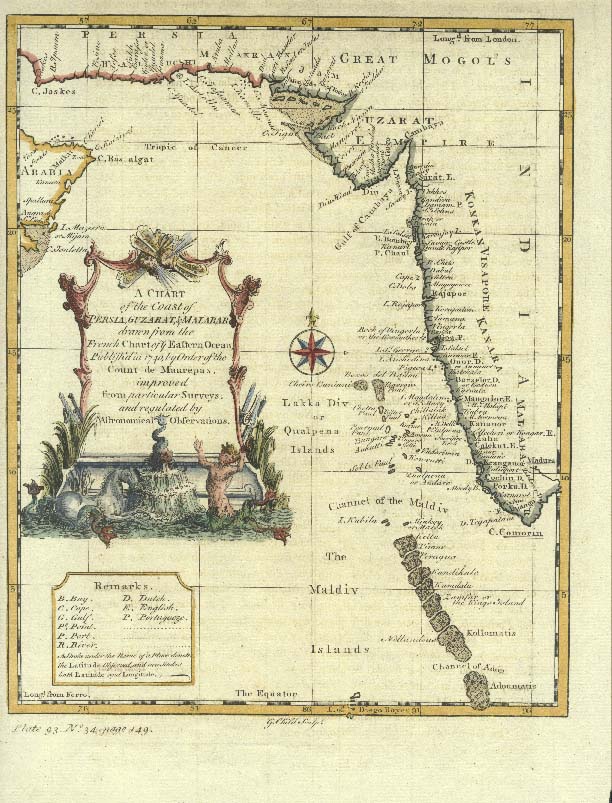
Ankhams of Malabar & The Curious Duel

Posted by Maddy Labels:

While the history of North Malabar, especially as related to Calicut proves to be relatively serious, the area around Cochin has added a number of curious and zestful stories to the historic texts, even if it were connected to a period of strife or occupation by foreign powers like the Portuguese or the Dutch. I cannot quite fathom why this is so, but the joviality was indeed lacking around Calicut.


The caste system was rearing its ugly and mighty head with great strength in Kerala during the medieval times. While the system was reasonably clear amongst the Hindu castes, it was a bit awry amongst the ruling elite with mighty quarrels erupting between the Cochin king, the Kolattiri and the Zamorin with the former two always claiming that the Zamorin had a lower caste status compared to theirs.

However the position of Christians and Moplah’s are curious indeed, for they were placed somewhere around the middle levels, thus sometimes providing a reason for conversion of the lowest class Hindus, the said reason being utilized cleverly by the Moplah leaders of those times to increase their ranks. The Christian and Moplah were thus somewhat on par with the Nair though even those religions set up their own caste systems.

Well, the Nairs were also adamant about maintaining their levels in the furor though their own higher classification was arguably suspect, with the questions resting around being Kshatriya or Sudra. Nevertheless, they were the armed warriors of Malabar and had the might of sword, I assume, to decide their standing in firm tones. If one were to ask about the various privileges and honors a Nair chieftain (Naduvazhi) enjoyed, they include among many others Ankham, Chungam, Ezha and Kozha (KKN Kurup – Kerala Studies). While each of them is an interesting term, we will in the course of this note dwell upon Ankham or the right to duel, for that is what we will talk about together, with the right of way and exemplify it with a small record of a duel.

But the position of the foreigner was always interesting, for they were allowed to intermingle even (possibly owing to their apparent military might) with the Brahman and ruling classes or remain on top. But it was not necessarily easy as we shall see. In fact there is one documented instance where the Portuguse used their power to elevate certain Sudras to Nayar level (we also know that Marthanda Varma used this as a tool to get more people into his fighting ranks in Travancore) after a war around Chetwa. Over time, many became Nairs, like Andhra Nairs or Ottu Nairs who were originally Kusavans or potters and the categorization of Nairs went from 7 to 64. But this is not an anthropological study; I was just providing some background to establish perspective.

So we saw that the Nair placed himself at his spot and ensured a clear separation from classes lower down. A Nair as we read was expected to instantly punish a person who would apparently defile him by touching his body or even breathe near him; and a similar fate awaited another, who did not clear the road when a Nair passed (Buchanan) According to the tradition at that time, these classes were forced to maintain a distance of 64 feet from the upper classes to avoid pollution. Other castes like Nayadis, Kanisans and Mukkuvans were forbidden within 72 feet, 32 feet and 24 feet respectively from the higher levels.

As a writer recorded - Take the sad example of the Pulayas. If a Nair felt the breath of a Pulaya, he fancied himself polluted, and was obliged to kill the man, and make certain ablutions in public with great ceremony. If he spared the Pulaya, and the matter reached the ears of the Raja, the Nair would be either put to death or sold for a slave. The Pulayas in the fields were obliged to cry out ‘Po! Po’ incessantly, in order to give notice to any Nairs who might chance to be in the neighbourhood. If a Nair responded, the Pulayas retired to a distance. No Pulaya was allowed to enter a town. If a Pulaya wanted anything he cried for it with a loud voice outside the town, and left the money at a certain place appointed for the traffic. Some merchant then brought the commodity that was called for, and took away the price of it.

So in order to avoid defilement or pollution, the Nair also walked along noisily, drawn sword in hand, and if somebody of lower caste crossed his path, it is said that they got killed, otherwise serious purification rites at exorbitant costs had to be completed before the said person was clean. Thus came about the concept of ‘right of way’. Now as the story goes, the Nair being a proud individual refused to give way to the new entrant – the Portuguese soldiers who had been granted staying rights in Cochin, by the King. The Portuguese would have none of it. A huge hue and cry ensued and the king of Cochin finally decided to bring the matter to a closure with a formal Ankham that got reported in a number of history books. Let us see what happened, but before that a few words about the concept of the Ankham.

Ankham – The right to duel

Duel fighting was a traditional way of formally settling private claims. A payment was made to the naduvazhi, important personnel were invited and a sword and hand to hand fight took place. There were of course petty duels and major duels. In the latter category lie the various famous duels fought by Aromal Chekavar & Tatcholi Othenan. Such major duels were complicated affairs which I will cover another day for it involved much drama as it was more of a fight until death, involving drama, prayer, celibacy and many vows. It is said that the combatants had to have at least 12 years training to fight an Ankham. Some of these aspects seem folklore, especially the time of training and the fight until death which were definitely not the norm, but valid for ceremonial major duels (To cover this I have to get to the story of the Chekavars as well as the Mamankham)..

So to summarize, a Malabar duel, or single combat was quite common among the Nairs with each duelist required to pay a sum for permission to fight. Sometimes they were fought by hired champions (reminds you of the Wild West - right??). A duel is thus fought between two fighters, each side being represented by a Ankachekavar. The ruler represented by the surviving Ankachekavar was considered the winner.

But back to strict protocols to establish the perspective, let us look at the top –When the Zamorin writes to the Rajah of Cochin, or any of the superior Princes write to each other, the letter must be addressed not to the Prince, but to the chief Rasidoor, who in Cochin is called the Naicoviti, and the chief Rasidoor of the Zamorin is called the Mangatachan. If a Nair brings a letter from his Rajah to another, or to the Commandant, he must prostrate himself thrice in token of reverence; a Brahman or Pattar is exempt from this ceremony. When the Rajah is employed in religious activities no one may speak to him, not even a Brahman; but if any very important circumstance occurs which demands his attention, he must be informed of it by certain signs on the fingers.

So in those days when things were so to say amicably settled with a fight enjoyed by the watchers, a small complication arose. What about the right of way for a foreigner? Well, the Portuguese of course imagined themselves to be at the top of any hierarchy, and the Nairs would not allow these warriors above them if they could help it. While sea fights were one thing, the Portuguese walking with a retinue of soldiers, local or foreign on local roads or pathways is another thing. They could be decimated by the guerilla warfare and hand to hand fighting expertise of the Nairs. The numbers were not on their side and this kind of combat was not on the lines of the organized war that was waged at that time, and thus it was imperative that the protocol was established for the foreigner. 

The dispute ran so high (according to the Portuguese) that at last it was agreed between the Rajah and the Portuguese General in Chief that it should be settled by a duel between a member of each party, and that the winner should win the right for his associates. As the Portuguese themselves record, they decided to use a little deceit in order to win this duel. But I smell a ‘fix’ in this story, so as to bring about a workable conclusion.

In Vissicher’s words - So on the appointed day, the Rajah selected his most able fencing master, who was well versed in the use of sword and shield. The Portuguese also made choice of the bravest of his army for his champion, but dressed him in common sailor's clothes, so that if he were to lose, the disgrace might not fall on the army, however he prostrated his adversary three times, and the Rajah, unconscious of the deception, was very much surprised that a common sailor should display such dexterity. Anyway the duel progressed and it is said hat the Nair lost to the Portuguese following which the king accorded the right of way as he had previously agreed, to the Portuguese.

As Vissicher states - Since this time, the Nairs have always conceded the right of way to the Europeans, except in one or two instances in my time, when they have disputed that right with our soldiers, who resisted their incivility so valiantly that they have not had courage to repeat it.

Thevenot describes the duel as well: " They yield precedence to none except to the Portuguese. To appease the quarrels which often arose on this point, the Portuguese General came to an agreement with the King of Cochin, that a duel between a Nair and a Portuguese should be fought, and the conquering party be entitled to precedence; and as the Nair succumbed, the Portuguese precede them."

Now to introduce briefly the fighter or the Chekavar - As the saying goes, "one became a Chekavar only after the fight of an ankam" and that "A Chekavar's food was on the tip of the sword. They were a special sub caste of Tiyyas termed chekavars who were highly trained Kalari masters, and were engaged to fight in an ankham, to the death in order to solve disputes between higher castes. As the ankham ended with the death of one of the warriors, the warriors charged high prices for fights. In addition, it was also customary to pay compensation to the families of those who died in the fight. Foul play in the ankam was disallowed and the parties were expected to observe the highest ethical standards while taking part in the combat. Ankham were fought on an ankathattu, a temporary platform, four to six feet high, built specifically for an ankham. The price paid per combatant was about a 1000 fanams at that time, a large amount which of course went to the naduvazhi who had the rights to supervise & conduct an ankham. So as we saw, these were the deadly gladiators of the medieval Kerala, fighting the deathly duels for the higher castes.

U Balakrishnan Nair states in an old article - In Old Malabar, blood-feuds and mortal combats were the rule rather than the exception: in truth, the common saying ran that " the slain rests in the yard of the slayer." For the Nair was by no means peaceful in private life even. He invariably carried arms, kept a sharp look-out for those who had offended him, and thirsted for revenge. Assassinations thus were frequent; there were often surprises and scuffles, and sometimes contests in the open field. In passing through a crowd, he bore his head high, struck his sword upon his target, and, in the grand style, called out, not simply to obtain a clear passage quickly, but also to make known his rank and establish his dignity. When a man was slain, the duty devolved on his kith and kin to be avenged on the slayer or a member of his family. And with that we come to another facet of life then, remnants of which we see even today in Kerala society. This is something termed Kudipaka. 

What is Kudipaka?

By definition, it is a hereditary family feud verging on Vendetta. Basically the concept of family feud and deadly hatred rested upon vendetta or revenge, which will continue until death of the opposing member. Upon death of a member of a family in a duel or fight, the family kept a blood soaked rag in the sanctum sanctorum of the house, and the family took a vow of revenge that should traverse generation to generation till all male members of the other family are killed and their dwelling (most usually just the outhouse) destroyed or burnt.

Above all was the fidelity of the Nair swordsman or foot soldier to his employer.  They were thus usually employed in Changathams or convoy escorts who defended any responsibility given to them, even at the cost of his life. It is well recorded that this was always discharged honorably by the Nairs of that time, for if they did not, they were degraded to the level of Kosavans (it is thus that the derogatory usage ‘eda kosava’- came about in Kerala) or potters. Upon the death of a Nair in the course of duty, the aspect of Kudipaka commences and a series of new duels take place. Of course if the level was the highest involving the death of a chieftain, then the Chavers or suicide squads enter into the foray as I wrote earlier in another article.

So as you saw, those times were not bereft of all kinds of strange but interesting customs which bewildered anthropologists and travelers enough to get them writing voluminous texts that we are lucky to read today

References
Kerala Studies – KKN Kurup
Cochin state manual – Achuytha Menon
Malabar Manual – William Logan
Letters from Malabar- Jacob Canter Visscher 

The Royalty of Palghat

Posted by Maddy Labels:

We talked a bit about the Cochin Kings, we talked much about the Zamorin, we mentioned the Kolathiri and Arakkal Beevi in passing and we even sidestepped the Velathiri thus far, but did not forget the king of them all, the Cheraman Perumal. We met them all in many historical alleys over the past few months. As I stumbled past these dark alleys with little fear but much excitement, you all kept me company. Thank you for that


The various Naduvazhi swaroopams, like the Perumbadapuu, Nediyirippu, Kurumbra, Kola etc were mentioned and we talked of external factors like the Dutch, the Portuguese the English and so on. We also mentioned the Achans of Palghat, but I did not venture to detail that part at all. I even entered the Nila valley and talked about the lesser though richer Kavalappara feudal family and the Palghat gap, though not getting involved in the history of Palghat itself or its kings. Now that was not quite nice on my part as my origins are actually from Palakkad and so this is overdue.

So we go to Palghat for a while, we will talk about the past of the present granary of Kerala, the un-spoilt green lands, where we still have tribal dwellers, silent valleys, majestic elephants wandering in forests, lush paddy fields, gramams, tharas,  and traditional tharavads with a tank or two, temple festivals and so on…and I belong to such a village and a tharavad in that small village called Pallavur.To get to Palghat from the East in the past, one must cross the Western Ghats and trace out the Palakkad gap which I talked about some time back. As you cross over, you are struck by the change of soil type and green ambience. Gone is the dry and black cotton growing soil and you now see lush green with wetter soil and a spread of paddy fields. From here the Bharatapuzha flows serenely westwards, to meet the sea.

Palghat was unfortunately or fortunately in the paths of hungry people, greedy traders, marauders preying on them, fugitives and of course travelers. On the Tamil side were weavers, grain and gem traders, and on the other side the kingdoms of Cochin and Calicut, vying to maximize the spice trade with the Arabs and the Chinese. The flow of goods and wealth was always through the Palghat country and the strategic location as a wedge in the middle of them all made Palghat a veritable battlefield on many occasions as I detailed out some months ago. Different kinds of people came, went or settled in these plains and later, paddy cultivation ensured low level work. While the Kongu kings never settled, the over-lordship of Palghat careened between the Cochin and Calicut kings acting as Suzerains. Many a type of people remained, like the Tamil Iyers, the Mannadiars, Chettiars, Moplah’s, the Rowthers and of course the Namboothiris and Nairs. They were coexistent with the aborigine indigenous hill tribes, many of whom are still present. And so it was an amalgam of cultures and dialects, each peacefully living in harmony, except when one or the other among the mighty neighboring kings decided to create havoc in those placid lands, and later even the greedy and ruthless Sultans of Mysore.

But to put it in a nutshell why did Palakkad present such a strategic importance to Calicut and Cochin? Because both were dependent on imported rice and other grains from other states, especially Tamil Nadu and Orissa which reached them through the ships of the Marakkar sea merchants. In good times, all was well, but with the arrival of Western powers who threatened these staid shipping lines for their own greedy purposes, the Zamorin believed correctly that he would be in deep trouble if there was a rice shortage. As you may recall, almost all sundry payment to soldiers and services was in rice. So he looked southwards into Palghat which had abundant rice cultivation. For some years the relationship was fine, during some years it bristled, some years it erupted in violence.

The two ruling clans of Palghat were established when the lands were once upon a time  split along the Bharatapuzha with the more productive south ruled by the Nambiati’s from Kollengode and the lands North by the Palghat Achans. As you could imagine, whenever faced with a problem, these two less than mighty rulers, curried favor with the opposite suzerain (Cochin & Calicut) to maintain a proper balance. This continued till eventually the Mysore Sultans destroyed it all, like the veritable monkey and cake story. After the British took over, the North portion belonged to the British, whereas the South continued under the Cochin administration as Chittur – Cochin.

It is said that the very first ruler of Porainad the old term for the area was a Pandian Tamil king called Subhangi who turned out to be a woman in mans clothing. The ruler was called Poraian and the region was part of the Chera empire as time went by this became Nedumporiyar. In 980 Ad we have the Kongu pada story when the Kongu kings army was defeated by the armies of the Nedumporiyar, Ernanad,Perumpadappu (Cochin) & Valluvavad. In compensation, the Poriyar had to give the Chittur area to the Cochin king, Koduvayur to the Ernanad people etc. In all the region had over 15,000-20,000 Nairs of fighting force which naturally was a very important statistic in times of war.

Of course there was a time before these kings when Palghat was the seat of Jainism and Buddhist learning, the birthplace of many famous astrologers and astronomers. But that is something I will cover later in a separate article, some other day.

The Nedumpurayur or Tharoor swaroopam

As thus I get into the story of Shekari Varma.  Ancient Tamil literature terms the raja of Palghat as the Vellappanatta (Vellapanad) raja and the Tharur family traces their lineage back to Sekharai varma. Their original palace and tharavad were once located close to the present Victoria College grounds, but moved to Kallekulangara after Haider came to Palghat. The Southern tip of their rule was Tharavur which later became the seat of the junior branch. They had a peculiar relationship with the Zamorins of Calicut (and a stronger relationship with the Cochin raja as you will see) for on one side there were a number of sambandham’s between the two families, but they also stood in the way of the Zamorin’s expansionist policies. The Nedumpurayur royal family was later known as Tarur, Taravur or Taruvayur Swaroopam and finally as Palakkad Raja Swaroopam. The Tarur Swaroopam covered Palghat, Alathur and Chittoor Taluks.

Sreedhara Menon mentions that the original seat of the Palghat Rajas was at the Athavanad Amsam (Ponnani Taluk) and they are believed to have exchanged their lands there for their later dominions in the Palghat-Chittur area with the Azhuvancheri Tamprakkal. The Nairs of Kongad, Edathara and Mannur were originally feudatories of the Palghat raja, but were later courted by both the Zamorin and Cochin Rajas during the medieval periods. Some time in the 13th century, a couple of princes from the family married into the Cochin family to maintain the line of male succession.

But for the origin story, and the first connection to the Cochin royal family, we go a long way back, to the fun part, for this sounds like it is straight from a movie story.

The story ( I quote Sibi) is that once in the unmemorable past, the land around Palakkad consisted of thick forests covered by hilly granite heaps, where human habitation was virtually impossible. It is said that four big elephants of Raja of Cochin once ran amuck into the forests of the 'Kuthiran' hills The Raja sent his soldiers with mahouts in search of these elephants, but in vain At last one of the princes of the Cochin Royal family entered into the thick forest with four Nair soldiers He obtained the assistance of some hill tribes and with their help regained the lost elephants The prince and the Nairs returned to the Raja of Perumpadapu and were received with great jubilation But the prince himself felt bad as his heart was weighed down with grief. The members of the Kshatriya Royal house found to their dismay that this prince was deeply in love with a tribal girl with whose help he had obtained the assistance of the hill tribes.

The rigors of the caste system were immediately evident from the reactions. This resulted in the immediate excommunication of the prince. He returned to the Palghat hills, where he got married to the tribal girl. With the help of the tribal’s who rallied around him with all sincerity and enthusiasm, the Raja established a royal dynasty and extended his sway over these uninhibited regions. The wisdom and statesmanship in him, combined with the courage and dedication of the jungle heroes, released a new lease of life, among them. It is believed that this prince was the founder of the dynasty of Palghatcherry.

Shekary Raja, then lorded over eight edoms (houses or major tharavads), divided between its Northern and southern branches. The Southern or Thekke thavazhi comprised Elayachan, Peruvakal, Naduvil and Ponnil edoms. The vadakke (Northern) thavazhi comprised Cherukotta, Pulickal, Mele and Poojakkal edoms. The members were called Achanmars (fathers) and the eldest five were the rajas 1-5 (shekhari, eleya, cavasseri, talantampuram & tariputamuran raja). So you can imagine that the raja, being the oldest was usually a grand old man who really could not govern, in return employed an able Achan as his deputy, to do the real ruling. As time went by the eight edoms became 27 (20 in the north sect and 7 in the south). The female members were called Nethiars.

Anyway the family continued to have troubled or cozy relationships with the Cochin king and Zamorin and got into serious trouble with the latter at times. In between we even had the case of the Portuguese and the Vijayanagar rayars coming to Palght to fight the Zamorin (actually Krishnadeva raya did not come himself as alluded – see my earlier article, but his generals Ramapayya and Devapayya came, and were aided by the Tharur Nairs in a battle against the Zamorin which the Mysoreans lost miserably). But these skirmishes continued on during the continuing times.

It was in the 18th century that the Zamorin finally took over some territory of the swaroopam as a result of the rice blockades and various other issues.  It is said that in the 1756-7 period, the Zamorin summoned the Achans to Kalpathi (Palghat Granthavari) where some of them were murdered. It is also mentioned that Kombi Achan who escaped the tragedy turned to Hyder Ali and thus brought in the miserable reign of the Mysore Sultans to Malabar. Today the family is sparse and separated, and we have of course some illustrious sons in the forefront these days. 

The Kallekulangara Bhagavathy temple in Akathethata (also called the Kaipathi temple or Hemambika temple which has a pair of hands as the main idol) is the family deity of Palakkad kings.

Kollengode Nambiatis

It would not be appropriate to leave this topic without mentioning the other power brokers of PALGHAT, namely the Kollengode nambiatis, though it is a long and somewhat interesting story by itself. As we all know, the panas and yakshis of Palghat are famous and I had written about them some time ago. But there cannot be the two without Gandharvas. So we get to the land of the Gandharvas or the south of Palghat, ruled by the Kollengode family.

Kollengode is the seat of the Venganad Nambidi whose family claims descent from an ancient Kshatriya Raja named Vira Ravi. The name Ravi Varma is accordingly still affixed to the names of all the male members of that family. Note here that the region named Venkunrunad or Venkatanad was corrupted to Venganad above in writings as time went by. The Venganad Nampitis are regarded as "Three-fourths Brahmin"; for they have the Upanayana ceremony, but are not entitled to study the Vedas, can sit and dine in company with Brahmins (though not sitting in the same row as the Brahmins). They were later termed the Valiya Rajahs of Kollengode after Tipu left the area. The location and strategic importance were high for it was another entrance to the Kerala side from the pass through the Anamalai hills. The Zamorin’s Naduvattom Nair was given the key responsibility, which as I understood, he sublet to the Kollengode Nambitis. Thus the nambitis ruled roughly the small region below the river comprising some 8 amsoms with the Zamorin as suzerain.

The traditions recorded by the family traces their beginnings to a royal person named Dharmavarma, who belonged to the Chera dynasty. The earliest story starts with the arrival of Dharma Varama to the Tiru Kachamkurissi temple near Payylur. As the article in The Hindu explains Dharma Varman, a prince, from what is now central Kerala, came, in search of a cure for a debilitating ailment. It is said that the dying Dharma Varman bathed in the healing spring waters that then existed in the forests around the temple, and after undergoing many days of ritual penance at this temple, at the feet of Perumal, returned to his kingdom, completely cured. Dharma Varman's grandson, Vira Ravi, became the first `utaiyvar' of this region, and it is a popular thought that he named his miniature principality, `Venkatanad' (later `Vengunad') in honour of Mahavishnu Perumal of Thirukachamkurissi.

But as legends go, Dharmavarma's son Hamangoda, is brought up to become a professional hunter, archer and warrior, by a black smith living near the Palghat gap, is supposed to have given the name Kollengode which literally means the land of the black-smiths, to the region which came into his possession. At this stage of the legend, a sister of the King, named Dronavadi appears and it is from her son Vira Ravi that the descent of the dynasty is traced, reflecting the matrilineal origins of this family as it was the case with most other families of chieftains of Kerala. As time went by another legend came up about Indra, the various Yaga rites and so on, but it would take too much space to cover that story. The family then split into 3 and migrated, one lot to Vendavanad-Pollachi, another to Thriprayar – Irinjalakkuda and finally the third to Thalipparamba in North Malabar. The palace they constructed can still be seen in Kollengode in full splendor though it is a popular Ayurvedic spa these days.

But a keen reader would get back and ask a question, why were the Kollengode kings half Brahmins or ¾ Brahmins? It appears that a girl was the cause, as most stories in history are, when heart ruled over the brain. The Raja of Kollengode was also ostracized by the Namboodiri Brahmins for his alleged illicit liaison with a low caste girl; however no real story could be traced out. Well, the raja was a clever man, he did not give in to the Naboothiris, he invited the Tamil Brahmins (who were at that point fleeing Madurai) over to his territories and bestowed his patronage in the form of lands, jobs and other amenities to them. But then again, it just might be a jumbling of the Skekharai varama story, with the story of the Nambiti. The Venganad Nambitis were mostly aligned to the Zamorin and figure in the list of feudatories usually invited for the Ariyittuvazhcha (coronation ceremony).

For a very detailed study of the Kollengode nambitis, please refer the NM Nampoothiri’s book, SammothiriNadu chapter 27.

References

A Journey from Madras through the countries of Mysore, Canara, and Malabar - Francis Buchanan
Malabar Studies – Samoothirnadu – N M Nampoothiri
Hyder & Tipu Sultan in Kerala - CK Kareem
Political development among the Tribals – Sibi Zacharias
Hindu Article

See new article on the Kollengode rajas - The Venganad Nambitis of Kollengode


Luís Vaz de Camões (Camoens) - The Shakespeare of Portugal

Posted by Maddy Labels:

Sometimes you wonder at the miseries that befall certain remarkably adventurous people. Look at this man Camoens, he accompanied some of the earliest Portuguese mariners to uncharted waters, lived in alien lands like Goa and Macau and wrote the greatest of Portuguese poems – The Lusiad. Today he is known as a national hero and the poetic genius of Portugal, but how was he treated during his lifetime? Not many will remember him or his times, or his love for a slave girl from India, or deep affection for his man Friday, the Javanese Antonio, for they were the only people who stood by him. Suffice to say that Camoens was an enigma, and little was he to know what the stars were to tell about his future, or how star crossed his affair with a gorgeous blond would turn out to be and how sad and forlorn  his last days wood be, instead of basking his fame and spending a substantial pension.

Luiz De Cameos (Cameos in Portuguese) somewhat related to Vasco Da Gama and hailing (according to historian Manuel Correia) from Lisbon was born around 1524, first endured misery when Lisbon was struck by an earthquake in 1526 (and later plague) and the family moved to Coimbra. He later studied in the Santa Cruz monastery until 1537 as an honorable poor student (now note here that his uncle was the university chancellor – so all it meant was that Camoens was on a scholarship). It is read that due to some problems with the university, he left and went back to Lisbon, to join the royal courts.

Soon he was involved in a romance with lovely blonde Catarina Ataide with golden tresses, a 13 year old lady in waiting to the Queen Catarina of Austria. Unfortunately another court hand by name Caminha had his own eyes on Catharina and as matters would have it, Caminha had a higher degree of influence on Catharina’s father (As you may observe, it is sounding like an Indian movie now). It appears that Camoens made lovely poetry for his beloved and passed it on (‘burning lines of passion’ as records put it)  it to her directly in contradiction to the strict rule that it had to be passed  through an intermediary, namely the court chamberlain, who by the way was De Lima – Catharina’s father. Well, as matters would have it, he was soon banished from the court for that and other reasons. He was next heard of in Ceuta were in a naval engagement alongside his father, against the moors, he loses his right eye to a flying splinter and returns to Lisbon in 1542 where he soon reignites his romance with Catarina.

The next three years were spent as a vagabond with disreputable company and known as a ‘face with no eyes’ , he composed satirical poems that alluded to the love the king had for his step mother. This was to raise eyebrows and more and in 1552 he was arrested and imprisoned (actually as it turns out, he was helping his low-class friends and injured an assailant who belonged to the king’s cavalry). But he agreed to be sent off to India for 5 mandatory years in return for a pardon and after first serving 8 months in jail in Tronco Goa. Another reason for his going to Goa was in search of his father who had departed in command of a ship destined to Goa (it appears the father was shipwrecked and died later in Goa). The bitter and not so young man sails out to the East in the mail boat San Bento, stating “Ungrateful country though shalt not possess my bones”.  At a parting meeting, Catarina tearfully promises to wait for him.

His is the lone ship that reached Goa the following year (the others catch up much later after surviving the storm), the place where his father is buried. Cameons now 29, soon gets disgusted and upset with the immorality in Goa and writes about all this while spending the next few months fighting in the West coast and the waters against the armies and navies of Malabar and Bijapur. He writes about Portuguese Goa “Of this land I can tell you that it is the mother of despicable villains, and stepmother of honest men. Because those who are here to get rich, always float on water as bladders”.

During this period, Camoens continued writing his style of poetry, which was saved for posterity by Correia. One of them which detailed the debauchery in Goa was soon to prove the reason for his expulsion from Goa to far away Macau by 1556. This part is certainly an unproven phase of his life though many historians continue to attest to the period in Macau. CR Boxer’s studies allude that the dates and events are quite wrong and grossly exaggerated. Anyway let us follow the popular tale for now.

There in Macau, he sat down to write the first 6 cantos of the famous Lusiads where worked as a chief warrant officer. He was apparently charged with managing the properties of missing and deceased soldiers in the Orient. He was later accused of misappropriations in Macau and was summoned to Goa to respond to the accusations of the tribunal. During his return journey, near the Mekong River along the Cambodian coast, he was shipwrecked, saving his manuscript but losing his Chinese lover. His shipwreck survival in the Mekong Delta was enhanced by the legendary detail that he succeeded in swimming ashore while holding aloft the manuscript of his still-unfinished epic.

Life was to prove even more difficult for the persecuted poet, for he not only heard that his old flame Catarina was dead (heartbroken as one is led to believe and unmarried) but also, upon landing in Goa, was cast into prison. He is released by the incoming governor, only to go in once again, for it was the turn of money lender Coutinho to get Camoens put in jail for a small but unpaid debt.

It was around this time that Camoens met Barbara, the Indian slave in Goa. Of her exact nationality, I have made a guess favoring India, but she is mentioned as Mulatto, African and so on, and one is led towards the Indian Hindu direction by a stray comment by biographer Richard Burton. 

Teófilo Braga , in his “History of Portuguese Literature: Camoens, his Life and Work” describes beautifully the magic spell of Barbara:

“The poet could not remain impassive before the voluptuous flexuosity of those curves which make alive the movements that wrapped him up; neither from the languid looks of a morbidity which magnetizes and breaks the will by desire. Barbara was the type of a native girl, dark skinned; arms and neck such as a bronze sculpture of a complete correction, lewd hips by the habit of hieratical dances. which bestow all movements a feline flexuosity, wholly wrapping, completing the seduction by the maddening brilliancy of black almond shaped eyes which provoke an infinite desire, which illuminate the smile of a small mouth, bordered by extremely white teeth with which she chewed aromatic plants; a light way of walking such as a free gazelle; a primitive grace such as of a submissive animal, which offers itself at the first caress”.

Camoens went bonkers over “this slave which has me enslaved” and wrote a famous poem (Endecha of Barbara) about her. Little was he to know that she would play an even greater part in his life. But life continued to be difficult in Goa and Camoens wanted his poems published. So he finally decided to go back to Lisbon, but he was unable to pay the full amount to his carrier and is abandoned at Sofala. In 1569 he was rescued from this beggarly and miserable plight and taken back to Portugal with nothing but the full Lusiad manuscript. He reaches Lisbon in 1570, after a full 17 years of exile and penniless.

But well, life is always unkind to some, for the plague was sweeping Lisbon as our man and his ship reach its shores. They are not permitted to land for many days. But they disembark finally, and Camoens gets engrossed in getting his manuscript approved for printing by the inquisition tribunal. The royal permission to print the Lusiads is finally obtained in 1572 where it was published, but resulting in no great monetary benefits for the author. Camoens is paid a silly pension and in return asked to remain in Lisbon. The next few years were spent in total misery, where the poet loses his benefactors one by one and finally his pension as well.

Strangely at this point of time, two other characters come back to life in his story. It appears that the slave girl Barbara as well as Antonio have reached Lisbon by now. Barbara is running a small grocery or fish shop and Antonio in the service of his master. Possibly Barbara was living with Camoens as well, for in the visitors book of the church of St. Anne one can read the inventory taken in 1572 of the house of the poet, and making a reference to the concubine, and there appears the following sentence: “Barbara who lives together with a person, who, for just causes, one does not mention”.

Faria e Sousa points out a tradition of an ambulant female seller, who was brokenhearted about the poverty of the poet: “a black woman called Barbara, knowing about his misery, gave him sometimes a dish of food, with the money that she earned from her sales and sometimes the money that she got from her sales”. António too became a beggar, and with the proceeds of his alms, he too took care of Camoens, until António died of the plague. Camoens left the world of the living  on the 10th of June 1580.

The death is recorded thus

The sad sickness unto death came at last, on the 10th of June, 1580. In a small, cheerless room of a shabby house in the Rua de Santa Ana (No. 52 or 54) Luiz de Camoens died, and he was buried in the neighboring convent of Santa Ana. On the fly-leaf of a copy of the first edition of the Lusiad (said to be in the library of Holland House), and in the handwriting of Fray Just; Indio, a Carmelite monk of Guadalajara, is found the following statement "What thing more grievous than to see so great genius lacking success! I saw him die in a hospital in Lisbon, without a sheet to cover him, after having triumphed in the Indies, and having sailed five thousand five hundred leagues by sea. What warning so great for those, who, by night and day, weary themselves in study without profit, like the spider weaving a web to catch small flies."

Camoens was a sad and miserable man in his last days - When a Ruy Diaz de Camara a noble, came to his poor dwelling to complain of the non-fulfillment of a promise of a translation of the penitential psalms, Camoens replied—" When I wrote verses I was young, had ample food, was a lover, and beloved by many friends and by the ladies; therefore, I felt poetic ardor. Now I have no spirit, no peace of mind; behold there my Javanese who asks me for two coins to purchase fuel, and I have none to give him."
Of the person - He was of middle stature, his face full, and his countenance slightly lowering; his nose long, raised in the middle, and large at the end. He was much disfigured by the loss of his right eye. Whilst young his hair was so yellow as to resemble saffron. Although his appearance was not perhaps prepossessing, his manners and conversation were pleasing and cheerful. He was afterwards a prey to melancholy, was never married, and left no child."

Of the dark skinned raven haired, black eyed beautiful slave girl Barbara or Barbora (as Camoens put it) christened Luisa Barbara , Richard Burton describes as probably a shipwrecked Hindu girl, she is lost from history, but personified eternally by Camoens, just like Baudelaire did in his Malabar girl (in copycat fashion). Experts state that Barbora could not have been Camoes's slave because he couldn't afford one. She was the slave or cook of the governor, Francisco Barreto, which made her subject to ill-treatment, though she was an excellent housekeeper and cook.

Let us take a quick look at the man and his poem on Barbara


Camoens and Malabar
It appears he went to Malabar in late 1553 or early 1554. On his first expedition, he joined a battle along the Malabar Coast. The battle was followed by skirmishes along the trading routes between Egypt and India. The fleet eventually returned to Goa by November 1554

But a  final question remains – If Camoens a Portuguese fidalgo found it so difficult to raise money for his voyage back home, how did the slave girl barabara or Antonio from java manage it? Did she perhaps stowaway to Lisbon? An interesting story lies behind all this and is a fit subject for fertile imagination.

Notes

1. Escrava means female slave so Barbara or Barbora Escrava is the slave Barabara. Goa’s slave market of the 16th century provided an abundance of slaves. Slaves were auctioned, and bartered, even at door steps. Domestic help were frequently used or even prostituted by their masters and friends.

2. Endecha is a kind of poem which induces 'emotional correlations by the sound and rhythm of the speech' Endecha is lyrical poem, melancholic and often, built from four lines, each verse with a six syllables.

3. There are experts who also say that Camoens died of malaria and neglect, not plague as reported. BMJ Sept 12th, 1908 reveals - It appears that the poet contracted malaria in the East, and in 1580, when the authorities of Lisbon were in fear of the plague; they appointed an official with large powers for the safeguarding of the public health. There is reason to believe that these powers were exercised for political purposes, being found highly useful for the removal of inconvenient persons, and it is hinted that Camoens, being obnoxious to the party in power, was thus put of the way. He was declared to be suffering from plague, and in March or April ordered to be segregated among the other victims of the disease. 

4.  To the uninitiated, the Lusiads, is a Portuguese epic poem written in Homeric fashion. The poem focuses mainly on a fantastical interpretation of the Portuguese voyages of discovery during the 15th and 16th centuries.

5. To see the Camoens memorial in Lisbon, click here

References

Memoirs of the life and writings of Luis de Camoens- John Adamson, Thomas Bewick

Camoens: his life and his Lusiads - Sir Richard Francis Burton

Camoes – Seen from Goa


To many, fame cometh too late- Camoens

The Many Faces of the Zamorin

Posted by Maddy Labels: ,

 Vasco Da Gama’s meeting with the Zamorin at Calicut 1498


There were many depictions of the natives or savages of Malabar before the arrival of Vasco Da Gama and I had covered some of them earlier. But the first time the Zamorin of Calicut was presented formally to the European public in pictorial images was after Vasco Da Gama met him. The Zamorin was by then titled as Samorin, Samuli, Samudri, Chamorin and so on….

The "Roteiro," or Journal, on the contrary, as is emphasized by Ravenstein in his translation for the Hakluyt Society, has the highest value, and from it the following description of the visit at Calicut is taken. The description of the meeting from the ship’s Roteiro of Gama, authorship unknown goes as follows. I am taking up the narrative from the arrival of the coterie at Manachira.

When we reached the palace we passed through a gate into a courtyard of great size, and before we arrived at where the king was, we passed four doors, through which we had to force our way, giving many blows to the people. When, at last, we reached the door where the king was, there came forth from it a little old man, who holds a position resembling that of a bishop, and whose advice the king acts upon in all affairs of the church. This man embraced the captain when he entered the door. Several men were wounded at this door, and we got in only by the use of much force.

The Brahmin priest is depicted in most paintings, as the main with the shaved head and the tuft. As you can see, the incongruity in hair style of the Iyer or Namboodri Brahmin seems to have been firmly imprinted on various minds which talked to the artists.

The king (Zamorin) was in a small court, reclining upon a couch covered with a cloth of green velvet, above which was a good mattress, and upon this again a sheet of cotton stuff, very white and fine, more so than any linen. The cushions were after the same fashion. In his left hand the king held a very large golden cup (spittoon), having a capacity of half an almude (eight pints). At its mouth this cup was two palmas (sixteen inches) wide, and apparently it was massive. Into this cup the king threw the husks of a certain herb which is chewed by the people of this country because of its soothing effects, and which they call atambor (Arabic tambur, "betel-nut "). On the right side of the king stood a basin of gold so large that a man might just encircle it with his arms: this contained the herbs. There were likewise many silver jugs. The canopy above the couch was all gilt.

The spittoon and the Vetilla thalam are obviously of brass, which have been confused with gold. The fact that the Zamorin was sitting on a reclining couch is somewhat confusing for many other pictures depict a throne. The green velvet is also a little confusing, it would normally be red, but then again it may have been a Persian or Arabic gift. Silver jugs would be approipriate for water. The canopy in gilt is also difficult to reconcile with. But let us assume all these are correct, for the time being.

The captain (Vasco da Gama), on entering, saluted in the manner of the country; by putting the hands together, then raising them toward heaven, as is done by the Christians when addressing God, and immediately afterwards opening them and shutting the fists quickly. The king' beckoned to the captain with his right hand to come nearer, but the captain did not approach him, for it is the custom of the country for no man to approach the king except only the servant who hands him the herbs, and when any one addresses the king he holds his hands before the mouth, and remains at a distance.

Some of the paintings obviously want to show the Gama as a person of higher standing that the Zamorin, so they show him close to the Zamorin on his right side.

"When the king beckoned to the captain he looked at us others, and ordered us to be seated on a stone bench near him, where he could see us. He ordered that water for our hands should be given us, also some fruit, one kind of which resembled a melon, except that its outside was rough and the inside sweet, whilst another kind of fruit resembled a fig, and tasted very nice. There were men who prepared these fruits for us; and the king looked at us eating, and smiled; and talked to the servant who stood near him supplying him with the herbs referred to.

Apparently the fruit is the jack fruit and the fig type fruit being bananas. But then again offering jack fruit seems a little stange, especially with the rough outside. Usually the jack fruit is plucked out and served, never will the skin be shown in an offering to the guest. Was it perhaps a tender coconut to be drunk? As you can see, the Zamorin was conversing with his Brahmin advisor who was at the same time preparing his betel leaves.

Then, throwing his eyes on the captain (Vasco da Gama), who sat facing him, he invited him to address himself to the courtiers present, saying they were men of much distinction, that he could tell them whatever he desired to say and they would repeat it to him (the king). The captain-major (Vasco da Gama) replied that he was the ambassador of the King of Portugal, and the bearer of a message which he could only deliver to him personally. The king said this was good, and immediately asked him to be conducted to a chamber. When the captain-major had entered, the king, too, rose and joined him, whilst we remained where we were. All this happened about sunset. An old man who was in the court took away the couch as soon as the king rose, but allowed the plate to remain. The king, when he joined the captain, threw himself upon another couch, covered with various stuffs embroidered in gold, and asked the captain what he wanted.

Many an artist working with cloth, wood, paint media presented him thus. It is certainly amusing to see how the scene was transformed into an image. Let us take a look at some of the images

The 1752 Le Abbe Prevost image
Shows the Zamorin with a golden conical crown which is a depiction of a possible Thalapaavu or turban. Did the Zamorin wear a turban for ceremonial occasions? It is doubtful, but may have been keeping up appearances. The people around are obviously half clad (in reality just wearing a dhoti) and look terribly muscular (virtually impossible). As we read in Correa’s and other writings, the possibility of rings around his shin and calves like Romans is pretty doubtful, though he wore a Shringala. The large spittoon is depicted wrongly and the overall ambience thoroughly inappropriate. The room itself looks too high (impossible for a thatched roof dwelling) with ornate curtains and hangings. Note that the Zamorin has no beard.

The Moore’s depiction Voyages & Travels on copper plates in 1778 

The room looks even bigger, the Zamorin looks very young, no beard, the spittoon has become a kettle, the throne has become more ornate, but in general a version based on the Abbe Prevost image with the same conical crown.

The Maurício José do Carmo Sendim (1786-1870) sketch

This one is pretty interesting. The Zamorin has anklets which is the veera shrinkala, he looks very much Chinese, has a great mogul style crown. The Brahmins have flowing hair, the men are dressed in a strange fashion and the throne looks more like a modern sofa. The hall looks very large, which again is incongruous. The spittoon looks like a large flower vase.

The Calicut Tapestry version (clipped from left corner of tapestry introduce din previous article)


This dates to the 16th Century and of Flemish origin. The Brahmin looks more appropriate, the Zamorin and his courtiers of course very western with typical clothing of that period. 

Jose Veloso Salgado’s painting 1898 - Vasco da Gama perante o Samorim 


Shows a darker and younger Zamorin, with a stylish beard, wearing a lot of jewels and a collection of people closely clustered around him. The throne is also ornate and you can see carpets on the floor. The Spittoon and the water jug (no longer silver are a way away)

The Coke Smyth version 1850’s


Shows a much older Zamorin on the floor, and the persons look wearling Punjabi and Mahrata garb. The brahmin looks dimunitive and the spitoon has become miniature.

An engraving from 1851

Very Arabic style with a general Persian impression. The Zamorin looks more like a traditional Sultan.

A more basic depiction (origin unknown)


An old painting showing Vasco Da Gama (right) meeting the Indian king and his courtiers in Calicut. The Zamorin has become a queen in this version and they are meeting outdoors. 

The 1510 commemorative medal by F Fonseca


This one is pretty interesting, shows the Zamorin with a royal turban, a couple of maidens base don temple forms playing the veena and a vision of the courtyard with elephants and the such. The Zamorin has no beard, is reasonably healthy for his age and sits cross-legged, while receiving his Portuguese visitors.

The commemorative coin released celebrating 500 years of Camoes Lusiad, date unknown (possibly circa 1900)

The Zamorin now has a beard, is fully dressed more in Arabic style including a sultan slipper, looks older, the Brahmin looks somewhat appropriate, and the picture is pretty much similar to the B&W  Lokesh Raina version in the Life magazine. I do not know which is the original sketch though.

Two more recent versions (around 2003)
More versions based on Camoes poems. Shows the Zamorin sitting on an ornate throne. The spears have been replaced with Western maces and the such.The Brahmin has changed shape and the palace walls have changed a lot with pictures of tigers and so on.

Now based on all this and many other factual descriptions, my next attempt would be to describe the palace of the Zamorin as it would have looked in reality. Unfortunately the palace grounds are covered by SM street, LIC buildings and so on these days., but all of the shopping area there encompassed the old palace. A depiction of it as an artist of that time saw it, was quite surprising, but more of that in a later blog.


References
Vasco Da Gama – Sanjay Subrahmanyam
Em nome de Deus: the journal of the first voyage of Vasco da Gama to India ...Glenn Joseph Ames, Vasco da Gama

Pics
Veloso Salgado’s painting – geographical society of Lisbon site
Medals, Abbe Prevost & Moore versions – Columbia Calicut page
Maurício José do Carmo Sendim from Wikipedia page on Vettathunad

Wishing all readers a happy & prosperous new year

Introducing the Calicut Tapestry series

Posted by Maddy Labels:

Voyage de Caluce – Voyage to Calicut

Some months ago, I wrote about the wood carvings by Burgkmair on Calicut Sprenger, Burgkmair and the Savages of Calicut. This time I will introduce you to what is known as the Calicut tapestry series from Tournai, the Flemish weaving center.

It was the crowning moment of Portuguese age of discoveries. Calicut had been discovered, Malabar had been connected and a commemoration was in order. The Portuguese wanted to show the world the exotic nature of the orient, and at the same time the vast difference in style and cultural advancement of the white man. The Calicut tapestry series was to be carried out in Antwerp and Dom Manual VI insisted that the depiction be accurate. Images and events were to be shown naturally and 25 themes were to be drawn covering the entire voyage of Vasco Da Gama from Lisbon to Calicut.

Various tapestries were made in Southern Netherlands in the 16th century and one of the important centers was in Tournai (Tower) which was originally occupied by English and later came under the Habsburg rule.

Two things stand out – the fact that the artists had to work on written or oral accounts of the travelers and secondly the strange ideas they had in their own minds of lands and people far away which found its way into the images. It is said by experts that the weavers even used images from the old tapestries portraying the exploits of Alexander the Great. As children listen to parents reciting tales of high romance or adventure, the people of Europe hung on the tales told by sailors returning from faraway lands  and in Flanders the weavers took stories brought back by Vasco da Gama's men and wove them into these tapestries. As there were no newspapers, rich nobles procured such tapestries commemorating and explaining the event.

Originally 26 panels were ordered, to introduce the oriental exotica to gawking European public, and thus were introduced the camel, giraffe, black skinned people, naked children, or outlandish costumes. The Voyage to Calicut series was completed in 1504. It was very popular and many copies were made.

The voyage to Calicut was procured for the regent Margaret of Austria, from Clement Sarazzin according to Delmarcel. The picture depicted is called the Voyage de Caluce, another name for Calicut. However Jardine and Brotton and others state that the tapestry maker was Giles Le Castre and sold 5 panels from the series through the shops of Arnold Poissonier to Robert Wytfel (Wingfield), counselor of Henri VIII or England in 1513.

The tapestry depicted shows Gama’s leave taking and arrival at Calicut, with the audience before the king, the procession of the monks on the right and at the left reaching Calicut meeting the bearded Zamorin (I am not 100% sure of this part as yet)  and unloading a unicorn.


References

Flemish tapestry from the 15th to the 18th century - Guy Delmarcel
Global Interests: Renaissance Art Between East and West - Lisa Jardine, Jerry Brotton
Circa 1492: art in the age of exploration Jay A. Levenson, National Gallery of Art (U.S.)

The Malabarese soldier

Posted by Maddy Labels:

Vijay, a fellow blogger and history enthusiast asked a question some weeks ago about the Malabarese soldiers who accompanied or fought for the Portuguese in various wars. It was an interesting question, considering the turbulent situations in medieval Malabar. Were they Nairs, the traditional warriors, or conscripts from the Christian trader communities, were they the ‘low class converts’, or soldiers from other classes such as Thiyya or Ezhava or hillmen like the Kurichiyars or otherwise or were they Moplah’s?  Considering that the Frinigi or Parangi – the Portuguese settlers were equally hated by all of the indigenous people, was it the lure of money that created this new mercenary class of Malabarese soldiers? How did they fare? How were they equipped and treated? Did they get equal opportunities? Interesting questions indeed! An anthropologist thrives in these situations, looking at the conqueror or occupier, the conquest or the spoils, the relationships and various angles, the land and the terrain, but I will not go in such a direction for I am no anthropologist, I will view the facts as an amused and deeply interested history buff, which I am and will try to bring them across to you in a somewhat coherent fashion.


And so I decided to do some checking. A detailed research is quite difficult for it means poring through a number of ancient Portuguese texts and working out meaningful translations, since this topic has not interested many in the past to elicit an English article. But I think I have sufficient information for a small note, so here goes. I will not continue beyond the Portuguese period and into the Dutch and British times, for the time being. The British times have been very well accounted anyway.

The greatest help in this area came from an interesting two volume book written by Sir William Wilson Hunter. The volume 1 covers the early period in good summary and my intention was to start there and augment the information with those from those who concentrated on the Portuguese period and written great works – people such as Panikkar, Subramanyam, Danvers, Mathew, Maleknadathil, De Souza and so on. The second half will be completed some other time.

We have to start with Vasco Da Gama, but naturally. He was of course not one to enlist any kind of local support and went back home fairly quickly, he was convinced he was in Christian lands though somewhat confused why he was not obtaining cooperation from the Christian Zamorin (I still find it difficult to believe he was so naive) against the Muslims. But we can zoom in to Almeida’s (1505-1510) period and then drift on to Albuquerque (1509-1515), the first statesman, who possessed a strategic vision. 

The first Malabarese who worked on the Portuguese side were soldiers supplied by the Rajah of Cochin. They find mention in the 1504 battle led by Pacheo when he was placed in charge of the defense of Cochin. Having only 150 Portuguese and a small number of Malabarese auxiliaries at his disposal, Cochin was vastly outnumbered by the Zamorin's army of 60,000. Nonetheless, by clever positioning, individual heroics and a lot of luck, Duarte Pacheco successfully resisted attacks for five months, until the Zamorin finally called off his forces. So now you can see that they are grouped under the title ‘auxiliaries’.

Some time back I wrote about Joao Da Cruz a Chetty or a Nair youth, who excelled himself amongst the Portuguese and rose to become a fidalgo, but that was just an individual. But many others joined the enemy’s forces as well after these initial forays. Now you must remember that many Nair men of those times were a kind of on demand soldier who worked for one or other naduvazhi, though the relationship lasted for a long time and they hardly defected to another. However they were loaned for ‘akambadi’ or escort activities to other wealthy citizens and traders or sent to take care of issues singly or as a group. If the headman or eventually the king ordered you to fight against other Nairs, you did so as a professional soldier. So at this stage, do not cloud your mind with patriotism and the such, it was just the usual Cochin against Calicut skirmishes, but one side had additional Parangi support, viewed from the Malayali mind. It must be noted here that the Nair foot soldier did not always fight for one chieftain or one noble. There have been many instances of one lot joining the other after a battle. They were in some ways mercenaries who allied with the best payers, I suppose. But this is gemeral conjuncture at this point of time. 

So for a lot of Nairs in the Cochin, teaming up with their better paying Portuguese collaborators was but natural. In history they are termed Malabarese. Many a Moplah also joined these groups. Interestingly as you pore through these musty old history books, you come across many battles fought in Malabar where the Zamorin or the Cochin king had many tens of thousands of Nairs whereas the Portuguese or Dutch had tens to hundreds of white soldiers with guns and a score of armed auxiliaries, but in many of these cases the Portuguese or Dutch win the battle. Whether it is discipline or just misinformation in the books, I cannot confirm, but that is how it is written in many books. Anyway many auxiliaries were available, armed with lances, swords and shields, possibly bows and arrows too. The way battles were fought then were different from the skirmishes during the British period of the guerilla type and the intent was not to move in action. Until then the battle was a formal stationery type of specified duration and fought in big fields, like a competition. I will get to that description another day.

I would assume thus that the source of the militia into the Portuguese forces, was mainly through the Cochin ranks and possibly because they paid better, in gold and not just rice. But let us try and find out more. For that we have to read the conclusions of WW Hunter in his book History of India Vol VI. The results were interesting to say the least, for it turns out that Malabarese soldiers had been fighting in those times not only for Malabar rulers or noblemen, not only for the Portuguese, but also for the Vijayanagar kings in their armies and not only was this force comprised of Nairs but also Moplahs and Christians. Now one must take “nairs’ with a pinch of salt, for in many cases, it is believed that they participated as group heads leading groups of faithful Thiyyas and hill men as I described previously.

So as we saw, the practice of enlisting native soldiers commenced with Pacheo. Albuquerque later employed two hundred native soldiers in the attack at capturing Goa (1510), and later used one thousand natives during Goa’s subsequent defense. His Indian troops consisted partly of Nairs, partly of the native Christians of Malabar, and interestingly it was these soldiers who first forced their way past the bastions of Goa. 

As Hunter puts it, After its final recapture, Albuquerque advanced with a mixed force of one thousand Portuguese and two thousand native troops. How far the native soldiers in these early operations were drilled, it is difficult to say, but the contemporary records disclose bodies of Asiatics as a regular part of the trained Portuguese forces, both on shore and in distant sea expeditions. To quote only a few examples: Albuquerque employed a mixed force of 1700 Portuguese and 830 Indians against Aden in 1513; and 1500 Portuguese with 700 Indians against Ormuz in 1515; while Soarez in 1516 sailed for the Red Sea with 1200 Portuguese, 800 Indian soldiers, and 800 Indian seamen.
 
The cavalry remained for the most part European; the infantry consisted largely if not chiefly of Indians. In 1520 the commandant of Goa seized part of the adjacent mainland with 250 horse and eight hundred Canarese foot soldiers, so by now you can see that it was not just Malabarese. As Hunter continues, Human beings were cheap in India in those times of wars, raids, and famines: a slave was valued in Bengal at fourteen shillings, " and a young woman of good appearance at about as much again." The slave population was also put into military service later.

Later you can see that while setting out on the expedition against Aden in 1530 Nuno da Cunha got together a fleet of four hundred vessels, most of them small craft fitted out by natives, with a force of 3600 Portuguese soldiers, 1460 Portuguese sailors, 2000 Indian soldiers, 5000 Indian seamen, and 8000 slaves. But all was not quite well, for the Portuguese in India, especially the lowest ranks were, as they wrote, an unmanageable and a reluctant foot-soldier. 

Hunter continues - Albuquerque, following the example of Alexander the Great in his Asiatic conquests, and of Hamilcar in Spain, encouraged his troops to marry native wives. The Lisbon court supplied dowries for these unions which at once created the nucleus of a female Catholic population and yearly added infants to the Faith. It soon appeared, however, that such nuptials had another aspect. In 1513 Duarte Barbosa raised his voice against " paying more for marriages to men who afterwards became Moors, than the worth of what Goa has produced up to the present, or ever will produce." But the priests defended the system, the Government provided posts for the husbands, and the records show a frequent desire that "the married people" should be greatly favoured. A languid population of half-breeds sprang up, and employment had to be found for them. In 1569 the attacking force on Parnel included 100 Portuguese, 50 Moorish horse, and 650 half-caste soldiers. Three years previously, in 1566, a militia, chiefly natives and half-breeds, had been organized for Goa— divided in 1630 into a body of regulars 2500 strong, and a defensive reserve of 5000 men.

As the flow of pay from the treasury dried up, the Portuguese soldiers and their half-caste descendants degenerated into a military mob, selling their muskets to native princes and stooping to every disgrace to fill their stomachs. In 1548 the King of Portugal was implored to allow war-service grants to the soldiers, "for they walk day and night at the doors, begging for the love of God. And if it would but end here it would be a lesser evil. But they go over to the Moors because they give them wages and allow them to live at their own liberty." "What stipends they received they gambled away.

The native infantry were disciplined and directed by Portuguese officers, but sometimes led by their own. Antonio Fernandes Chale, for example, a Malabar native Christian, held important command under Portuguese generals, and was raised to the dignity of a Knight of the military Order of Christ. Slain in action in 1571, he received a state funeral at Goa. In the previous year, 1570, the viceroy manned the defensive works of Goa against Adil Khan with 1500 native troops under Portuguese officers, holding his little force of seven hundred Portuguese as a reserve to support whatever position might be hardest pressed. "I certify to your Highness," wrote Pedro de Paria to the king as early as 1522 about the Calicut troops, “that they are as good as ours” and are practiced in shooting three times a week. The differences in drill and weapons were not so decisively in favor of the European system in the sixteenth century as they afterwards became. The chivalrous confidence of the first Portuguese adventurers in their Christian saints degenerated among their half-caste successors into a vague hope of supernatural succor, a habit of “always awaiting the benefits of our Lord working miracles on our behalf—which is a trying thing.”

Meanwhile, the officers of the Indian Department at Lisbon and at Goa embezzled pay for seventeen thousand soldiers, while only four thousand were actually kept up. The native troops became masters of the situation and rose in mutiny. After many troubles they had to be disbanded, and, when re-established on a different footing, commenced in our own day a fresh course of mutiny and revolt.

Antonio Fernandes of Chalium

I then tried to find some more detail on Antonio Fernandez, the convert soldier who rose up the ranks and who always delivered success. The mentions are not many but he seems to have merged well into the Portuguese ranks and is mentioned briefly by many historians. Let us look at some of his battles

1570 - Three thousand of the enemy began to invade the island of Joao Lopes, whereupon Antonio Fernandes de Chale, with 120 men, engaged them and killed a large number, and the rest took to flight. Adil Khan, in order to divide and weaken the Viceroy's forces, again persuaded the Queen of Garcopa to attack Onor. She collected an army of 3,000 of her own men, which, with 2,000 of the Adil Khan's soldiers, besieged the fort. It was in July, 1570, that the news of this further trouble reached the Viceroy. He immediately dispatched Antonio Fernandes de Chale with two galleys and eight other vessels with such men as they could accommodate. In five days Antonio Fernandes reached Onor, and having joined Jorge de Moura, the commander there, fell upon the besiegers, putting them to flight.

Danvers provides some more data of the 1571 battles - Peace having been thus concluded, the next care of the new Viceroy was to send relief to Chale, which he dispatched thither in two galleys, one galleon, and four ships,, under the command of Dom Diogo de Menezes; and subsequently two more galleys and three other vessels followed. These reliefs reached Chale too late, as the fort had already been surrendered to the Zamorin on certain conditions. The surrender was made, in opposition to the opinion of the majority of his officers, by Dom Jorge de Castro, who gave way to the entreaties and tears of his wife and the other ladies there. At this point I have to suppose that Antonio Fernandez (who was obviously from Chale – Chalium, it appears he converted some time ago) participated in that fight as well.

Dom Diogo de Menezes took on board his vessels all the people of Chale who were subjects of the King of Thana, and carried them to Cochin. He then divided his fleet with Mathias de Albuquerque, and cleared the sea of pirates. He next captured, and demolished, a fortress (built by a Naik, subject to the Adil Khan) at the mouth of the River Sanguicer, in which action there  fell Antonio Fernandes Chale, a Malabarese, who for his bravery had often occupied important commands under Portuguese captains. Being a Knight of the Order of Christ, his body was carried to Goa, where it was interred with great ceremony and state.

Mentions of Malabarese in the Vijayanagara army

This is the description of the arrangements for a fight between the Vijayanagar and Bijapur armies.  The Vijayanagar forces were made up of large drafts from all the provinces - Canarese and Telugus of the frontier, Mysoreans and Malabarese from the west and centre, mixed with the Tamils from the remoter districts to the south; each detachment under its own local leaders, and forming part of the levies of the temporary provincial chieftain appointed by the crown. According to Couto, they numbered 600,000 foot and 100,000 horses. His adversaries had about half that number. As to their appearance and armament, Paes mentions that the common soldiers were clad in the lightest of working clothes, many perhaps with hardly any clothes at all, and armed only with spear or dagger.

So it is all rather clear that the fighting forces roamed around for work and found work amongst the various kings and conquerors of the area. But there is more to all this and further study will provide details of their day to day activities while outside the home territory.

References
A History of British India - William Wilson Hunter
A Forgotten Empire, Vijayanagar: Robert Sewell
The Portuguese in India – FC Danvers

Pics – Scenes from the movie Pazhassi raja