
The Sha-mi-ti mystery

Posted by Maddy Labels:

Ming China and Calicut – Part 1

This study resulted from the reading of a very complicated document covering China and Calicut relations during the early Ming period. The excellent article by Roderich Ptak would have reached a complete and proper conclusion if he had access to more Malabar history books, but then again, Malabar history is neither well understood and recorded by indigenous people living then, nor are the relations with foreign traders well documented. There is a reason for that of course since trade was kept at arm’s length by the rulers and the local populace who went about their normal course of living, leaving the sailing and port handling to expatriate Arabs and other nationalities who were free to come and work as they wanted, provided they kept to themselves and paid the duties in time. And with that background, we go to Beijing, the new capital of imperial Ming China…

In 1403, Yung Lo (Yong Le – Zhu Di) had come to power in China, and was about to project the Ming capital into limelight, with the massive building efforts of a new city, a new palace and plan and organize the dispatch of a vast armada of ships under the admiralty of Zheng he (Cheng Hu). The new emperor, the representative of heavens received many emissaries from countries that it had relations with. The how’s and why’s will be discussed in another more detailed article, but let us look at an interesting entry into various Chinese manuscripts which thence pose a few questions. Quoting Ptak…

An envoy sent by the ruler of Calicut (now referred to, for the first time, as "Ku-li"), Sha-mi-ti (Samutiri), came to China in the wake of Yin Ch'ing's returning ships. This Calicut emissary was entertained twice by the Chinese, together with other envoys including the one from Hsi-yang, once on 21 October 1405 and once on 6 November 1405. Note here that we are actually talking about two emissaries from Calicut (His-Yang Kuli was also Calicut). While we do not learn anything about the subsequent departure of the Calicut envoy, it is important to realize that this is the first instance where a Calicut ruler is said to have been formally granted a Chinese title (on 3 October); perhaps Sha mi-ti had acceded to power some time in 1403 or 1404 and news of this only arrived in China with Yin Ch'ing, hence the Calicut envoy who accompanied Yin received all honours on behalf of his king.

However, the situation is complicated by the fact that envoys representing a place called Ch'e-li (here probably not identical with the Yunnan tribal office in MS, ch. 325) were received, as indicated, on 23 September 1405 together with ambassadors from Hsi-yang (representing perhaps Chola) and Java, and on 25 February 1403 (erh-yueh jen tzu), together with diplomats representing Korea and Siam. Since, quite obviously, Ch'e-li in both events is linked to other maritime countries it could be that we are dealing with an Indian Ocean country here and not with the Yunnan tribal office. There is little reason, however, to believe that "Ch'e-li" is a mistake for "So-li" or "Ch'e-li (a)" or for any of the other forms representing "Chulya" since no other text alludes to such a possibility. Moreover, Ch'e-li is listed together with Hsi-yang (which may have something to do with Hsi-yang So-li or So-li, as shown above) as two places in the entry of September 1405. Furthermore, Hsi-yang and La-ni (if these stand for two places) submitted tribute in 1403, i.e. in the same year in which the first Ch'e-li diplomats were received; in other words, if Ch'e-li and Hsi-yang (So-li) were to stand for the same place, there would have been two envoys from that place submitting tribute in one and the same year which is highly unlikely. A second possible interpretation of Ch'e-li is to consider this name as a variant form of Ku-li.

This is possible in the case of 1403 but not in the case of the 1405 envoy since it is clearly stated in MSL that in 1405 Yin Ch'ing brought with him to China an ambassador from Calicut (Ku-li). So, why would two envoys from the same place (under two different names) have arrived almost simultaneously in 1405? Now, before continuing with the discussion of this name problem a second question has to be considered. Several of the geographical descriptions of Calicut, starting with the HYTC and TMITC, which do not list Sha-mi-ti's mission of 1405 claim that another Calicut ruler, Ma-na Pi-chia-la-man (Mana Vikraman), sent tribute to China in 1403 through his emissary Ma Shu, while other works, for example SYCTL, SIKC or TWL, speak of two tribute missions, of the one of Ma Shu in 1403 and the one sent by Sha-mi-ti in 1405. The SIKC even lists a third envoy for the year 1404. While the latter cannot be verified through any other account, we have seriously to consider the "two envoy option" Perhaps the 1403 tribute mission sent by Ch e-li (as listed in MSL) is identical to the Ma Shu mission dispatched by Ma-na Pi-chia-la-man. If so, we may again infer that a change in government took place at Calicut after Ma Shu had left, most likely towards the end of 1402 or during the years 1403/4………………..

Does this imply that Calicut was called "Ch'e-li" by the Chinese before and "Ku-li" after Sha-mi-ti's accession? Once again, there are no definite solutions to the above questions. We may only conclude that, in all likelihood, two Calicut envoys arrived, one in 1403 under the old ruler, one in 1405 under the new one. The part played by Ch'e-li, Hsi-yang and La-ni or Hsi yang La-ni remains unclear……….

Cheng Ho took back to Calicut Sha-mi-ti's envoy who had arrived, as we saw, on 3 October and remained in China until 5 November 1405. When Cheng Ho returned from his first expedition on 2 October 1407 he was accompanied by several emissaries including a new ambassador from Calicut. This envoy is also mentioned in KC. In MSL he is referred to as Pi-che-ya-man-hei-ti. Moreover, the sovereign of Calicut is now no longer called ch'iu-chang (chieftain) but wang (king), according to the status granted to him in 1405.44 ranted to him in 1405.

To get a better understanding of all this text, one should be aware of what the Chinese called a tributary system. Why did Calicut and the other countries listed have to send envoys and pay tribute to China? We will try to get a fair understanding from reading Fairbank’s article.

Quoting Fairbank - First is the fact that the emperor is the son of heaven. He had to maintain harmony between heaven and earth.

"The kings of former times cultivated their own refinement and virtue in order to subdue persons at a distance, whereupon the barbarians (of the east and north) came to Court to have audience. . The first tenet of this theory-and this is an interpretation-was that the alien, however crass and stupid, could not but appreciate the superiority of Chinese civilization and would naturally seek to "come and be trans- formed" (lai-hua) and so participate in its benefits. The formalities of the tributary system constituted a mechanism by which formerly barbarous regions outside the empire were given their place in the all-embracing Sinocentric cosmos

First of all the tributary ruler who tendered his submission was incorporated into the charmed circle of the Chinese state by several forms. An imperial patent of appointment was bestowed upon him-a document which recognized his status as a tributary. More than this, the tributary system was a diplomatic medium, the vehicle for Chinese foreign relations. Whenever a new ruler ascended the throne of a tributary state, he was required by the regulations to send an envoy to obtain an imperial mandate from the Chinese court. By imperial command he was then appointed ruler of his country, and the imperial patent of appointment was given to his envoy; after receiving this document, the new ruler sent a tribute mission to offer thanks for the imperial favor. A recognized vassal might appeal in time of need for Chinese help

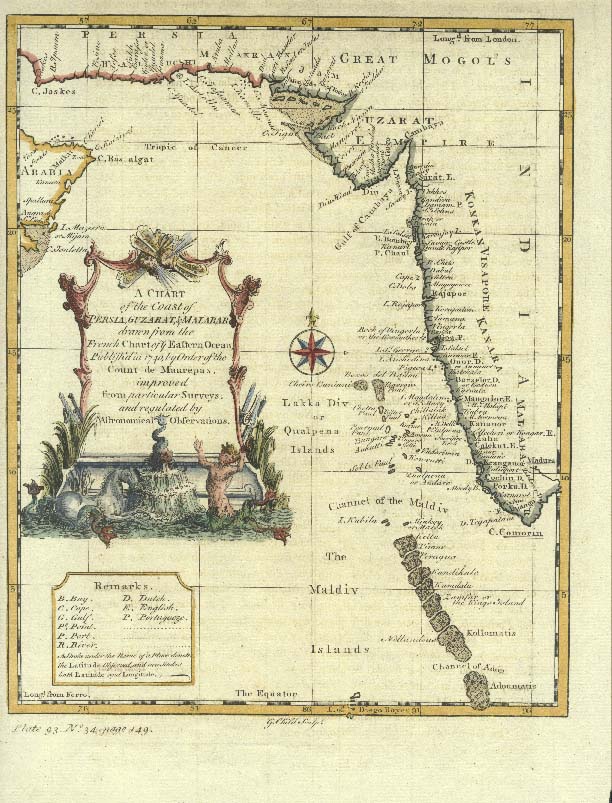
In summary one can see that the early days of the Ming dynasty saw envoys being deputed from two kingdoms around Calicut, both vying for Chinese approval, one being the Manavikarama envoy from Calicut and the other from the neighboring principality of Chaliyam. And thus we see Chaliyam on the global map for the first time.

Some would wonder how a place like Chaliyam could be connected to the Ming king. Others would be surprised to know that this small principality was an independent kingdom. Some others wonder how a Chaliyam ambassador could rub shoulders with other bigwigs in imperial Peking, and conclude that there was a time when all this was possible, mainly due to the trade links that existed. In today’s measures, the trade was not that significant, but it was enough to encourage private traders to start the process and for a large kingdom to take notice, if only to cater for their rich men’s fancy tastes for things like spices. This kind of imagination becomes difficult when you know that those tastes have become common place now.

Anyway as we can see, the Chaliyam raja was also connected with the Chinese trade. Cheng Ho comes around in 1405 and established the superiority of the Zamorin and his accession as the ruler of Malabar, and places him above the Chaliyam king. Many history books wrongly mention that Zheng came to establish the Manavikrama Zamorin’s accession to the throne; it was actually to present the papers and install the stone monument establishing the relationship as a fact.

Chaliyam’s (the nearby locales of Parappanad, Beypore, Tirur, Tanur are all known in history from ancient times and form part of this locale) history is certainly checkered after that, and the events in that region were to determine the futures of many a king, namely the Zamorin, the Portuguese, the Chinese, the Arabs and Moplahs. One can think a bit and easily figure out why the place was important. One was the acess to the river Bharatapuzha, trade connected to it and secondly the geography of the vicinity. As you will note the serene Puzha flows over the Nila valley and empties the waters from the mountains into the Arabian Sea at Ponnani, so it was an important sea port that connected though a major river to inland centers where material for trade arrived. This locale in early Malabar history was called Vettathnaad, Prakasha Rajya or land of light. Today the family that ruled these areas is extinct, and their story is not very easy o piece together, but we do know that at one time, one of the chieftains for the sake of survival even changed religion to side with the Portuguese. Rivalry with the neighboring Zamorin of Calicut determined the future of that place. Sad events continued, after life had settled down somewhat and the British had taken charge. Violent events connected with the Moplah revolts shook the sleepy villages of Vettath naad, Chaliyam and the offices of the powerful EIC.

Readers should note that there were two chieftains, one being the Tanur king or Vettath raja, the other being the vassal of the Zamorin called the (N) Parappanad raja. The Tanur kingdom was in those days very learned, and produced many famous people, mathematicians and artists. Tanur was thus a swaroopam. Somewhere during the 1350 period the wars between the upcoming Zamorin and the Vettah raja intensified and the dynasty were defeated by the Zamorin. The Ponnani port was very important for Arab trade and thus the strategic importance meant that the Zamorin had to have a long term relationship with the raja. Following this the Tirunavaya wars took place and in the uneasy truce that followed the Vettam raja was given a significant position in the ceremonious Mamankham where he stood to the right of the Zamorin and the Shahbandar koya of Calicut to his right.

Vettatnad (Vettam) or Tanur Swarupam comprised of parts of Ponnani and Tirur Taluks. It included within itself such places as Tanur, Trikkantiyur, Chaliyam, Triprangode etc. Chalium on the other hand was controlled by the Parappanad raja called Urinama. So note that the Parappanad swaroopma is different from the Tanur swaroopam, but then again entire area for foreigners was perhaps termed Chaliya.

What connection would the Chinese trade have with the principalities of Chaliyam or Tanore? To figure that out it must be noted that Ponnani was an important port where many of the trade ships berthed. The main exports specific to Chaliyam were the muslin shawls, Chalia (areca) nuts other than the usual trade goods & fine articles that came down the river. It rivaled Pantalayanai to the North of Calicut and eventually became the seat of the Yemeni Arabs as well as the Portuguese when they established a fort there. So how about the Chinese?

Ibn batuta had to say this in 1326 - I next came to the city of Shaliat, where the Shaliats are made, and hence they derive their name. This is a fine city. I remained at it some time, and there heard that the kakam (third sized vessels) had returned to China, and that my slave girl had died in it and I was very much distressed on her account. The infidels too had seized upon my property, and my followers had been dispersed among the Chinese and others.

A later observation by P Vincenzo is certainly curious. We passed Cinacotta", says P. Vincenzo, "at the mouth of the river Ciali, where the Portuguese formerly had a fortress" (liv. I, cap. xxxiii).. G De Orta certainly mentions a fort of the Chinese, whereas Vincernzo equates it to ‘little fort’. But the time lines covered in past and present tenses cross in translations and one cannot be sure, nevertheless, did the Chinese settle down in Chaliyam or were they mostly around Calicut?

Reading all these one can infer that there was a sizeable Chinese presence in the location, around the turn of the 15th century, even before Cheng Ho’s arrival in Calicut. It could have been so that they were mainly centered on Chaliyam and the mention of a Cinacotta probably signified a Chinese settlement around that location. Perhaps that was the very reason the Chaliyam raja had his envoys in China even before the Zamorin’s envoy reached Ming China.

Who could have been the emissary of Sha-mi-ti? Was Sha-mi-ti a translation for Samuthiri as Western historians conclude? Unlikely, for the word did not come into use until later in the 15th century, it was therefore just some confusion by the translators or could very well have been a name other than Samuthiri. But the mystery is still not solved, for suddenly the Paraksh Rajyam or Vettathnadu now delivers a ruler named Viraraya in ancient history notings. As people who study the Zamorins will agree, the Mana Vikaramas are understood, but nobody really knows how the Viraraya became a part of Zamorin titles. Nampoothiri concurs - He says that the Viraraya title seems to be acquired 15th AD, when Zamorins annexed Valluvanadu territory (or was it actually the Vettathnadu?).

Was there perhaps a time when the Virarayas of Vettath nadu were part of the Zamorin’s ruling coalition, i.e. not just standing to his right on important occasions, but also as part of the family? Did they drift apart in time to become enemies? But that drift is more difficult to analyze without more matter, and so we will try to do so another day.

Soon the Chinese were to leave Malabar shores entirely. I had covered it briefly in the past, but will get back to it in more detail soon. The Ming dynasty shifted its interests to internal problems and land border issues, forgetting their tributaries abroad. Probably the relationship between Calicut and China was broken already for other reasons as ‘Joseph the Indian’ mentions. The Portuguese came next and the Zamorin had to resort to asking the Egyptian and Turkish Sultans for help. The heavily armed Chinese armada of Zheng He was not available anymore and the tributary status was perhaps lost… but why? That will be another story for another day.

As for Chalium, the uneasy truce with the Zamorin continued till 1498 and the Portuguese appeared on the scene. Seeing an ally in them, the Vettath rajas sided with the Portuguese in the wars that followed, and allied with the royal families of Cochin and Travancore. By the 18th century the family became extinct, though the Zamorin was to send his family to Paonnani, just before his own death, when faced with danger from Hyder Ali.

The area around continued to be a prosperous trading center and became home for many a famous person including the Zainuddin Makkadum’s, the Maraikkars and so on, all figuring regularly in Malabar history. The weavers vanished in the turmoil’s that followed and the Shaliat manufacture was attributed to Kashmir. The Portuguese finally constructed a fort in 1532, fulfilling their their main aim. The fort was later (1571) demolished by the Zamorin and many big battles followed, resulting in the departure of the Portuguese from Malabar soil once and for all. It later became a terminus for the Madras railway in Malabar and slowly faded from notice. Today there are talks of creating a warship building center there. Perhaps the locales near Tyndis will become famous once again after years of obscurity.

Notes
1. Ibn Batuta states that Shaliats are made in Chaliyam, and it is possible that the fine cotton head scarf (Keffiyeh) worn by Arabs (muslin from cotton & silk weed) were manufactured by the Chaliyar weavers of Chaliyam in those days. However the modern day shawl is attributed to a Shaliat in Kashmir. As Chaliyars were always resident close to a river, this is likely. Batuta called the place Ash Shaliyat.
2. The Kilimanoor koil thampurans such as Marthanda varma are related to the Malabar Parappanad family. Vettathu Nadu annexes Chowara, one of the original list of 64 Namboothiri Gramams’ and Queen Gangadhara Lakshmi of Kochi adopted children from Vettathu Nadu for this reason.
3. The Vettath sampardayam in Ramanattam(which later became Kathakali) originated from Vettah nadu,.

References

Tributary Trade and China's Relations with the West – JK Fairbank
China & Calicut in the early ming period – Roderich Ptak
Samoothirinaad – NM Nampoothiri

Malik Kafur in Malabar – A Myth

Posted by Maddy Labels: ,

The old capital of the Hoysala Ballalas at Dvarasamudra was taken in 1310, and Malik Kafur went to the Malabar Coast where he erected a mosque, and afterwards returned to his master with enormous booty (A sketch of the dynasties of Southern India Robert Sewell-1883 .

Now is that correct? To determine the answer you have to understand the differences between the usages M’aabar and Malabar signifying two geographically different areas of South India, as mentioned in history. One of them is lost in modern parlance, while the other will soon be forgotten in today’s integrated Kerala save in the minds of some from an older generation or those studying history. These two words are known to some historians, but the occasional reader is definite to get confused. In reality these are two different parts of South India and both names originated from Arabic terms used to signify the region they traded with. Basically both names signify ‘passage’ or ‘the crossing’. In the early medieval, the South Coromandel area was synonymous with the kingdom of M’aabar (Incidentally, the word Coromandel that we use came from Cholamandalam). The word M’aabar was used often by Arab writers and then when it became a kingdom post invasion it came to limelight, and thereafter got confused with Malabar after the English arrived.

Ma’bar as a kingdom appears in history books around the 13th century and is defined as the area eastwards from Cape Comorin (Abdulfeda) to Nellore. It was however mentioned as a trading area even before that. The western region of Melibar (Menibar) which we know as today’s Malabar, is defined to be the area between Mt Deli (Cannanore) and Cape Comorin. Of the origins of the usage Malabar to depict the west Coast of Kerala, I will not get into much detail at this moment, and we have covered that before.

During the later parts of the 17th or 18th century, the definitions between these two words got blurred and some English writers like Sewell mixed up the locales. One of the mentions that changed the entire course of history of a region, if it had really been accepted would be the mythical invasion of Malabar by Malik Kafur. It never happened, for Kafur never crossed the Western Ghats. On the contrary, as some books mention, the Kulashkhara Varma of the Chera dynasty, supporting the Pandyas drove Kafur and his minions out of Madurai during his first foray. This is probably a confusion as well, which we will see shortly.

Then there is another rclaim that needs further study - this mention in the Kulashekara dynasty entry in Wikipedia - The Various sub-castes of Bunts (community) such as Nayara, Menava, Kuruba and Samantha established Matriarchal dynasties in Kerala only after 1310 when Malik Kafur invaded Kerala. The first ever mention of Nairs is at Thrikodithanam mentions a Chennan Nair who was a Drummer migrated from Tulunadu. But more on this some other day, for now we will focus on Malik Kafur.

A number of articles mentions about the southerly invasion by Malik Kafur, the 1000 Dinar slave and eunuch at the command of Alaudin Khilji, the subsequent sacking of Malabar and his return up North with huge amounts of booty. Now was that right?

In order to clear this confusion from the records, let us take a real look at the movements of Malik Kafur, for the story of the man is pretty interesting and so is the story of the Sultanate of M’aabar which lasted less than 50 years. The best descriptions of the Sultanate can be obtained from a fine book written by Mehrdad Shokoohy titled Muslim Architecture of South India. I will get to these parts and the empire of M’aabar another day while covering the Coromandel and later the Chinese traders , but will presently introduce it as the area east of Cape Comorin (Kumhuri) and its many ports. This area and upto Madurai later on became the Sultanate of M’aabar.

Somewhere around the 13th century (Nov 1310) this area came under the direct notice of the Delhi Sultans, possibly because of the export of pearls and other trade related activities and an urgent summons to mediate in a family quarrel. Sundara Pandya of Madurai requested the support of Alauddin Khilji over a matter of accession and Ulugh Khan was deputed to support the king. But he died before he could raise the forces, and his place was taken by the vice regent Malik Kafur (white camphor) or Kafur Hazar Dinari.

The story of M’aabar is somewhat similar to what happened when the Palghat Appan invited Hyder Ali, who was hanging round Dindigul. Let me borrow words from Tamil Tribune.

King Maravarman Kulasekhara Pandyan (1268 - 1310) had two sons Jatavarman Sundara Pandyan and Jatavarman Veera Pandyan. The elder son, Sundara Pandyan, was by the king's wife and the younger, Veera Pandyan, was by a mistress. Contrary to tradition, the king proclaimed that the younger son would succeed him. This enraged Sundara Pandyan. He killed the father and became king in 1310. Some local chieftains in the kingdom swore allegiance to the younger brother Veera Pandian and a civil war broke out. Sundara Pandyan was defeated and he fled the country. He sought help from the far off northern ruler Sultan Ala-ud-din Khilji who was ruling much of northern India from Delhi. At that time, his army under General Malik Kafur was in the south at Dvarasamudra (far to the north of Tamil Nadu). Khilji agreed to help Sundara Pandyan and ordered Malik Kafur's army to march to Tamil Nadu. With Sundara Pandyan's assistance, this Muslim army from the north entered Tamil Nadu in 1311.

Kafur and his troops created mayhem in the area for a full year, looting and pillaging, finally carrying an immense treasure on 312 elephants, 20000 horses and 10 crore gold coins. Since then the place has been mentioned by Ibn Batuta as well (who married a girl from the local rulers family), and we hear about the many battles of the M’aabar rulers with local kings & chieftains. By the 15th century the sultanate was no more. Prior to the 14th century, this was the area where the much interaction with the Chinese took place. But it is important to note that M’aabar was the place where the Arab ships delivered horses though we hear of smaller deliveries to the Malabar coasts. The reasoning should be that Malabar did not need horses due to the nature of the terrain and Arabian horses did not quite fit in, but were more important for the plains of the East and from where they were traded up north to the Deccan and Delhi kings. If you recall I wrote about the famous horse trader of Kayalpatanam who converted the Paravas during the later Portuguese reign as well. Anyway one other reason why the Delhi Sultans wanted a foothold in the south was to control the horse trade as horses were needed for any war campaign.

So who was Malik Kafur? Let us first look at what is mentioned in most books – Borrowing from Wikipedia, Malik Kafur (1296 - 1316),or "Chand Ram" as his name was supposedly ,was a eunuch slave who became a head general in the army of Alauddin Khilji, ruler of the Delhi sultanate from 1296 to 1316 AD. He was originally seized by Alauddin's army after the army conquered the city of Khambhat (Cambay). Alauddin Khilji fell in love with the effeminate beauty of Malik Kafur, castrated and converted him to Islam. He was made malik naib, the senior commander of the army. Another article states thus - In 1297 AD Alauddin Khilji set off for conquering Gujarat. The Raja of Gujarat took shelter in Devagiri where Nusrat Khan an Ulugh Khan pursued them and looted. During Alauddin Khalji’s invasion of Gujarat, his generals had brought immense booty from there including Raja Karan’s consort Kamla Devi and the handsome slave Malik Kafur Hazardinari.. The Sultan fell in love with both. In the words of Farishtah, he converted Kamala Devi to Islam and married her, and treating Kafur as a favourite “tied the sacred thread (zunnar) of his love in his own waist.” Shanti Sadiq Ali in the book The African dispersal in the Deccan: from medieval to modern times mentions he was African slave purchased in Baghdad. Abdul Sherif identifies him as an Ethiopian. Chand Ram or African, he went on to create havoc much like Ayas Khan did for Hyder Ali.

So that was Kafur, the slave and later commander. I will get to his life thereafter a little later, but let us see how historians interpret the story.

See what German historian Wilhelm von Pochhammer has to say about this in ‘India's road to nationhood: a political history of the subcontinent’ – He reorganizes the history - As the weakest among the Tamil states, Kerala maintained its identity by identifying with the strongest power. After the dissolution of the Chola Empire, Kerala obtained complete independence once again. It was then threatened by a new danger. With the Muslim invasion, the cavalry general Malik Kafur (1310) wanted to plunder Kerala. Kerala however defended itself partly by skilful guerilla warfare and partly by drawing the Muslim general’s attention to the much greater riches in the neighboring territory of the Pandyas. The state although saved from danger, broke up into small segments of which the biggest was ruled by the Zamorin of Calicut.

So we have already seen two new definitions to the medieval period of Kerala, one based on the parley of Bunts to Kerala and the second based on the threat of the Khilji Eunuch general.

Krishnaswami Iyengar in his book Some Contributions of South India to Indian Culture opines thus - In the meanwhile the Mohammadan garrisons left by Malik-Kafur had been dislodged from the Tamil country by the Kerala ruler, Harivarma Kulashekara, who broke out of his mountain frontier and carried his armies successfully as far as Poonamallee, perhaps only to retire, when the Kakatiya general advanced against him.

This is confirmed by JBP More, who states that Kafur’s first invasion attempt was a failure, but he was immensely successful the second time around. If that were the case, why did Malik Kafur not retaliate during his second and successful raid and attack the Chera king in his domain? Anyway we do not know if he did, probably he did not.

Malik Kafur did not live very long after the plunder. As Dunning explains - On the 4th Jumada Sani 711 H. (1311) Malik Kafur arrived in Delhi with all this treasure and presented it to the Sultan Ala-ud-Din. But a curse seemed to attach to all the gold and jewels taken from the Hindoo idolaters, and in the same way as the Warangal treasure tempted Ala-ud-Din to murder his uncle Jelal-ud-Din, so now the same temptation brought upon him the same fate from the hands of Malik Kafur. In 1317 Ala-ud-Din died, his death having been hastened(poisoned), it is said, by Malik Kafur, who at once seized the throne. He put out the eyes of two of Ala-ud-Din's sons, "by cutting them from their sockets with a razor, like slices of melon," and confined another (Mubarak Khan), intending him for the same fate. Before, however, he could do this, retribution overtook Malik Kafur himself. A conspiracy was formed amongst some of the nobles, who entered the palace at night and killed him when he was asleep. This being done, Mubarak Khan was placed upon the throne and assumed the title of Sultan Kutb-ud-Din (1317).

Ziauddin Barani (translation by S Kidwai) says thus – In those last 4-5 years of Alauddin Khilji’s life, the sultan was losing his memory & senses; he had fallen deeply and madly in love with Malik Naib. He had entrusted his responsibilities to the useless, ingratiate sodomite Kafur. In a scornful obituary to Kafur, Barani says – This ignorant man did not know that to be castrated, to be addicted to the vice of being sodomised and to be faithless are the worst vices. He did not know the necessities and rules of Kingship require a person to be exceptional, independent, fearless and strong. … That was Malik Kafur..

But Malik Kafur is remembered in history for something else as well; he looted and brought to Delhi the great diamond taken from Rudradeva, identified by some with the famous Koh-i-Nur. Of that I will talk at length soon.

So that was the story of Kafur and his foray into M’aabar. The story got tainted in time, when M’aabar vanished from the vocabulary and further got confused with Malabar. Regretfully many works of history and even text books still mention that Malik Kafur plundered Malabar, which as you saw from this study is after all, a misconception..

References

Mehrdad Shokoohy - Muslim architecture of South India
Tarikh-i ‘Alai or Khazainu-l Futuh by Amir Khusru
Dhow Cultures and the Indian Ocean - Abdul Sheriff
The history of India from the earliest ages: Mussulman rule - James Talboys Wheeler
A history of the Deccan, Volume 1- James Dunning Baker Gribble, Mary Gribble Pendlebury


Notes:

There is an interesting but false legend about Kafur which is heard in old men’s tales. It is a fabrication and is mentioned below only for the fun of it….

In 1312 AD, Malik Kafur invaded Devagiri in Deccan for the second time and captured two beautiful daughters of King Ramadeva. Malik Kafur sent those two young ladies to Alauddin Khalji in Delhi along with other loot. Alauddin, who had natural weakness for beautiful ladies irrespective of their marital status, invited them to join his royal harem with all dignity. The elder girl replied that both of them were not fit for emperor as Malik Kafur had already enjoyed them. In anger Alauddin forgot that Malik Kafur was a Eunuch and cannot enjoy girls normally. He ordered an immediate arrest of Malik Kafur and got him sent to Delhi after packing him in a sack made of cow skin. Alauddin knew that during the fortnight’s journey from Devagiri to Delhi, the cow skin would shrink gradually in hot and humid climate killing Malik Kafur by suffocating him slowly. After a fortnight the cow skin sack containing Malik Kafur’s dead body reached Alauddin. Alauddin opened the sack in presence of those two ladies. On seeing the dead body, one of the girls told him that emperor should have checked genuineness of their allegation before giving the death order. Alauddin became furious and asked why they made false allegation against Malik Kafur. They replied that they wanted to take revenge on Malik Kafur who had destroyed their country. Source rajendracholan – Ponniyinselvam forum


Vasco’s death

Posted by Maddy Labels:

Vasco Da Gama made three trips to Malabar. The value of his discovery was immense to Europe, but it also created immense turbulence in Malabar. The tight grip of the Zamorins of Calicut on Malabar was weakened, the importance of Cochin increased, and a wedge was slowly inserted in the balanced relationship between the Nairs and the Moplahs of Malabar and many other social economic changes were initiated. Malabar came to know about new things and new practices, but they were also to see a new enemy in cavalcades after the arrival of the feared Parangi. Yes, the people who followed from the west like the Dutch and the Englishmen capitalized on the turmoil created by the Portuguese, but the people of Malabar eventually benefitted over time from the sale of the produce of the land namely the famed spices of Malabar that grew and ripened in the Malabar sun and rain, prophetically attributed to the famous saying of a Zamorin – you can take away our pepper but not our sun and rain (surely a legend as I answered a readers question earlier). Many died in the battle for pepper control and the Zamorins lost their control after hanging on to them for some six centuries.

Vasco was always a hunted man after his arrival in Malabar. One of the first attempts on his life was after his landing at Kappad/Pantalayani, by the moors. He did not really have to fear then, for he had some experienced convicts in his entourage. This was not clear to me until I read an article by Jose Calico. He explains ‘Vasco da Gama personally recruited the crew (that was) to accompany him on this maiden voyage. It was not very easy to find recruits for this journey. Many promised to join the mission but few actually dared to show up. The voyage to India was seen as being fraught with immense dangers. Many were keen but few were willing. Eventually an assortment of individuals was put together for this voyage. Among the crew were 10 convicted killers whose sentences had been specially commuted. They were to be used for the suicidal dangerous missions anticipated en route’.

When a threat was uncovered against the Gama's life it upset the Portuguese, for they had believed that the Zamorin was a Christian of some kind. The antagonistic atmosphere in Calicut left little sense in their remaining at Calicut, and on top of that disease and accidents had taken a heavy toll of his men by now. There were more rumors of plots against his life, and so Gama sailed away from Calicut at the end of August 1498. These stories were covered in earlier posts.

Anyway this is not an attempt to trace all of his life but only to cover the final days of his life. Time had moved on and the final voyage was on the charts. The 64 year old man thus started out on his last voyage to Goa, by then the headquarters of the Portuguese colony in India. The weary old man, who had finally became a fidalgo after intense negotiations, was now titled Count or Earl Vasco Da Gama, travelled to Goa in 1524. Eduardo Duarte Menezes in Cochin was a disaster in the eyes of the Portuguese superiors and had to be replaced. Vasco arrived in Goa, in stately fashion, to take care of that mission.

Vasco was destined for Cochin, some eight weeks later, and was by then very sick. It became clear that he was dreadfully ill, and rumors swirled around the Portuguese bureaucracy. Questions like who would take over and what their responsibilities were going to be, bounced back and forth. The interesting question was what his ailment was all about. Some said it was malaria and some said nothing. But later studies point out that he had contracted anthrax.

Trade was one of the fastest carriers for intercontinental diseases. Many diseases moved from one place to another, from places where people had immunity to places where they did not, thereby creating havoc. The Bubonic plague was one of them; influenza was another as microbes piggybacked carriers over the oceans. There was one more and that was Anthrax, something that afflicted meat eaters or those who drank milk from these afflicted animals.

Gama moved to Cochin for two purposes, one to check the continuous attacks by the paros of Kunjali and secondly to arrest Duarte De Menzes. By then the Portuguese establishment had become very corrupt and people were happily enriching themselves. Duarte had amassed wealth and fearing the arrival of Gama went onto bury it (that is an interesting story for Duarte sailed to Lisbon with it but lost it again at the beaches of Farao and I am not sure if it has been found as yet).

St Francis church Cochin Photo byThoufeek Zakriya
Back to Gama’s sickness- Da Gama began to suffer "great pains in the neck," wrote Correa, and large boils prevented him from turning his head in any direction. Duarte who was not allowed to disembark from his ship decided to wait and see if he could outlive Vasco.

Correa explains - The boils were very hard, and they would not ripen for all the remedies that were applied, for nothing availed, and they gave him such great torment that they did not allow him to turn his face in any direction. At this the Viceroy was subject to great fits of irritation, with the heavy cares which he felt on account of the many things which he had got to do, so that his illness was doubled, and went on getting worse until he altogether took to his bed, and from thence gave all the necessary orders, with great travail of spirit, which caused him to be overtaken by mortal illness, with such pains as deprived him of speech.

The Viceroy, feeling that he was ill, spoke secretly at night to the guardian of St. Antony, who was his confessor, with whom he consulted; and at this conjuncture there arrived at Cochym the ships and vessel from Ceylon with the cinnamon, which was transferred from them into the ships bound for the kingdom, which were now almost laden, and the Viceroy hurried this on. He dispatched at once the vessel to the kingdom with his letters; Francisco de Mendonca went as captain of it, and he sailed on the first of December.

Gama was first buried here - Photo by JK - Varnam

Vasco continued with the responsibilities until the last moments, did his confessions and one of his last acts was to compensate the women he had ordered flogged, some years ago and breathed his last on the shores of Cochin shortly before Christmas eve 1524. His last wish was that his bones be conveyed to Lisbon for burial. 26 years had passed since he touched the Malabar shores and he was cursed to die there, a painful death for all the atrocities he had committed. The body was buried in the St Antony’s chapel (others mention the Franciscan monastery of Cochin) a building that was later destroyed in 1806.

His body was first buried at St. Francis Church, which was located at Fort Kochi, but his remains were returned to Portugal in 1539. Even his dead body had an adventurous trip. The body of Vasco da Gama was re-interred in Vidigueira in a casket decorated with gold and jewels in 1539. In 1838 or thereabouts, Jose Sylvester Riberio opened the casket to discover that the casket had a skeleton and two craniums. It appears that the marauding French had desecrated many graves, searching for gold. Here the body remained until 1880 after which the body was transferred to the monastery of Jeronimos at Belem. But then it was discovered that the wrong body was moved. Finally in 1898, the right body was moved to Belem (or so it seems – for nobody is sure) and there it remains for you to visit & see….

How did the Gama die? Did he die of Malaria as it was said or Anthrax? Was he poisoned? It is now believed that due to the cumulative effects of the arduous journeys and what is perhaps consistent with anthrax bacillary infection, Vasco da Gama died in Cochin on December 25, 1524, a sad and painful death. Possibly he regretted his violent actions in those final days, probably he did not, for he and he alone was his judge.

References
Three voyages – Gaspar Correa
Vasco Da Gama – Career & legend – Sanjay Subrahmanyam

Additional Notes 07/18/2024

Cause of death – While many sources opine that the cause could be due to Anthrax, it is also likely that he died post Diabetes complications. Some mentions can be found that it was due to an inflamed carbuncle, and potential sepsis. Anthrax incidentally is a name given in French language to two distinct infectious diseases. One corresponds to carbuncle which is a collection of boils. The other one corresponds to the English term anthrax.

Burial location – I could reconstruct the story, generally as follows - The Catholic church which existed in Fort Cochin of the Portuguese was known as the Franciscan Bartholomew Church, built in wood circa 1503. This was rebuilt in stone/masonry and dedicated to St Anthony, in 1516, by Francesco Almeida. Vasco Da Gama died in Dec 1524 and was buried at its principal chapel (Castanheda, Correa).

St Francis came to India after the event and preached in these parts and Ma’abar during the 1530-43 years. Pedroda Silva da Gama, Vasco’s son, according to his father’s wishes, moved his father’s remains to Lisbon in 1538. A larger Church was built in 1557 in the locality, this was potentially the St Francis Church.

During the Dutch invasion in 1663, the old Church building became a storehouse, and apparently the Dutch reformed Protestant Church, built adjoining it, was used by them between1664-1804. In 1795, the entire area passed to English hands, and during the 1806 period, fearing a Dutch invasion, the English blew up the older storehouse section and the fort Emmanuel walls. After that, only the ruins of the ancient Santa Cruz/Anthony’s church could be seen for some years around the Municipal Gardens.

It is said that the Protestant Church was also meant to be blown up and charges were laid, but the officer in command had a change of heart at the last moment, leaving it standing. I am not sure if the Dutch or the English continued to call it the St Francis church. Between 1806-1947, it continued as an Anglican Church. Logan however mentions that all the blame laid on the British is unfair, and an example of their care for antiquary can be found in this still standing St Francis church.

Also to be noted is that one of the tombstones (With the word Vasco engraved) pointed out as Vasco da Gama’s and previously venerated, is not actually his, as the coat of arms does not correspond to his.

Gama’s last wish to forgive the flogged women – Flogging in this instance means whipping. The women who accompanied the fleet, as stowaways or were secreted abroad, were locked up in Mozambique, and publicly flogged at Goa (200 lashes each), and the record mentions that Vasco sent them dowers from his death bed. Dowers in this instance means dowry. On his death, Dom Vasco da Gama left 100,000 reis to each of these women, and with this money as a dowry they had no difficulty in obtaining husbands. They were accordingly married, and became, it is said, honest women.


On the location of Muziris………..

Posted by Maddy Labels:

Muyiri or Mirjan

Today most people including me accept that the location of Muziris is close to Kodungallur. We accept that the Periyar River changed its course and silted, resulting in the closure of the old port and the move of trading centers elsewhere. But there are still a few people who believe that the real location of Muziris and for that matter Nelcynda are elsewhere, in varied locations such as Mirjan, Karur and Chitambaram. I thought it an interesting task to analyze the information we have, so that the mystery is revisited, if not cleared and also take a second look at the presently accepted conclusions of Pattanam’s discoverer Dr Shajan.

I had consciously stayed away from the subject of Muziris, straying only once to discuss the papyrus, but a persistent reader made me take a relook at the location of Muziris. His contention was that it was surely around Mangalore, as Dr Vincent & Maj Rennell had said many years ago. It raised interest in me for another reason, for I recalled my pet project – the story of the trader Yiju who was located in Mangalore in the 12th -13th century. With that background, I was aware that there was a shipping channel open between the Red Sea ports and Mangalore and I was also reminded of the peculiar anomaly where Yiju himself could not find a Jewish wife nor could be find a Jewish husband for his daughter. So much so that he married a Nair girl and he wandered off later to Cairo in search of a bridegroom for his daughter. Now if there was a big contingent of Jews at nearby Muziris (i.e. if Muziris was close to Mangalore) it may not have been an issue. That there were Jews in Muziris is pretty clear, at least after the start of this century (but then It is said they were at Shingly since 562 BC even though trade started much before, in King Solomon’s times).Anyway Yiju came to Mangalore 11 centuries after the mention of Muziris, so Yiju has no standing here. I was also reminded of the study of the Payyanur Pattu which mentioned much trade with Arabian and Yavana sailors which was located close to Nileshwaram, which again dates to the 12th century. Due to all this in my mind, Muziris surely felt farther away from Mangalore. Am I right? I have to revisit the conclusions by eminent historians to check the reason for ambiguity. And I finally reread my study of the Udyavara.

But the main point to note here is that Muziris, like Prestor John is somewhat mythical. It is important to note that Muziris was first mentioned briefly by just one western writer, in the 1st century AD and repeated by Ptolemy in his copied notes. After a century the port disappeared from texts and historians who have studied this subject in greater detail agree that for all practical purposes, just as Malabar ports and activity shifted in time, the port of Muziris vanished with the fall of Roman trade. Many also state after studies that Muziris was just a frontier town as opposed to a well established port of long standing, so it quickly got disbanded. Other aspects such as the Augustus temple shown in the Tabula Peutingeriana, amphorae of wine and Garum etc have been explained as necessities for the expatriate Yavanas who waited for the next year of the monsoon or for commodities to be delivered from inland locations.


First and foremost, one should realize as I explained in past posts that the Arab or for that matter Greek and Roman traders did not typically venture beyond Malabar. They used Malabar ports or Lymurike ports as transshipment points. From Malabar the stuff went eastwards or inland. Similarly the Chinese & SE Asian goods reached these Malabar ports through Kalingan ships or overland and changed hands with the traders. Why did the traders not venture eastwards? One reason being lack of propulsion, second being lack of knowledge, but the third and more probable reason was a clever use of misinformation by Indians. For example outlandish stories about monsters were spread and the location or source of goods were never divulged. The Adams Bridge finally ensured that only shallow bottomed Malabar boats and not oceangoing yavana ships could go to the other side of India.

Still the question is where is the port of Muziris? Starting with Forbes, followed by Rennel and later, Dr William Vincent conclusions were made that Muziris was in the Mangalore area. Their hypothesis was based on some reasoning as below

The problem started with Forbes in 1783 who said in his Oriental memoirs

Sir James Sibbald, for many years the English resident at Onore, informs me that Mirzee (the Musiris of the ancient Greeks) is situated twenty-two miles to the northward of Onore. At spring tides large ships can sail over the bar, at the entrance of the river, and remain in safety during the monsoon.

The supposition in brackets was used by some to bolster their case.

Major Rennell around 1788 concluded that Nylcanda was Neeleswaram.

Ptolemy's ideas are these: Tyndis (going southward) succeeds Nitria; then Muziris; Becare (which is one of the readings of Barace) Melcynda, or Nelcynda; Cottiara; and then Comaria, or Cape Comorin; whose proper name is Komrin or Komry. And the Periple (my information is from M. D'Anville) enumerates in the same order, Tyndis, Muziris, and Barace: allowing 500 stadia between each, respectively. No three places appear more convenient to this relative disposition, and to the circumstances of the pirate coast and pepper country, than Goa, Meerzaw (vulgarly, Merjee) and Barcelore, or Baflinore. The first, namely, Goa, is just clear of the pirate coast; having Newtya, possibly the Nitrias of Pliny and Ptolemy (near which the pirates cruised on the Roman vessels in their way to Muziris) on the north of it. The second place, Meerzaw, or Merjee, has even some affinity in sound, with Muziris and is situated on a river, and at some distance from the sea. And Baccelore, or Baflinore, which may possibly be Barace, is one of the principal pepper factories, at present: and therefore answers so far to Barace. Nelcynda, I take to be Nelisuram: and do not, with M. D'Anville, suppose Barace to be the port of Nelcynda, but a distinct place. It is said by Pliny, to be situated within the kingdom of Pandion; which is pretty well understood to be Madura: or to be comprised, at least, within the southern part of the peninsula: and therefore, the farther south we go for Nelcynda, the less we are likely to err. But even all this is conjecture as far as relates to particular positions: nor is it of much consequence for we are clear that the ports of merchandise, must be situated, in or near to the country of Canara, the Cottonara, or pepper country of Pliny: that is, between Goa and Tellicherry; as before observed.


Vincent Williams in 1805 added his analysis stating

For the position of Nelkunda, I am obliged to major Rennell, who is the first geographer, as far as I have learnt, who has fixed it at Nelisuram. That he is correct in this, I am persuaded, admits not of presumptive proof only, but demonstration:


For we may first observe, that Nelisuram is not only a mart itself, but gives name to a district. This district is not in Canara, but Malabar: the frontier of Malabar, the boundary wall which runs from the sea to the foot of the Ghauts, is at Dekly, or Dekully, immediately north of Nelisuram. This wall is still visible; and this in a peculiar manner


A second proof may be derived from the name itself, which Orme writes Nelleaseram. Nella, according to Paolino, signifes rice, and Ceram a country; and if Nellaceram be the country of Nella, Nelkunda must be the fort of Nella, resembling Golconda, Inna-conda, or Conda-poor, on this identical coast of Canara.


But the last and best testimony is that of major Rennell himself, who mentions ' a large river, named Cangerecora, whose course is from the N. E. and which falls in about four miles to the north of mount Dilla; previous to which its course is parallel to the sea-coast for about eleven miles, being separated only by a spit of land. The forts of Nelisuram, ifamdilly, and Mattuloy, are situated on this river, which is joined by several others that descend from the Ghaut Mountains, which in this part approach within twenty-two miles of the coast. I cannot help considering this Nelisuram, which is situated twelve miles up the river, as the place meant by Nelcynda or Melcynda, by Pliny, and Ptolemy—a place visited by the Egyptian and Roman ships.'


Let us then observe, that the Nelkunda of the Periplus lies actually the same twelve miles up the river; and after this ask, whether all these circumstances can be accidental? For it the correspondence is evident, it is but reasonable to assume this proof as a demonstration."


Naoora is the first port of Limurike, and Mooziris the last. The Periplus places Mooziris fifty miles to the north of Nelkuda, Tundis fifty miles north of Mooziris, and a third fifty north are assumed to Kaoora.' These positions agree with Mangaloor, Barceloor, and Onoor. These stations are certainly assigned with, much greater probability than those adopted by former geographers.

Jean Baptiste Bourguignon d' Anville opines that Calicut or nearby Chaul was Muziris and nelcynda somewhere near Goa, but I could not quite understand or follow his train or thought and any interested reader may peruse his conclusions by checking page 43 and 44 of the book.

But Burnell, Caldwell and Yule after further studies fixed Muziris close to Cranganore. Casson strongly agreed with it, just like Schoff and Warmington and the only dissenter, with a (?) mark against the Muziris location in her studies was Vimala Begely. Many others followed convention since then. The primary reasoning was based on the situations of the Tamil kingdoms of the Cheras and Pandians in the old days. The only way Muziris could be Chera held and Nelcynda to be Pandyan held was if they were located near Cranganore and Porakad. The rivers are also seen as stated and things fit though there are some inconsistencies possibly created by passage of time and the changing geography of the cpoastal towns and rivers. A detailed analysis can be read in Kanakasabhai’s book with some older place names in Kerala.

So what does the Periplus state actually? Let me quote the paragraphs from Schoff’s book

53. Beyond Calliena there are other market-towns of this region; Semylla, Mandagora, Pala-patmae, Melizigara, Byzantium, Togarum and Aurannoboas. Then there are the islands called Sesecrienae and that of the Aegidii, and that of the Caenitae, opposite the place called Chersonesus (and in these places there are pirates), and after this the White Island. Then come Naura and Tyndis, the first markets of Damirica, and then Muziris and Nelcynda, which are now of leading importance.


54. Tyndis is of the Kingdom of Cerobothra; it is a village in plain sight by the sea. Muziris, of the same Kingdom, abounds in ships sent there with cargoes from Arabia, and by the Greeks; it is located on a river, distant from Tyndis by river and sea five hundred stadia, and up the river from the shore twenty stadia. Nelcynda is distant from Muziris by river and sea about five hundred stadia, and is of another Kingdom, the Pandian. This place also is situated on a river, about one hundred and twenty stadia from the sea.


55. There is another place at the mouth of this river, the village of Bacare; to which ships drop down on the outward voyage from Nelcynda, and anchor in the roadstead to take on their cargoes; because the river is full of shoals and the channels are not clear. The kings of both these market-towns live in the interior. And as a sign to those approaching these places from the sea there are serpents coming forth to meet you, black in color, but shorter, like snakes in the head, and with blood-red eyes.

Following the analysis of Edward Hurbert Bunbury in his History of ancient geography, we note

The territory of Limyrice was subject to an independent sovereign of its own, who resided in the interior, and whom our author calls Ceprobotras, evidently the same name with the Coelebothras or Celobothras of Pliny. The first ports in this district were Naoura and Tyndis, and beyond these to the south Muziris and Nelkynda, which were become the chief places of trade at the time our author wrote. Nelkynda however was not properly speaking included in Limyrice, but was subject to another king named Pandion, whose dominions appear to have comprised the whole southern extremity of the peninsula of India. The writer of the Periplus tells us that it was 500 stadia from Tyndis to Muziris, and again 500 stadia from thence to Nelkynda.


Nelkynda was situated on a river, about 120 stadia from the sea, and there was another port at its mouth, which was called Bacare: evidently the same with the Barace of Pliny, which he places in the territory of the Neacyndi, probably also a false reading for Nelcyndi. It is clear therefore that the ports referred to by both authors are the same: but there is much difficulty in determining their precise position on the western coast of India. Nelkynda was placed by Major Rennell at a place called Nelisseram, at the head of an estuary, the mouth of which is a few miles to the north of Mount Delli, in latitude 12° 10': and this identification was adopted by Dr. Vincent, as well as by the most recent editor of the Periplus.


In accordance with this view Muziris was placed at Mangalore, Tyndis probably at Cundapoor, and Naoura at Honauer in 14° 16', at the opening of a considerable estuary formed by the river Sherramutter. But the most recent writer who has investigated the subject, Colonel Yule, has transferred the whole group of ports, and with them of course the district called Limyrice, nearly three degrees farther south: identifying Muziris with Cranganore, which was a port much frequented in the middle ages, though now decayed, situated in about 10° 12" N. latitude. This change has the advantage of being in accordance with the 7000 stadia given as the distance from Barygaza to Limyrice—an estimate greatly in excess of the truth, if that district be supposed to coincide with the modern Canara: and of affording an explanation of some expressions very obscurely worded in the description of the coast from Tyndis to Muziris and Nelkynda. But on the other hand no site can be found on this part of the coast that corresponds nearly as well with the description of Nelkynda and its port of Bacare as that selected by Major Rennell. The difficulties attending the identification of the ports in question are certainly not altogether surmounted by either theory.

So many opinions can thus be found, but the one conclusive follows the identification of the name Muyiri with Cranganore in a Hebrew translation of a Tamil document dated 774AD which became one of Dr Burnell’s bases for establishing that Muziris is near Cranaganore. The Copper scrolls state -

I Erveh Barmen . . . sitting this day in Canganur. ..." {Madras Journal, xiii. pt. ii. p. 12). This is from an old Hebrew translation of the 8th century copper-grant to the Jews, in which the Tamil has "The king ... Sri Bhaakara Ravi Varman . . . on the day when he was pleased to sit in Muyiri-kodu. . . ."thus identifying Muyiri or Muziris with Cranganore, an identification afterwards verified by tradition ascertained on the spot by Dr. Burnell.

Gundert however makes a cryptic comment about the part concerning Muyiri kotta (Moderi oota or Muyeri oodu) which I have not been able to understand. Ellis another expert who studied the copper plates agrees it is Muyiri kotta.

To this if you add some inputs from some ancient Sangam Tamil literature; leads one to concur with Yule & Burnell. The Akananuru (5th century BC?) by Erukkadur Thyankannanar mentions how the Pandyan king attacked the Muziris port belonging to the Chera king and mentions the plunder of the (Augustus) temple and explains the subsequent shift of trade to Nelcynda. There are additional inputs from Silappadikaram and the distances travelled by Kannagi to establish Vanchi, but I will not complicate this more than it already is.

As Peter Francis puts it ‘There may be another reason why Muziris is difficult to locate today, it may not have functioned as a port for very long..The admittedly scant descriptions of it suggest that it was more of a frontier town than a city with substantial architecture.’ And probably that is the reason why not so many Roman antiquities have not been found as yet. Muziris traded for a short time during 1AD and quickly gave way to Mantai in Ceylon. Was it perhaps set up quickly by a clever king, then based in inland Karur for this trading purpose? Could be.

But let us go back to Udyavara in Udupi for a moment, for here appears a little twist. As we know, the Oxyrynchus Papyri from 2AD show the intercourse between the Greek Nile river town of Oxyrunchus and Odora (not mentioned in the Periplus). Some scholars determined the mime to be a Kannada form (Tamil + Tulu) language. You can also see an ancient temple purported to be from those times where a goddess was worshipped. Does it have anything to do with our Augustus temple? Did the Yavana sailors stop at those northerly points due to the fear of pirates in the southerly areas? Was that the mythical Muziris? Or was Odora somewhere else? One thing is for sure, the answers still lie on the Malabar Coast, the Lymurike of Ptolemy…..

Summarizing again the Periplus - Tyndis is of the Kingdom of Cerobothra; it is a village in plain sight by the sea. Muziris, of the same Kingdom, abounds in ships sent there with cargoes from Arabia, and by the Greeks; it is located on a river, distant from Tyndis by river and sea five hundred stadia, and up the river from the shore twenty stadia...Nelcynda is distant from Muziris by river and sea about five hundred stadia, and is of another Kingdom, the Pandian.

Various people are involved in these studies today, some study sails, some study beads, some study boats and others study topography. Some concentrate on the red sea ports, some look for clues in Inda. The compilation Migration, trades and peoples summarizes much of it. As times went by, the coast lines changed, it went inland and then stretched out and back again. Not necessarily global warming, but the changes in global sea levels were due to many reasons. Roman remains were found in Pattanam to clinch the location spotted by KP Shajan showing that it was a port of call. But was it Muziris? It has been established so. KP Shajan came to his conclusions by following satellite imagery of the course of the river, finding Chera coins, Roman pottery and believes that Muziris a.k.a Muciripatannam existed since 500BC. Once cannot say it is totally conclusive but evidence suggests so. Major archeologists and many historians seem to accept it. With Muziris hopefully out of the way, we will study Nelcynda or Niranam another rday.

So we determine that trade existed, ports existed, some were famous at a time and declined quickly as the ports moved to the next one for various reasons. While Muziris was one of the oldest, the Calicut area ports remained popular for a long time till it went back to Cochin. In between I am sure there was a time when Mangalore and Mirjan ports were popular for one or the other reason.

Let us now try and check some questions

Why should Pattanam be Muziris? Why not Karur in Coimbatore? The answer lies in the fact that according Periplus, the distance between Musiris and the sea was only some 120 stadia (31 km).Why is Nelcynda not Neeleswaram? If it is, then it follows that Muziris is North of Neeleswaram and close to Mangalore. Neeleswaram was never ruled by Pandian kings. Also see the analysis provided by Edward Hurbert Bunbury, as above and the conclusions of Shajan.

Sagam writings mention Vanji and Periyar. All rivers were Periyars and Cheras at Cranganore were not established by 1st century. So why is Cranganore associated with Cheras? This argument hinges on the fact that Karur on Amravati was the Vanji or Chera capital. This questions the fact that the Cheras were located at Mahodayapuram or Tiruvanjikulam or Cranganore area earlier than they actually were. Now such an argument will of course mean that the known borders of the Cheras cannot be used to displace Rennel’s argument. To get to the answers one must read the analysis by Prof A Sreedhara Menon in his ‘A survey of Kerala History’ pages 70-75. In addition we do have records of Chera trade with Yavanas (though dated 155AD, we know of the king Iamaiavaramban Nedunjeral Adan who poured oil on their heads & imprisoned some Yavanas who upset him). And the Valmiki Ramayana mentions Mucaripatannam.

The present arguments supporting the Cranganore area fit in reasonably with later studies and stands up to most tests if not all. So I tend to go along with the present conclusions, but for the Udyavara angle. But it is a continuing study…..

This is in no way any kind of formal analysis but just my way of trying to understand and tabulate the diverse opinions. We all agree that much trade took place between the western shores and the red sea ports as well as kingdoms beyond. Many of the traces have been washed away by the sea, so it is an ongoing attempt at trying to compare what was in the mind of that unknown sailor to what we see today. Whether there is sense in it or not, I cannot say, but it is a life’s work for some, and a passage of time wasted for others, just like study of history is. And the whole exercise may just turn out to be flexing the grey cells for a few hours, farfetched from reality. As for me, I am happy I got a chance to read relevant parts of most of these books below in the past few weeks, and can only marvel at the availability of these at the nearby NC State university library.

References

A geographical illustration of the map of India - Jean Baptiste Bourguignon d' Anville
Cathay and the way thither – Henry Yule
The Tamils 1800 years ago – Kanakasabhai
Oriental memoirs - Forbes
Map of Hindoostan – Rennell
The periplus – William Vincent
The periplus – Casson
The periplus – Schoff
Proposed identification of two south Indian place names – Schoff
Rome and the distance East – Raoul Mc Laughlin
History of ancient geography among Greeks and Romans., Edward Herbert Bunbury
A survey of Kerala History – A Sreedhara Menon
Madras journal or literature & science – Vol 13
The Periplus – McCrindle
Asia’s maritime bead trade – Peter Francis
Rome & India – Begley & De Puma
Commerce between the Roman empoira & India – Warmington
Migration, trade and peoples – Ed Michale Willis
Maddys Ramblings – The Chariton mime & Udyavara

Pics
Pattanam image from KP Shajan’s paper. Roman trade - Wikipedia

The Second Voyage of Vasco Da Gama

Posted by Maddy Labels:

The Trap at Calicut

As we saw in the previous article, Vasco was in a very disgruntled and violent mood when he arrived at the shores in Malabar. However, the plunder of the Meri did indeed give him a good amount of satisfaction; he had after all decimated a number of heathen and amassed riches from the burning ship. The cries and death throes of the dying were of no concern to him and he now decided to take his bearings and head south, hugging the coast line. His first port of call was Cannanore where he summoned the Kolathiri chieftain to the dock and conducted the interview in the most uncivil and arrogant fashion, but we won’t get into that, for it is not quite important and we have already determined that Vasco was not the most diplomatic or civil of persons. The ensuing trade agreement did not satisfy the Gama and he was upset not only with the prices, but also the fact that Mappila merchants were being sent to negotiate with him. It was an exhibition of fiery tantrum which followed, which was quickly quenched by Paio Rodriguez who arrived to continue relations with the merchants.

The infuriated Gama departed the shore, and bombarded a small port on the way in anger (more like a tantrum) thinking it was a locale under the Zamorin’s protection, only to realize later that it was not. By this time Paio explained to the Kolathiri king that the Gama was acting on his own and this made the Kolathiri write a letter to Vasco stating that while he valued friendship with Gama, his intention was to lodge a formal complaint to Don Manuel about his actions.

 Anyway the irritated admiral was by now wondering what to do to the Zamorin, for he had professed peace in a recent missive. The Zamorin requested a compromise and he agreed that the Gama had reasons to retaliate against the attack on the Portuguese factory and the Gama had retaliated in kind by destroying the Meri. The Zamorin’s letter indicated that they now had a clean slate from where the two parties could continue negotiations. Gama of course would have none of it, he wanted the entire 4,000 or so Arab (Cairo) Muslim population of Calicut, ‘the firangi traders’ expelled immediately. The Zamorin naturally refused to do that and Gama petulantly threatened to bomb the shoreline of Calicut (If one could check Vasco’s BP now, you would have recorded exceedingly high readings, possibly exacerbated by the intake of large amounts of salt on the voyage).

Back to the present – Residents of Calicut may have noticed a number of coconut trees lining the Calicut beach. Have any of them thought a bit about it? So how did these coconut trees get there and become objects of enjoyment these days? Well, look at them once more to heart’s content, for some developer is soon going to take them off to give new and richer residents a clear line of sight to the beach and the sea. Interestingly, the first of the palms were planted in 1500 after Cabral bombed Calicut. The Zamorin wanted some kind of a limited stockade to prevent a landing and to create a simple barrier against artillery fire. And that friends, was the story of the palms on the shoreline. I am sure those palms you see today are not 500+ years old, but they probably had parent trees out there…

And so the Gama commenced bombing the Calicut shorelines and created mayhem. The trees were alone in resistance while the gentry watched. As bad luck would have it, some ships laden with rice were coming towards the harbor (I assume near Kallayi) and the Gama plundered them too. All the sailors on those ships were chopped up and hung to dry or cast into the waters. Temporarily satiated, he left for Cochin leaving his uncle Vincent Sodre to continue the blockade. This was about the time Vasco wrote the first of his abusive letters to the Zamorin in Malayalam (now this is interesting and we will get back to it another day for the other letters exchanged with the rulers were mostly in Arabic)

Now comes the prelude to the story of the purported trap which historic chronicler KD Madan introduces in a lovely choice of word play, to be – ‘a lean vein of history enveloped in thick and myriad layers of legend’. To get to the story, we start at Cochin.

Vasco had just mediated and impaled to death a local trader for selling beef, acting on the complaint of the Kochi raja. The Muslim traders were by this time aware of the atrocities done by the admiral and were not too keen to work with him. Rumors were strife that people of Cochin, Calicut and Cannanore were planning to rise up in arms against the Portuguese and Vasco was getting angrier by the minute. The capitulation that he expected after his show of force was not happening. By now it was January 1503.

On one of those troubled days, Vasco was surprised to meet a contingent of three people, a Brahmin (it appears this was Talappanna Namboothiri who knew Gama from his first visit - the person who conducted Gama to the Zamorin's chamber May 1498), his son and accompanied by two Nair bodyguards. He carried a letter from the Zamorin offering to settle the old argument by compensation of the goods lost in the Portuguese factory. The Gama was impressed with the choice of a Brahmin for negotiation and was even more surprised when the Brahmin asked to return to Portugal with the Gama. He had even brought along jewels worth 3000 Cruzados for the trip. He also requested to load about 12 bahars of cinnamon that he could trade in Portugal in his own account to which the Gama agreed.

Later the Gama agreed to visit Calicut to discuss the matter with the Zamorin. The ship chosen was the Flor de la Mar, manned by his cousin Estevao. Upon reaching the shores of Calicut at the port on the river mouth, the envoys of the Zamorin disembarked and vanished. Another envoy came quickly to the Gama informing that the compensation had been readied and asked if the Gama could depute a gentleman to pick it up. Gama felt the trap closing in and refused. The envoy stated that he would come back the next morning.

The attack happened that night when a group of 70-80 small Zambuchi attacked the Flor de la Mar. That was the first and possibly only time Vasco was ever attacked with an intent to kill and destroy. The ship tried to flee but found that the Zamorins flotilla had secretly attached another anchor to the ship and made it immobile. Fighting raged, but the gods and luck were with the Portuguese. Just at that moment, Sodre arrived with his ships from Cannanore and with that the attackers fled.

The Gama hung the envoys (some say the Brahmin, some say his son) on the mast and went up and down the shoreline and wrote another blunt and threatening letter in Malayalam to the Zamorin, promising revenge. In some other versions it is said that the trap was detected not by Gama but by Koya Pakki and upon hearing this, the Brahmin was made to stand on hot embers till he confessed to the Zamorin’s plot. Afterwards, his ears and lips were cut off and parceled to the Zamorin.

The event is described thus in ‘the three voyages’ - Then, the captain-major commanded them to cut off the hands and ears and noses of all the crews, and put all that into one of the small vessels, into which he ordered them to put the friar, also without ears, or nose, or hands, which he ordered to be strung round his neck, with a palm-leaf for the King, on which he told him to have a curry mad to eat of what his friar brought him. When all the Indians had been thus executed, he ordered their feet to be tied together, as they had no hands with which to untie them: and in order that they should not untie them with their teeth he ordered them to strike upon their teeth with staves, and they knocked them down their throats; and they were thus put on board, heaped up upon the top of each other, mixed up with their blood which streamed from them; and he ordered mats and dry leaves to be spread over them, and the sails to be set for the shore, and the vessel set on fire; and there were more than eight hundred Moors; and the small vessel with the friar, with all the hands and ears, was also sent on shore under sail, without being fired. These vessels went at once on shore, where many people flocked together to put out the fire, and draw out those whom they found alive, upon which they made great lamentations.

Following this, the first organized retaliation took place. The Portuguese were attacked by about 32 local vessels, each with 400 men but they were quickly rebuffed by the Portuguese according to the various accounts. Gama captured a boy from one of the ships who recounted the background behind the attack. It appears that this was the first time the Mappilas (remember that all the previous engagements were primarily with the Arab trading community in Calicut) rose up in arms against the Portuguese, after being told to do so by the Zamorin. He had ordered about 7000 of them to go up in arms in a Chaver style suicide attack against the Gama. The Mappailas were not quite prepared for that as the Vasco had declared enmity only at the ‘moors of Mecca’, not the local Moplahs. But they finally decided to. The Zamorin as it appears had a palace near Kallayi on a hill from where he watched the event, which sadly ended in defeat and much devastation and loss of life.

The Dutch narrative Calcoen describes it thus - On the 12th of February we fought with the king of Calcoen, who had thirty-five ships, besides the rowing boats. In each of these boats were about sixty to seventy men, and we had no more than twenty-two men, and with that, thanks to God, we beat them; and we took two large ships, and slaughtered all the people that were in them, and burnt the ships before the town of Calcoen, where the king was present; and the next day we sailed for Cannaer, and prepared everything to return to Portugal, That happened in 1503, the 12th day of February.

In another article I will tell you the story of this Koya Pakki, but before that I cannot rest in peace till I tell you about the death of the Gama which will conclude the story of Gama and his atrocities in Malabar. That summer did not go well for the Zamorin as well, for he lost close to 20000 people to twin attacks of Cholera and Smallpox. Interestingly the events surrounding Gama’s second and third visits are not found in the Tuhfat Al Mujahidin and I wonder why.

Vasco and his ships sailed back, to be received in Lisbon to much fanfare by Sept 1503.

The Nau Floe De la mar continued its existence for some more years till it sank off Sumatra in 1512. The ship’s hull was by then eaten through by worms, for the Portuguese had not yet learned to coat the hull with copper lining as yet, nor was it made of teak like Indian ships which were more impervious to worms. Slaves tried hard to get the water out, but it sank, laden with booty. This shipwreck, one of the most famous in history, is believed to be the richest ship, the ultimate shipwreck, ever lost anywhere. Albuquerque commanding it, barely escaped, with only the clothes he was wearing. You can see a replica of it at Malacca. It is a subject of much interest, argument between Malaysia and Indonesia and has interested many treasure hunters including Robert Marx who is said to have spent many million dollars trying to get to the multibillion dollar bounty.

The curse of Calicut lies over the Flor de La Mar.

References
Life and travels of Vasco Da Gama - K. D. Madan
The career and legend of Vasco d agama – Sanjay Subrahmanyam
The Three Voyages of Vasco de Gama H. E. J. Stanley


Pics –Maritime Museum, replica of the Frol de la Mar ship, Malacca – Malaysia (Portrugral Luzo)

The Plunder and Massacre of 'The Meri'

Posted by Maddy Labels:

Off Cannanore - Northern Malabar Sept 1502

Vasco Da Gama is considered by many to be a great navigator, a shrewd leader and a diplomat in history books. But was he really that? Did he have a violent streak? If you dig deep into history books, you will find that he indeed had a violent streak and this was exhibited many times, though it was all far away from home and in trading lands, especially those he subdued with the power of the gun. This unlettered though crude and many a time sadistically violent sailor was nevertheless loyal to his king and proved fearless until his death. By today’s legal yardsticks and violence that Europe eschews, he would be rotting away in jails for his actions. Then again this was a long time ago, when might was perhaps, right and where it was proven by the power of a bigger gun and dishonest warring techniques. Vasco was after all, to summarize, as a detailed study of events that transpired after 1497 proves, brutal and single-minded, cunning, rash and suspicious. According to Sanjay Subrahmanyam, the "systematic use of violence at sea" was introduced after the arrival of the Portuguese.

Lets us first get some perspective. Gama had come to Calicut in 1498 and returned. A couple of issues caused his detractors to hound him, one being his declaration that Malabar was a land of Christians and second being the fact that some others in the kings court did not accept the discovery of Calicut a discovery, as Gama did, sailing close to land. But Gama rode the storm with aplomb and became a noted figure in Lisbon. In the meantime, Cabral was sent to assimilate the Portuguese positions in matters concerning trade. The old Zamorin whom Gama had met had passed away and the new entrant was a younger and more energetic person, who was up and about. Cabral quickly got his attention by an act of piracy, getting him a war elephant he desired, from a Gujarati vessel. Soon after a trade agreement was signed and the Portuguese built a factory in Calicut. But the Portuguese misinterpreted the broad aspects of the agreement thinking that they had priority over all spice loading. A laden vessel bound for Jeddah was thus seized by them, and the Muslims at Calicut reacted violently massacring the Portuguese, killing about 54 of them and destroying the goods stored in the factory. The Portuguese reacted in kind as they did not get any support from the Zamorin, by destroying 12 Arab vessels and bombarded Calicut and Pantalayani, before departing to Cochin where Unni Goda Varma seeing great possibilities welcomed them with more than open arms. The background and more is quite well explained in the many sources covering the Portuguese harassment of Malabar.

Things continued on for a couple of years and the hostilities between Cochin, Portuguese and Calicut continued as I had recounted earlier in other articles. In 1502, however, Vasco departed with 20 vessels to Malabar. The reason why Vasco Da Gama was deputed to Malabar in 1502 is not quite clear for the ‘regimento’ of the 2nd voyage has never been found. It is believed that the ongoing rivalry and politics between Alvarez Cabral and Vincent Sodre (Gama’s uncle – who was responsible for naval support to Cabral) resulted in the Gama drawing up on all his seafaring relatives and proceeding to Malabar to sort out the issues. Or was it personal greed? We shall soon see.

The story that I will now detail is about the callous massacre of some 300 people and the destruction of an inbound ship from Mecca carrying mainly Hajj pilgrims back to Malabar. It took place over 5 days between 29th Sept and 3rd Oct 1502.

Gama left Lisbon on 3rd March 1502 commanding 15 ships accompanied by his cousin Estavo Gama commanding another 5. Gama assumed the Captain Major title (it was a special decree granted by the King of Portugal that allowed Gama to assume the title whenever he wished!). The long voyage to Cannanore and Calicut was not uneventful, for at Sofala, his ship collided with another in his fleet commanded by Joao De Fonseca after which the latter had to be burnt and sunk. The Gama was obviously in a vile mood as he reached the shores of Cannanore around the 28th of Sept. They spent a couple of days trying to locate some inbound ships from the Red sea with intent to pillage, but it was not until the 29th Sept that they sighted the fully loaded Meri (also called ‘The Merim’ in some accounts).

The ownership of the boat is disputed. KM Panikkar states it belonged to Khoja Kassim’s brother settled in Calicut. KV Krishna Iyer mentions it was the Sahabandar Koya’s (port commissioner of Calicut) brother’s ship. According to Iyer, this Koya was Gama’s number # 1 enemy, so the intent from the beginning was clear. In some other sources the ship belonged to a rich Gujarati trader and yet others, the Mamluk Sultan of Egypt. Other accounts refer to this ship as the Meri or Miri and claim that it was owned by the Mamluk Sultan Qansawh al-Ghawri. Then again comes the issue with the names, for Koyas were not exactly Khojas as far as I know, since the Koya’s were Tharavadi Moplahs with Hindu ancestry (I will cover this interesting collection of Muslim subdivisions and caste divisions of medieval Calicut in another article). Anyway back to our story…but note here that this would come up later in discussions, for the Portuguese countered that they believed the ship was Gujarati. The ship was returning from Mecca (some accounts mention it was bound to Mecca, departing Calicut) and curving down in passage to Calicut.

The meeting of the Portuguese armada and the pilgrim ship resulted in an event that can perhaps be called one of the cruelest actions in history, though it has been glossed over by people of that time and many years thereafter. Upon seeing the Meri, The Portuguese ships fired warning shots, but the pilgrim ship did not retaliate even though it had artillery. The ship was loaded with very rich people and 10 of the richest Muslims of Calicut were on board, led by Jauhar Al Faquih. Gama proceeded to negotiate with this man, who first offered money & spices, which was refused by Gama. He then offered Gama one of his wives, his nephew as ransom and offered to load 4 Portuguese ships with spices. These discussions went on for 5 days. He also offered to arrange friendship between Gama and the new Zamorin. Gama refused and demanded all the wealth on the ship. The proud Al Faquih responded by asking Gama to ask for it himself as he had taken over command of the ship. Gama did that and obtained much money and jewels and in return first provided five boats of food items. He then disarmed the ship and boarded it, ordering his men to set fire to various parts of the ship and after it had caught fire, sailed away. The valiant pilgrims somehow put out the fire, but seeing this, the Gama came back to finish it off. The desperate pilgrims and women offered all their jewels and riches, if only they were allowed to leave with their infants and children.

Gama watched on impassively (or was he enjoying it?) through a spy hole as Thome Lopes noted; thoroughly perplexed for the riches left on the ship were so much that it could be put to great use. But let us pick up the event from his words..

The ship being taken after a vigorous resistance, the General went on board, and sending for the principal Moors ordered them to produce such merchandizes as they had, threatening them, otherwise, to have them thrown into the sea. They pretended all their effects were at Kalekut; but one of them having been flung overboard, bound hand and foot, the rest, through fear, delivered their goods. All the children were carried into the General's ship, and the remainder of the plunder given to the sailors. After which, Stephen de Gama, by Don Vasco's order, set fire to the vessel; but the Moors, having broken up the hatches under which they were confined, and quenched the flames with the water that was in the ship, Stephen was commanded to lay them aboard. The Moors, having been made desperate with the apprehension of their danger, received him with great resolution, and even attempted to burn the other ships.

" Night coming on, he was obliged to desist without doing his work; but the General gave orders, that the vessel should be watched, that the passengers might not, by favor of the darkness, escape to land, which was near. All night long the poor unhappy Moors called on Muhammad to help them, but the dead can neither hear nor succor their votaries. In the morning, Stephen de Gama was sent to execute his former orders. He boarded the ship, and, setting fire to it, drove the Moors into the poop, who still defended themselves; for some of the sailors would not leave the vessel till it was half burnt. Many of the Moors, when they saw the flames approach them, leaped into the sea with hatchets in their hands, and, swimming, fought with their pursuers. Some even made up to, and attacked, the boats, doing much hurt; however, most of them were at length slain, and all those drowned who remained in the ship, which soon after sunk. So that of three hundred persons, (among whom were thirty women,) not one escaped the fire, sword, or water."

Castenada another scribe and historian concurs

When the ship surrendered, De Gama went on board and commanded the owners and all the principal Moors to come before him, whom he ordered to produce all their goods on pain of being thrown overboard. They answered that they had nothing to produce, as all their goods were in Calicut; on which De Gama ordered one of them to be bound hand and foot and thrown into the sea. The rest were intimidated by this procedure, and immediately delivered up every thing belonging to them, which was very valuable; all of which was committed to the charge of Diego Hernando Correa, the factor appointed for conducting the trade at Cochin, by whose directions they were transported into one of the Portuguese ships. De Gama ordered all the children belonging to the Moors to be taken on board one of his own ships, and vowed to make them all friars in the church of our Lady at Belem, which he afterwards did.


All the ordinary merchandize belonging to the Moors was divided among his own men; and when all the goods were removed, he ordered Stephen de la Gama to confine the Moors under the hatches, and to set the ship on fire, to revenge the death of the Portuguese who were slain in the factory at Calicut. Soon after this was done, the Moors broke open the hatches, and quenched the fire; on which the admiral ordered Stephen de Gama to lay them aboard. The Moors, rendered desperate by this inhuman treatment, defended themselves to the utmost, and even threw firebrands into our ship to set it on fire. Night coming on, Stephen had to desist, but was ordered to watch the Moorish ship carefully that it might not escape during the dark, and the Moors all night long were heard calling on Mahomet to deliver them out of the hands of the Christians. When day appeared, the admiral again ordered Stephen de la Gama to set the ship on fire, which he did accordingly, after forcing the Moors to retreat into the poop. Some of the Moors leapt into the sea with hatchets in their hands, and endeavored to swim to our boats; but all of these were slain in the water by our people, and those that remained in the ship were all drowned, as the vessel sunk. Of 300 Moors, of whom thirty were women, not one escaped alive; and some of our men were hurt.

The author of Calcoen alludes to the monetary value of plunder thus - " We took a Mecca ship on board of which were 380 men and many women and children, and we took from it fully 12,000 ducats, with goods worth at least another 10,000. And we burned the ship and all the people on board with gunpowder, on the first day of October." Lopes declares that the wealth on board would have sufficed to ransom every Christian slave in " the kingdom of Fez," and even then to leave a handsome balance.

Sanjay Subramanian adds that the Meri tried some desperate tactics like ramming the Portuguese ship. In the middle of all this, one person escaped from the doomed Meri (in addition to the 20 children), this being the hunchback pilot of the doomed ship. He swam to the Portuguese ships and bargained for his life by telling the Gama where to place the charges to blow up the ship effectively. Gama did just that and brought an end to the 5 day misery of the Meri and its victims. He took a position later by telling the Zamorin that all this was done to avenge the events of 1500 in Calicut (which I had started with) and the death of one Portuguese sailor during the melee (crushed during the ramming event).

With that a curtain was finally brought down over one of the most barbaric acts by a cruel man, one that would draw a rigid line between the Portuguese and the Muslim traders of Malabar. As Kerr concluded, ‘Such a story as this is enough to make us deny De Gama's right to the epithet humane, which is frequently bestowed, did we not make proper allowance for the barbarity of his times. Besides, it amounts to a trifle compared with the atrocities which marked the course of some of his successors in their career of conquest and crime’.

Aftermath

The hunchback pilot became a mainstay for the Portuguese after this event. In fact a number of fine clothes that the Gama plundered from the Meri were, as an afterthought given to the pilot to dress himself. But he would not live long, for during a voyage to the Red sea with Sodre, Vincente Sodre himself was mysteriously killed. Sodre’s brother Bras then murdered the hunchbacked pilot, who incidentally considered as the best pilot in their service. And later, Bras also got killed mysteriously. All this is good stuff for a nice fictional story for the motives and events are all there to create a good fictional account.

The Zamorin was not going to take it lying down, he planned his revenge, and proceeded to lay a trap for the Gama, that story will be told in the next part.

The 20 children taken off the Meri became friars. According to De Faria, this was done in retaliation for the action of a Portuguese soldado who had turned Mohammedan. The 20 kids were attached to St. Mary's church, at Belem near Lisbon.

My copy of Sanjay’s book is a second hand purchase. On the page with the story of the Meri, the previous owner, a student obviously, had penned in ink “Da Gama is a Punk’. I agree with that young fella, with all my heart.

Gama did not hesitate in enriching himself during all this. During this trip he amassed a fortune of pearls by plunder and other jewels worth about 40,000 ducats. That alone established the extent of his horrible character. The 1502 trip was thus a family event where all of them quietly amassed fortunes at the expense of the people of Malabar. So was the 1502 trip just meant to enhance his retirement account and a peaceful passage to heaven? Not really, for some years later, he died a miserable death, about which I will write in part 3 of this article. As we know even after his death, his soul did not rest in peace. But naturally, he deserved that and more.

The story of the Meri has been used by a number of writers to spice up or pepper their books. The first fictional account was written around 1939 by Saradindu Bhandopadhyaya, in his short story Raktha Sandya. I read that with interest, a fine story, though kind of abrupt in its ending.

As somebody else remarked – That is Dom Vasco da Gama! There's no appeasing the devil in him; no chance of exorcism.

Concluding, let us read the words of KG Jayne - D. Vasco proceeded on his way, doubtless well pleased with this exploit, and anchored off Calicut on the 30th of October 1502. There can be little doubt that the burning of the Meri and similar achievements were regarded in Europe as laudable manifestations of zeal for religion. D. Vasco, had his conduct been challenged, would assuredly have answered, with honest and indignant surprise, that he was only doing his duty as a Christian in exterminating the vile brood of Muhammad ; that his acts of piracy and pillage were authorized by ‘ letters of marquee from God’

References

A general history of voyages and travels to the end of the 18th century - By Robert Kerr
History of the Discovery and Conquest of India - Hernan Lopez de Castaneda
The three voyages of Vasco de Gama - Gaspar CorrĂȘa
The career & legend of Vasco Da Gama – Sanjay Subrahmanyam
Vasco Da Gama and His Successors - K. G. Jayne

Notes

I have not yet seen the movie ‘Urumi’ which alludes to this story as a backdrop. It appears that the sword Urumi is made from the gold melted out of the ornaments of dead people - women and children - who were burnt alive in a massacre aboard this ship. But as we know, nothing is left of the 300 odd people and they sank with their jewels.

An Urumi made of gold would be a relatively worthless though symbolic piece of weaponry, gold being too soft for the purpose even if it were less than 20 carat. Then again the urumi was a weapon of choice for chekavar women (Unniarcha used one with great effect), so the prospect of that being the main weapon of Kelu Nayanar seems somewhat vague. But then again, Tatcholi Otenan had also mastered the use of the Urumi (a thin sword) from what I read. He was a master in the use of the Urumi and he could, by one sweep of it, graze the throat of a man without cutting and shedding a drop of blood. Interesting, eh??


Part 2 – The Trap at Calicut
Part 3 - Gama's death