


The Siege of Bednore 1783
Posted byAnd the treasure that vanished
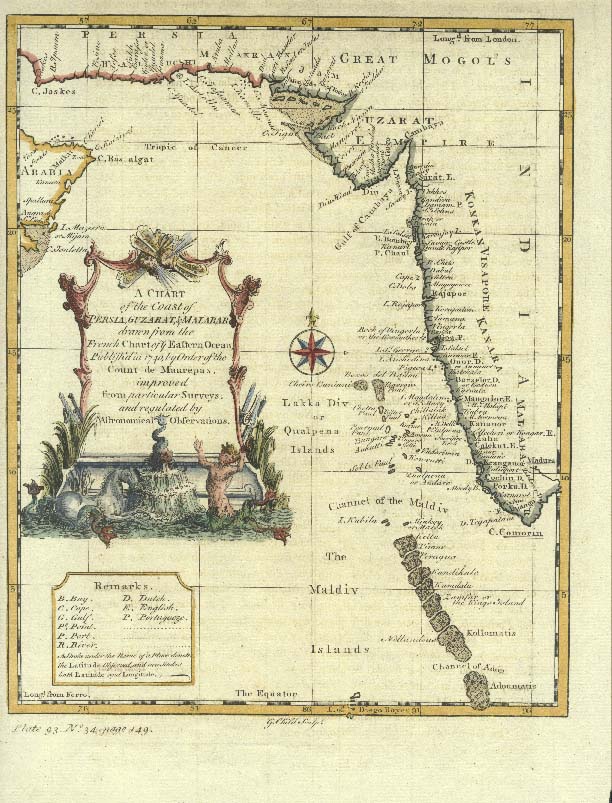
In the previous post, we discussed the intriguing story of a Nair boy who was captured by Hyder, converted, and eventually became the Governor of Bednore (also called Bednur, Bidanoore — present-day Nagaram in the Konkan) and Mangalore. That was Ayaz Khan, or Hyat Sahib (as the British called him), the Nawab of Bednore, who was the Chirakkal chela (slave) favored by Hyder, which greatly angered and disgusted Tipu. But that was how it was, and Ayaz ruled over Bednore, a strategically located district that held significant treasures, a large 13th-century fort, an armory, and a mint.

Before we arrive at the location, let's explore a bit of
Bednore’s history. In the 16th century, it was the last capital of the Nayakas
of Keladi, vassals of the Vijayanagar Empire. After the Vijayanagar fall in
1565, the Keladi Nayaks gained independence and ruled large parts of Malnad, as
well as other coastal towns like Bhatkal, and the plains along the Tungabhadra
River. In 1763, Virammaji, the last queen, lost the kingdom to the upstart
Mysore ruler Hyder Ali. After capturing Bednore fort, Hyder renamed the town
Hydernagara. This became his arsenal, where arms and ammunition were produced,
and a home to a treasure of roughly 12 million pounds sterling (or so they
said). With many sandalwood trees and rice fields, Bednore was truly a wealthy
district. It also housed the Ikkeri mint, which Hyder continued to use to
produce the Bahaduri Huns or pagodas. Bednore was special to Hyder; he called
it his own, even though other territories were originally taken from the Mysore
Raja. He expanded it to hold 90,000 people, called it Hyder Nagar, and even
thought about making it his capital. Hyder built a beautiful palace there,
revived the mint, and ordered the construction of a naval base and dockyard at
Honnavar, north of Murdeshwar.
He appointed Ayaz as the governor of Bednore (covering
neighboring districts and about 84 forts) in 1782, just before his death,
relocating the latter from Chitteldurg to Bednore. Nervous about potentially
clashing with Tipu, who had been named Hyder’s successor, Ayaz pondered his
future. The earliest accounts of Ayaz’s rule at Bednore come from the diaries
of Gen. Campbell, who had been imprisoned there.


Mathews, incidentally, was instructed by the EIC in Bombay
to try an attack on Bednore, mainly to distract Tipu, who was advancing on
British troops at Madras and North Arcot. Since safeguarding Bednore, its
treasury, and armory was more important, they expected Tipu to pause and then
move eastward with his forces to Bednore. While many reports later described
Gen. Mathews, a man from an ordinary middle-class British family (not part of
the gentry), as a mediocre officer, the original assessment was different. In
the Palk manuscripts, he is described as the most warlike genius in India, very
enterprising, and as having achieved incredible feats with just one battalion.
Anyway, Campbell rode back, met Ayaz, and conveyed the
essence of a treaty in case Ayaz decided to defect and abandon Bednore to the
British. After reflecting on the contents and his own future, Ayaz agreed to
the EIC’s proposal after several days. He then handed over the entire treasure
and control of his district to Mathews, also ordering the commanders of forts
under his command, such as Mangalore, Deokull, Anantpore, and others, to step
down and surrender to the British. Some complied, while others chose to fight
the British.
As for Campbell’s situation - The General, it is true,
promised that I should remain with him till he made some arrangements; and Hyat
Sahib offered, on his part, to make me, through the General, a handsome
present. The General, however, suddenly became dissatisfied with me, and I neither
got Hyat Sahib’s present nor ever received even a rupee of the vast spoil found
there.
Although a few forts surrendered, the three main ones did
not, and Gen Mathews and his men then attacked Mangalore, committing acts of
slaughter, maiming, and rape against the population. It turned out that Mathews
had little control over his soldiers, who, incidentally, had gone without pay
for the past 16-18 months and had been promised a share of the Bednore
loot.
Instead of preparing for a counterattack from Tipu, the
soldiers celebrated and, in February, attacked the town of Anantpore (now
Anandapuram), where the troops were said to have committed numerous atrocities.
Campbell explains how Mathews' forces had lost focus—rendered incautious by
success, our army became less vigilant, and Tippoo retook Hydernagur; and, in
direct breach of the capitulation, made the garrison prisoners, treated them
with a degree of inhumanity that is shocking to even think about, and forced
General Mathews to take poison in prison!
The British records summarized the attack and the Mysore
response succinctly - It is with pain we recount, that as slaughter,
cruelty, rapine, and avarice had disgraced this expedition in its commencement
at Onore, so the same detestable maxims and vices, continued to stain its whole
progress, until they were, at its fatal conclusion, most cruelly required; when
the innocent became indiscriminately with the guilt, victims to the rage of an
exasperated and merciless enemy.'
Tipu's retaliation was quick and fierce when he reached
Bednore a few months later. Gen. Mathews and his troops were captured, chained,
and sent to prisons throughout the Mysore Kingdom, along with other captured
soldiers.
The reports about the British occupation of Bednore are
uncertain. Many sources claim that Mathews captured the fort without incident
(luckily, as Mathews noted, by divine will), and that Hyat Sahib surrendered
peacefully. Others suggest it required effort, and the discussions ultimately
focused on the treasure, which was of great importance to the occupying
soldiers, who had not been paid for 18 months and had been promised a fair
share of the loot by Mathews.
As it turned out, Mathews imprisoned Ayaz Khan, coerced him
into signing an agreement, and made him hand over the vault keys. Reports
continued to mention either that Ayaz considered some of it his personal
property, added a reward for Campbell (which was never paid), and handed over
the rest to Mathews, or that Mathews took it all, leaving a small amount for
Ayaz and nothing for the soldiers, who then decided to revolt. Mathews then, in
cooperation with his brother, transported 13 chests (or 23 chests) of treasure
to Goa and Bombay, the locations of which remain unknown.
In any case, there was a frantic scramble for loot after the
English occupation of Bednore, including reports of Mathews hollowing out the
handles of his transport and filling them with valuable jewels and pagodas.
Additionally, it is noted that brother Capt Mathews was, according to British
sources, secretly introduced into the army by Gen Mathews.
What is especially notable is that the British
administration threw Mathews under the bus even after he had sent the chests of
treasure as detailed above. They could have chosen to blame Ayaz for seizing it
all, but instead, they decided to pin all the blame on Mathews for a botched-up
raid and even worse actions later, such as the massacre at Mangalore, the
retaking of Bednore by Tipu, plus the loss of British lives and the capture of
many prisoners.
Even after the British were rounded up and interned at
Gopal Drooge, and some marched off to Seringapatanam, and many, including Mathews, were executed, all the blame was
placed on Mathews. This was entirely due to formal complaints lodged by a few
British officers, including Macleod, who abandoned Mathews and went to Bombay
after receiving no share of the promised loot. Both Campbell and Hyat defended
Mathews, emphasizing that although General Mathews had faults, greed was not
one of them. According to them, Mathews received Rs 2 lakhs and a pearl
necklace as a gift from Ayaz, which was not much. Hyat, toeing the British
line, later accused Mathews of plundering Bednore’s and his personal riches and
demanded that the British restore them.

Lt. Sheen mentions that Ayaz ensured the safety of his own
private property, but Gen. Mathews took possession of 30 lakhs of pagodas
(equivalent to 120 lakhs rupees plus a large quantity of diamonds and other
precious stones, some of which Lt. Sheen actually saw). The English general
later hid this treasure and sent it through his brother, a captain, to Bombay.
He adds that Tipu saw an empty treasury at Bednore and also found out that all
soldiers (about 2000) were encouraged to draw their full salaries from the
stores.
After Tipu defeated the British forces and took the
captives, Tipu stated that the agreement was for the British to hand over all
the "cash" and other "treasures," as well as all other
"stores" of the Sarkar that they might have with them. This suggests
that although a lot was sent to Bombay, the soldiers had secretly hidden their
own loot. After Mathews surrendered, he was asked by Tipu’s officers, "You
have carried away money on the Sarkar's oxen, and at the time of leaving the
fort, you distributed among your men the contents of the Sarkar's
storehouse." Mathews and his companions lied, claiming they knew nothing
about it. Once the prisoners were gathered, they were searched, and it was
found that they had concealed items on their persons in many ways.
British records state -Their greed, it appears, overshadowed
their judgment, so that they could not perhaps think calmly of the possible
consequences of the action, for which the whole army suffered. Alan Machado
provides the following summary (Slaves and Sultans) in his book: The true
value of Nagar’s treasury or what happened to it was never investigated.
Various estimates made by reliable witnesses, including Mathews and Hyat Sahib,
however, survive: Rs 32,400,000; heaps of jewels, gold, and silver, and cash of
Rs 19,200,000 (Mathews’s secretary); Rs 12,000,000 (Mathews); Rs 9,600,000 plus
jewels of considerable value (Hyat Sahib).
While all this was happening, what became of Ayaz Khan? He
first went to Onore, Goa, then fled to Tellicherry. The written agreement
between Campbell, Mathews, and Ayaz stated that upon surrender, Ayaz would
receive 120,000 pagodas (480,000 Rs) annually for maintenance and would be
provided with British security for himself and his family.
Mathews stayed silent as Bednore was being taken, failing to
report progress to Bombay. The details were relayed by Col. Macleod, Col.
Humberston, and Major Shaw, who, witnessing Gen. Mathews's conduct, left in
disgust and reached Bombay with a formal complaint. Norman MacLeod had been in
command of the 2nd Battalion of the 42nd Highlanders (Black Watch) and was
actively fighting the French and Tipu Sultan's forces along the Malabar coast,
especially around Ponnani, and had hurried to support Mathews. Humberston was
reassigned from Calicut.
MacLeod, upon arriving at Bednore, discovered that Hyat was
actually a prisoner negotiating his release and that Mathews had seized all the
treasure. Although Campbell and Mathews had promised to maintain the
governorship at Bednore, Hyat had been forced to surrender ‘private property’
worth 14 lakhs, along with a stash of diamonds and jewels, to Mathews. To keep
the army obedient, Hyat was compelled to pay the soldiers 50,000 pagodas (Rs
200,000).
It was all highly inappropriate, and after reviewing the
complaint, the EIC promoted MacLeod to Brigadier-General and appointed him
Commander-in-Chief of the army, superseding General Mathews.
Meanwhile, in Bednore, escorted by Captain William Mathews,
the general’s brother, Hyat Sahib set sail for Goa from Kundapur on April 8.
Captain Mathews delivered 11 of 13 chests of treasure at Honnavar Fort and
loaded the remaining two onto General Mathews’s vessel. Thompson estimated the
treasure, excluding jewels and precious stones, at no less than Rs 11,000,000,
with Rs 3,300,000 of it transported to Goa. Whiteway, a prisoner at
Srirangapatnam and a close associate of Scurry and Drake, claims that 24 chests
filled with treasure were secretly sent to Bombay, not just 11 or 13. Needless
to say, the figures are inconsistent, and no proper accounting has ever been
done.
A more detailed study reveals that on April 8th, Captain
Mathews traveled with Commodore Emptage aboard a ship from Kundapore to Onore
and Goa, while Hyat Sahib took his family on a couple of shybars (local boats)
to the same destinations. At Goa, Hyat Sahib was denied entry and asked to
leave. Hyat, who only had his bedding, refused to go to Bombay. The report
states that Captain Mathews carried thirteen chests of the Company's (Bednore)
treasure, eleven of which he landed at Onore and delivered to Captain Toriano,
while the remaining two were placed on a snow belonging to General Mathews at
Goa. It’s unclear what property was on board this snow and the two shybars, but
the presence of Mathews’ yacht was noted as unusual by the government. From
Goa, Hyat Sahib continued to Tellicherry. Thomas Pennant adds that it was
commonly believed General Mathews had sent three hundred thousand pounds and a
large quantity of diamonds to Bombay through his brother, and that even before
leaving, he had had his palanquin’s bamboo poles pierced and filled with
pagodas.
So we see that it was not 13 chests and may have been as
many as 24 chests of treasure that were conveyed to the British. The 11 or 22
chests that were delivered to Toriano were never heard of again. Were they
misappropriated by the high command?
Hyat Sahib spent the entire monsoon under British protection
at Tellicherry and had reached Bombay with Mr. Sibbald by December 8, 1783.
Looking back, one would notice that although his pension was quite small, it
was enough for him to support himself in Bombay from October 1783 to May 1788.
This suggests he carried some of the treasure with him, possibly what he
claimed as his.
It is quite surprising that Gen Mathews had docked his
personal yacht at Kundapur and apparently had his wife, Mary Duckett, living on
it, a fact even Tipu knew, who was considering using her as
leverage. Surprisingly, Gen Mathews, within four days of accepting the
surrender of Mangalore fort between March 16-18, also visited Tellicherry, just
as Tipu was closing in with all his forces. Was it to negotiate with the
British high command or discuss the treasure and his wife’s future?
Captain Mathews, who was later shipwrecked at Tellicherry, was captured by
Tipu in the aftermath and murdered. Colonel Macloed was injured, and Humberston died in a subsequent battle. General Richard Mathews was assassinated at Seringapatanam after being imprisoned, possibly by poison, starvation, or having his neck
broken by Tipu’s wrestlers. Shaik Ali, a subedar, mentions that he died of grief.
After Richard Mathews’s death, Mary married Richard Church,
who was previously a high-ranking official in Tellicherry and later served on
the Supreme Council in Bombay. Over time, their daughter, Mary Cotsford,
sometimes described as the heiress to the Bednore/Mathews treasure, married
Bourdon Rowland.

I was traveling and quite near Bednore last month. It’s a quiet place these days, and nobody seems to have any idea of its turbulent past. I saw youngsters strolling around taking reels while couples necked at the many forts dotting the region. Bhatkal has many excellent eateries serving Muslim coastal cuisine. Mangalore is home to a busy port, while Udupi and Mookambika are filled with pilgrims from Kerala and Maharashtra. Slightly north of Udupi is Murdeshwar, which features a massive Shiva statue by the sea. Kundapura, close to Udupi, was the port used by all these nefarious characters and still grows Kunda-Jasmine flowers. Onore, once a popular Portuguese port near Goa, better known as Honnavar during the Mysore era, became a naval base, a story we will get to shortly. Nobody in these places has any idea of treasures or the marches of the Sultans, Portuguese, or the British, these days.
EH Nolan, a British historian, possibly defending the
qualities of British officers, questions: Was there really a treasure at
Bednore, or was it all just hype? He even claims that it would have been
impossible to gather such a large amount of treasure and suggests that the
British were misled by their own unrealistic expectations. Maybe he does not
remember the looting of Malabar from Ikkeri down to Cochin by Hyder and his
allies. Much of the loot could have been moved to safety in Mysore and Bednore.
Slaves and Sultans – Alan Machado (Prabhu)
Remarks on the most important military operations – (John Moodie?)
Siege of Bednore – Surath Charan Sen Gupta – IHC vol 2, 3
The captivity, sufferings, and escape of James Scurry
0 comments:
Post a Comment